
Warehouse Arts District
St. Pete's working-artist corridor
1st Ave N to 10th Ave S, 16th St to 31st St
Boundaries
2012
WADA Founded
October 2017
ArtsXchange Opened
300+ in district
Artists & Arts Businesses
10-15 min
Walk to Tropicana Field site
Runs through district
Pinellas Trail
Neighborhood Overview
The Warehouse Arts District sits just south of Central Avenue, west of downtown, and runs along the railroad and Pinellas Trail corridor between roughly 16th Street and 31st Street. For most of the 20th century this stretch was industrial — tomato and seafood packing plants, a commercial laundry, a sewer-equipment manufacturer, lumber yards, and a deserted railway station. Then in the late 1990s and 2000s, artists priced out of downtown started renting cheap warehouse space here. Glass artist Duncan McClellan converted an 7,800-square-foot fish-and-tomato packing plant into a gallery in 2010. The Morean Center for Clay had already taken over the historic Seaboard freight depot in 2000. By 2012 a group of artists, dealers, and arts patrons formed the Warehouse Arts District Association (WADA) to give the area an identity and protect what they had built.
The center of the district today is the ArtsXchange — a 50,000-square-foot multi-building campus on 2.7 acres at 22nd Street S that WADA bought in late 2014 with public and private funding and opened in October 2017. About 30 working artists rent rent-controlled studios there, alongside galleries, classrooms, an outdoor stage, and the Academy of Ballet Arts. Around the campus you'll find 3 Daughters Brewing, Cage Brewing, the Factory St. Pete (90,000 sq ft of nine warehouse buildings on Fairfield Ave S), Daddy Kool Records, FloridaRAMA's immersive installation, and dozens of independent studios. The Second Saturday ArtWalk pulls a free trolley through the district from 6-10 PM monthly, hitting WADA, Morean, Duncan McClellan, the Five Deuces, and the Clay Co-Op.
What you're buying when you buy here is access — to galleries, breweries, the Pinellas Trail, the SunRunner BRT, and a 10-minute walk to the Tropicana Field redevelopment site. What you're also buying is a neighborhood in the middle of a real argument about itself. Affordable studio space is getting harder to find. Infill townhomes and live-work lofts at $500K-$650K are landing on blocks that artists pioneered. The district overlaps with the Deuces — 22nd Street South, the heart of St. Pete's Black community during segregation — and the redevelopment story here is inseparable from that history. Buyers who appreciate the layered context tend to thrive here. Buyers expecting a polished, finished neighborhood are going to be disappointed.
History & Origins
Industrial era ~1920s-1960s; arts district era 2010-present
Warehouse Arts District Association (WADA) — community-led
Late industrial → contemporary adaptive reuse
The land that's now the Warehouse Arts District was, for the first half of the 20th century, where St. Pete's working economy lived. Tomato and seafood packing plants, a lumber mill, a commercial laundry, a sewer-equipment manufacturer, and the Seaboard Air Line Railway freight depot all clustered along the rail corridor between 16th and 31st Streets. Buildings dated mostly 1925-1940 in what the city's design guidelines call 'masonry vernacular' — flat-roofed, concrete-block, function-first. They weren't built to be beautiful; they were built to move freight, pack fish, and store materials. Right next door, on 22nd Street South, the Deuces was developing into something very different: the heart of St. Pete's Black community during segregation, with the Manhattan Casino (1925), the Royal Theater (1948), Black-owned doctors' offices, attorneys, groceries, funeral homes, and barbershops. By 1962 there were over 100 businesses on 22nd Street, roughly 75% Black-owned.
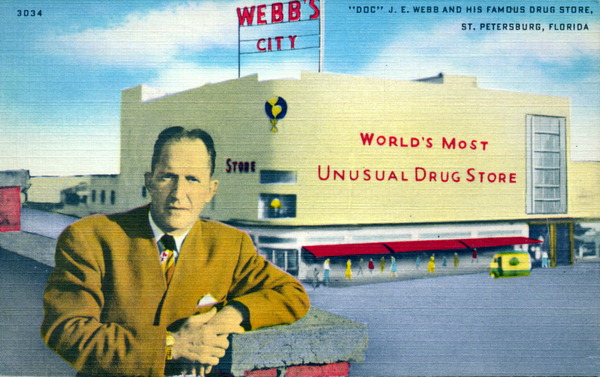
Both stories declined together in the latter half of the 20th century. The 1964 Civil Rights Act — and, more directly, the construction of I-275 through the Black community in the late 1970s — gutted the Deuces' commercial backbone. Industrial businesses left the warehouse blocks for cheaper land in the suburbs. Webb's City, the famous 'World's Most Unusual Drugstore' that anchored 9th Street and 2nd Avenue South starting in 1925, closed in 1979 and was demolished in 1984. By the 1990s, much of the warehouse stock sat empty. Cheap space attracted artists. The Morean Center for Clay moved into the historic Seaboard depot in 2000. Glass artist Duncan McClellan converted a packing plant on Emerson Ave S in 2010. A handful of pioneers proved you could live and work here.
The Warehouse Arts District Association formed in early 2012 at a meeting at the Morean Center for Clay. The mission was explicit: give the area an identity, attract more artists, and — most importantly — protect affordable studio space before developers priced everyone out. WADA bought 2.7 acres on the Deuces Corridor in late 2014 with public and private donor support, and the ArtsXchange opened October 2017 with 26 working studios at below-market rents. In September 2024 the city approved zoning changes and a Target Employment Center overlay around the SunRunner BRT station at 22nd Street, opening the district to mixed-use redevelopment while attempting to preserve maker, fabrication, and arts space. The tension between revitalization and displacement is now the defining story of the neighborhood — and WADA itself is exploring affordable artist housing at 2275 Sixth Ave S to keep its members from being priced out of the district they built.
Architecture & What You'll Be Buying
Predominant Styles
Typical Year Built
1925-1940 for warehouses; 1910-1930 for residential cottages; 2018-present for infill
Typical Size
900-1,800 sq ft for original cottages; 1,500-2,500 sq ft for new townhomes; 2,000-15,000 sq ft for warehouse spaces
Construction
The warehouses are concrete block on slab, flat or low-pitched roofs, large bays and open spans — built for industry, not aesthetics. Most adaptive-reuse work has kept the original shells and added skylights, polished concrete floors, and roll-up doors. The residential stock on side streets is mostly small wood-frame cottages and bungalows from the 1910s-1930s, many on small lots, with some Mediterranean Revival and craftsman elements scattered through. New infill construction since ~2020 has been mostly stick-built three-story townhomes and a handful of true live-work conversions in former warehouses.
Materials & Streetscape
Concrete block, brick, exposed steel trusses, corrugated metal, and sawtooth-roof skylights characterize the warehouse stock. Wood-frame clapboard or board-and-batten on the original cottages. The Pinellas Trail (a former rail line) and active CSX freight tracks define the spine of the district.
Notable Homes & Landmarks
636 22nd Street S
Built ~1930
Historic photo from the State Archives of Florida shows David Rothblatt, owner of Southern Grocery, in his delivery truck at this address circa 1930. The building represented the kind of small ethnic-immigrant-owned commercial enterprise that operated alongside the much larger Black business district on 22nd Street S during the segregation era. Many of these small storefront-with-living-quarters buildings have since been demolished or substantially altered.
515 22nd Street S (ArtsXchange campus)
Built Buildings ~1925-1940; renovated 2014-2017
The 2.7-acre ArtsXchange campus is the centerpiece of the entire district — a multi-building cluster of former industrial buildings purchased by WADA in late 2014 and renovated into 50,000+ square feet of artist studios, galleries, classrooms, a community kitchen, an outdoor performance stage, and (since 2023) the home of the long-running Academy of Ballet Arts. Approximately 30 working artists rent rent-controlled studio space here. The campus hosts the Second Saturday ArtWalk and serves as WADA's headquarters. Not for sale — but it's the reason the district exists in its current form.
2342 Emerson Ave S (Duncan McClellan Gallery)
Built Building ~1925; converted 2010
A 7,800-square-foot former fish and tomato packing plant that glass artist Duncan McClellan bought and converted in 2010 — one of the catalyst conversions that kicked off the modern district. Duncan lives, works, and exhibits here, alongside the St. Petersburg Hot Glass Workshop and the DMG School Project. Monthly Second Saturday openings draw 400-500 visitors.
2606 Fairfield Ave S (The Factory St. Pete)
Built Buildings ~1930s-1950s; relaunched 2020
A 6.5-acre, 90,000-square-foot complex of nine warehouse buildings along the Pinellas Trail, marketed as 'The Factory.' Houses HEIRESS gallery, Daddy Kool Records, Fairgrounds St. Pete, FloridaRAMA's immersive art installation, in-house artist studios, and event/rehearsal space. Sold to a new ownership group in 2024 — a transaction that signaled the district's transition from artist-led to investor-led, for better and worse.
Then & Now
1930s commercial era636 22nd Street S, c. 1930 — David Rothblatt at his Southern Grocery on the corridor that became the Deuces and the Warehouse Arts District
Florida Memory / State Archives of Florida — MS25738
 Early 20th century
Webb's City — the 'World's Most Unusual Drugstore' at 9th Street and 2nd Avenue South, blocks from today's Warehouse Arts District
Florida Memory / State Archives of Florida — PC3729
 1960s peak
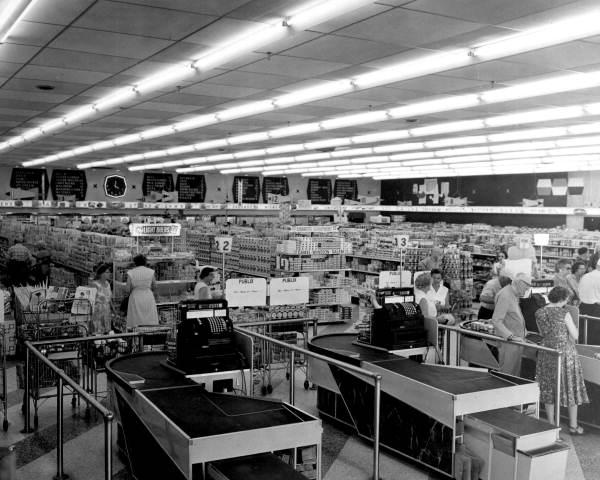
Webb's City grocery, 1961 — at peak the complex covered ten city blocks with 77 departments and 1,700 employees
Florida Memory / State Archives of Florida — C035526
 1960s peak
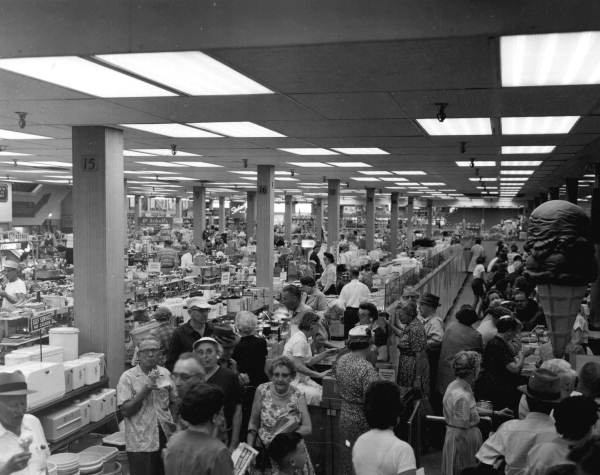
Webb's City department store, 1961 — Doc Webb's 'stack it high and sell it cheap' philosophy predated Walmart by decades
Florida Memory / State Archives of Florida — C035527
 1960s peak
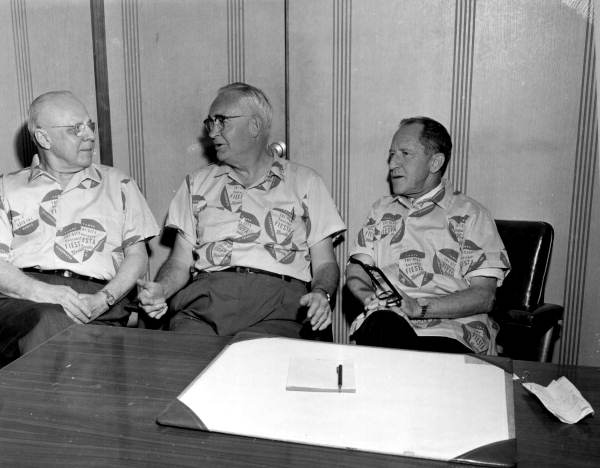
The Webb's City founders, 1961 — the complex closed in 1979 and was demolished in 1984, ending the original commercial era of the area
Florida Memory / State Archives of Florida — C035530
Commute Times
Click any destination to see the mapped route with real-time traffic estimates.
Pros & Cons
The Pros
- Most concentrated working-artist community in St. Pete — and one of the largest in Florida
- Walking distance to ArtsXchange, Morean Center for Clay, Duncan McClellan, the Factory, and 3 Daughters Brewing
- Pinellas Trail runs through the district — straight shot to downtown by bike or scooter
- Mostly flood zone X — higher elevation, low storm-surge exposure compared to waterfront neighborhoods
- 10-15 minute walk to the Tropicana Field / Historic Gas Plant redevelopment — major upside if delivered as planned
- SunRunner BRT line at 22nd Street provides direct rapid transit to the beaches
- Second Saturday ArtWalk and active gallery / brewery / event scene year-round
- Real lower-cost entry point into walkable, downtown-adjacent St. Pete — still possible to find cottages under $400K
The Cons
- Active CSX freight tracks run through the district — train horns are part of the neighborhood
- Industrial-residential mix means some blocks have warehouse loading, paint fumes, late-night brewery noise
- Block-by-block character changes fast — one street feels like Brooklyn, the next still has empty lots and chain-link
- Gentrification pressure is real — artists are being priced out of the area they built
- The Deuces' Black history is being layered over by infill development, which is a sensitive and ongoing community conversation
- School-zoned options are not the strongest in Pinellas — most buyers with kids end up in magnets or private
- Older cottages often need significant work; warehouse conversions involve commercial-to-residential permitting complexity
What You Need to Know
Who Should Live Here
Buyers who want to be inside the cultural production of St. Pete — not just visiting it. Artists and makers who want studio space within walking distance of home. Downtown professionals who want a 10-minute commute and a bike ride to a Rays game (or to whatever replaces them on the Gas Plant site). Buyers comfortable with neighborhood unevenness — block-to-block contrast between renovated warehouse, working artist studio, infill townhome, and lot still waiting to be developed. Not the right fit for someone who wants a finished, polished, manicured neighborhood today. The Warehouse Arts District is mid-transformation, and that's the whole pitch.
What to Watch For
Read the specific block before you fall in love with a listing. Some streets are quiet residential; others sit between working warehouses with after-hours loading. Check freight train proximity and run a horn-noise test at 6 AM and 10 PM before you write an offer. If you're looking at a warehouse conversion or live-work loft, verify that it's permitted as residential — some 'lofts' are still zoned commercial, which complicates financing and homestead exemption. Check the seller's permit history on any major work. On older cottages, the usual century-old-Florida-home checklist applies: 4-point inspection, wind mitigation, roof age, electrical, plumbing. Insurance quotes before contract, not after.
What to Expect
A neighborhood where the local economy is gallery openings, brewery taprooms, and Pinellas Trail bike traffic. Where you can walk from your front door to the Morean Center for Clay, then to 3 Daughters for a beer, then to a Second Saturday opening at Duncan McClellan, then to a show at Cage Brewing — all without driving. Active CSX freight running through the spine of the district. Murals on the walls, sculpture in the alleys, working artists who actually live here. A real, ongoing public conversation about how to grow without destroying the things that made the neighborhood worth growing into. And a 10-minute walk to whatever the Gas Plant District becomes when the Rays' deal moves forward.
Aaron's Honest Take
Aaron & Aubrey Chand
Living in St. Pete · Excellecore Real Estate
Here's what I tell buyers asking about the Warehouse Arts District: this is the most interesting neighborhood story in St. Pete right now, and that's both why you'd buy and why you might wait. The arts community here is real — 300+ working artists, the ArtsXchange campus, Duncan McClellan, the Morean Center for Clay — these aren't boutiques pretending to be galleries, these are people making things in the buildings they live in. If you've ever walked Wynwood in Miami before it got fully consumed, the WAD feels like that same window — already scenic, not yet fully built out, prices still reachable.
The honest middle ground: most of the district sits in flood zone X, which is unusual for St. Pete and a real advantage in 2026. Helene and Milton mostly didn't touch it the way they touched Shore Acres. You're 10 minutes from downtown by bike, 8 minutes by car, and the Tropicana Field site — when the Rays deal eventually closes — sits a 10-minute walk away. The SunRunner BRT runs to the beach. Walk Score is in the 80s. For a house in the $400K-$550K range, this is one of the few St. Pete neighborhoods where you genuinely don't need two cars.
What I'd want a buyer to think hard about: the WAD overlaps with the Deuces, which is sacred ground in Black St. Pete history. Buying here means buying into a real community conversation about gentrification, displacement, and what 22nd Street S becomes next. Block-by-block character is uneven — there will be a finished block and then an empty lot and then a working warehouse and then a brand-new $625K townhome. Train horns are real. School zoning isn't the strength. If you want polished and predictable, look at Old Northeast or Snell Isle. If you want to be early in the most genuinely creative urban pocket in St. Pete and you can hold for 7-10 years, this is one of the better long-term plays in the city.
The Buying Reality
30-50 days for cottages; new-construction townhomes vary widely
Moderate — typical district has 8-15 active listings across mixed product types
Occasional on well-priced renovated cottages and turn-key live-work lofts; less common on land or unrenovated stock
Walk the specific block at multiple times of day before you write. Get insurance quotes before going under contract. If it's a converted warehouse or live-work, verify the certificate of occupancy and current zoning before you fall in love. Be flexible on cosmetics — a lot of the value here is in the bones and the location, not the finishes.
Schools & Zoning
Magnet Options
Private / Independent
Pinellas County operates a controlled-choice attendance system, so zoning is one factor among several. The zoned-school path here isn't the strongest in the city, which is why most WAD families with school-age kids either compete for magnet seats (Lakewood CAT, Hopkins CCJM, SPC Collegiate) or go private. The magnet pathway is competitive but doesn't depend on neighborhood, so a WAD address doesn't disadvantage you in that lane.
Insurance & Maintenance Reality
Pre-War Home Considerations
For the older cottage stock on the residential side streets, the same rules apply as anywhere else in pre-war St. Pete: carriers will require a 4-point inspection (roof, electrical, plumbing, HVAC) and a wind-mitigation report. Roof age is the biggest single factor — anything over 15 years on a wood-frame home will narrow your carrier options sharply.
Warehouse conversions and live-work lofts are their own conversation. Some are insured as residential, some as commercial, and some as mixed-use. Verify the policy structure before closing, because financing and homestead-exemption eligibility both flow from how the property is classified. A 'live-work loft' that's still on a commercial certificate of occupancy is not the same product as a residential condo, and the insurance market treats it differently.
The upside: most of the district sits in flood zone X, which keeps base flood insurance modest or optional. Helene's storm surge stopped well short of the Warehouse Arts District. Wind insurance is the bigger line item, and the same wind-mitigation features (hip roof, impact windows, reinforced garage doors, secondary water resistance) drive meaningful premium reductions here as elsewhere in St. Pete.
Storm Impact: Helene & Milton
The Warehouse Arts District came through Hurricanes Helene (Sep 2024) and Milton (Oct 2024) significantly better than St. Pete's waterfront and barrier-island neighborhoods. Most of the district sits in flood zone X at roughly 20-30 ft elevation, well west of Tampa Bay surge zones. Wind damage and a few roof and tree losses were the typical impact — not the catastrophic interior flooding that hit Shore Acres, Snell Isle, and Riviera Bay.
Hurricane Helene
Sep 2024Helene's surge was the worst on record for Pinellas waterfront neighborhoods, but it largely stopped before reaching the Warehouse Arts District. Reports were limited to wind damage, downed limbs, scattered roof issues on older buildings, and minor street flooding from rainfall — nothing comparable to the four-to-six feet of saltwater that filled homes east of the bay.
Hurricane Milton
Oct 2024Milton tracked across the state inland from the south two weeks after Helene. The district experienced wind, wind-driven rain, and additional tree loss, but no widespread surge given Milton's path. Roofs already weakened by Helene took the biggest hit.
Community & Events
Second Saturday ArtWalk
Monthly, second Saturday, 5-9 PM (galleries) and 6-10 PM (WADA trolley)
Galleries and studios across the Warehouse Arts District, Central Arts District, Grand Central, Edge, Deuces Live, Uptown Arts, and Waterfront Arts open their doors for openings, demonstrations, and public events. WADA runs a free trolley loop through the district hitting WADA, Morean Center for Clay, FloridaRAMA, Duncan McClellan, Five Deuces, and the Clay Co-Op every 30-35 minutes.
ArtsXchange open studios and exhibitions
Year-round; most active around Second Saturday
The 50,000-square-foot ArtsXchange campus at 515 22nd St S hosts approximately 30 working artists, rotating gallery exhibitions, classes, and outdoor performances on its stage. Open studio events are the easiest way to meet the resident artist community.
3 Daughters Brewing live music and events
Friday and Saturday nights year-round
One of Florida's busiest tasting rooms — a 30-barrel brewery in an 18,000-square-foot warehouse with food trucks, live music, ping-pong, oversized Jenga, and an 18-hole indoor putt-putt course. A primary anchor of nightlife in the district.
Cage Brewing music venue
Year-round, multiple shows weekly
Brewery and live music venue at 2001 1st Ave S — full-band shows, broad craft-beer list, Kraken Joe's pizza on site. Effectively the rock-club anchor of the district edge.
WADA Meetup and member events
Ongoing
The Warehouse Arts District Association runs a year-round calendar of artist talks, business mixers, classes, and workshops. The fastest way for a new resident to plug into the artist community.
What Residents Are Saying Online
Public discussion about the Warehouse Arts District tends to land in two camps: people who love the creative energy, walkability, and proximity to downtown, and people raising honest concerns about train noise, the speed of development, and gentrification pressure on the artists and on the adjacent Deuces community. Verified resident-quote density on Reddit and City-Data is thinner here than in older established neighborhoods like Roser Park or Old Northeast — the district is newer as a residential identity, and much of the public commentary lives in journalism (Tampa Bay Times, St Pete Catalyst, Creative Loafing) rather than in long forum threads. The quotes below capture the recurring themes from the public sources we could verify.
“Local artists need more than walls to paint. We need affordable studios, attainable housing, accessible venues and communities that aren't priced out of their own neighborhoods.”
“Many artists can't afford to own property. When development comes, [developers] will try to fetch top dollar.”
“Be prepared for train horns, paint fumes, and Instagrammers blocking the alleys.”
“Surrounded by historic homes and cobblestone streets, this district's neighborhood feel is evident.”
“Artists organized the Warehouse Arts District Association in 2011 to address the sad tradition of artists discovering and popularizing an area only to be priced out by developers.”
Further Reading & Resources
Civic & Preservation
City of St. Petersburg — Imagine the Deuces / Deuces Rising
Official city .gov page on the Deuces redevelopment plan — bike and pedestrian routes, transit improvements, and infrastructure investments.
City of St. Petersburg — Art Districts
Official city overview of all St. Pete arts districts including Warehouse Arts.
City of St. Pete — Warehouse Arts District / 22nd St S Zoning Changes
September 2024 zoning amendments and Target Employment Center overlay around the SunRunner BRT — the regulatory framework that shapes redevelopment in the district.
City of St. Petersburg — Historic Gas Plant District / Tropicana Field Redevelopment
Official city page on the 86-acre Trop site redevelopment — the major adjacent project that will reshape this part of St. Pete.
Journalism
St Pete Catalyst — Warehouse Arts District tag archive
Ongoing local journalism coverage of the district — feature pieces, development news, and artist profiles.
St Pete Catalyst — ArtsXchange Phase II
Catalyst feature on the next phase of ArtsXchange expansion.
Tampa Bay Times — Affordable artist housing in the Warehouse Arts District
August 2024 Times feature on WADA's plan for 40-60 affordable housing units at 2275 6th Ave S.
Tampa Bay Times — Artists turning a gritty area into the Warehouse Arts District
Original Tampa Bay Times feature on the district's formation and the artists who pioneered it.
Creative Loafing Tampa Bay — Art-washing and the gentrification of arts districts
CL feature on the gentrification pressure facing artists in the Warehouse Arts District and how 'art-washing' shows up in development marketing.
St Pete Rising — Warehouse Arts District upzoning approved
Coverage of the September 2024 zoning approval that will shape the next decade of development in the district.
St Pete Rising — Factory sells 6.5-acre property in Warehouse Arts District
Coverage of the 2024 sale of the Factory campus — a transition point for the district from artist-led to investor-led ownership.
St Pete Catalyst — Vintage St. Pete: Webb's City
History of Webb's City, the 'World's Most Unusual Drug Store' that anchored 9th Street and 2nd Avenue South from 1925 to 1979 — a key piece of the district's commercial-era history.
Florida Trend — An Artists' Draw: The Warehouse Arts District
Florida Trend feature on WADA's mission and how the ArtsXchange model protects affordable studio space.
Neighborhood Association
Warehouse Arts District Association (WADA)
The neighborhood's artist-led association — events, ArtsXchange information, member directory, and the Second Saturday ArtWalk trolley.
WADA — Visit page
Visitor guide to the ArtsXchange campus, member studios, and trolley stops.
WADA — Second Saturday ArtWalk
Monthly art walk schedule, trolley route, and participating galleries.
Cultural
St. Petersburg Arts Alliance
City-wide arts alliance coordinating the multi-district Second Saturday ArtWalk that includes the Warehouse Arts District.
Deuces Live
Main Street organization for 22nd Street South — the historic Black business corridor that overlaps and runs through the Warehouse Arts District.
Deuces Live — Our History
The Deuces' history as the heart of St. Pete's Black community during segregation — essential context for any buyer in this district.
ArtsXchange (visitor profile)
Visitor information for the ArtsXchange campus — the centerpiece of the district at 515 22nd St S.
Morean Center for Clay
Largest pottery studio in the Southeast, housed in the historic Seaboard Air Line freight depot — one of the original anchors of the arts district.
Duncan McClellan Gallery
Glass art gallery and St. Petersburg Hot Glass Workshop in a converted 7,800-square-foot fish-and-tomato packing plant — a catalyst conversion for the district.
The Factory St. Pete
90,000-square-foot creative complex on Fairfield Ave S — galleries, studios, Daddy Kool Records, FloridaRAMA, event space, and rotating exhibitions.
What's Nearby
ArtsXchange
in district
Morean Center for Clay (historic Seaboard depot)
in district
Duncan McClellan Gallery
in district
The Factory St. Pete
in district
3 Daughters Brewing
in district
Cage Brewing
0.3 mi (district edge)
Pinellas Trail (through-district)
in district
Deuces Live / 22nd Street S corridor
overlapping
Tropicana Field site / Historic Gas Plant District
0.7 mi
Downtown St. Pete waterfront
1.5 mi
Saturday Morning Market (downtown)
1.5 mi
Campbell Park
0.8 mi
Elevation & Flood Risk
25ft average elevation
FEMA Flood Zone X (most of district — higher elevation away from the bay) — flood insurance required
Thinking about Warehouse Arts District?
We've helped over 50 buyers relocate to Tampa Bay. Let's talk about whether Warehouse Arts District is the right fit for you.
Explore more neighborhoods
View All in Relocation Guide