Pasadena
St. Pete's 1920s Spanish estate corridor
1922 (Pasadena-on-the-Gulf)
Established
I.M. "Handsome Jack" Taylor
Original Developer
S.V. Schooley & Schooley-Murphy
Signature Builder
1922-1930
Period of Significance
8 minutes by car / bike
Walk to St. Pete Beach
Walter Hagen (320 Park St S, 1924)
Famous First Resident
Neighborhood Overview
Pasadena is the corridor of 1920s Spanish and Mediterranean Revival estates that runs along Park Street between Tyrone and St. Pete Beach. It sits on the western edge of St. Petersburg — separate from the small municipality of South Pasadena to the south, separate again from Gulfport to the southeast. The neighborhood was platted in 1922 by I.M. "Handsome Jack" Taylor, a New York investment banker who arrived after the 1921 hurricane, bought 1,800 acres on the west side, and rebranded it as Pasadena-on-the-Gulf. Taylor sold most of those lots to New York investors — by one count, of 108 lots in one section, 106 went to buyers within a few miles of Times Square. The land boom collapsed in 1926 and Taylor walked away from his debts, but the homes that got built in those four years are some of the most architecturally significant in the city.
What makes Pasadena distinct is the building stock. While Old Northeast and Roser Park are predominantly Craftsman and Colonial Revival, Pasadena is the city's Spanish corridor — smooth white stucco, thick tile roofs, wrought-iron balconies, walled gardens, courtyards, Cuban tile floors, hand-painted murals. The signature builder was S.V. Schooley (and the Schooley-Murphy firm), who put up the estates along Park Street, the "Spanish Castle" at 7003 Park Street S, the $60,000 Spanish-Moorish home at 619 65th St S, and the wrought-iron Authentic Spanish at 690 64th St S. Walter Hagen — the world's #1 professional golfer in 1924 — lived at 320 Park Street S and ran the Pasadena Yacht & Country Club. Babe Ruth bought a few blocks away in 1925 and snuck off from Yankees spring training to play golf with Hagen.
Today the neighborhood is a mix: stately 1920s estates on Park Street and the Gulf-side waterfront, mid-century infill on Bear Creek and the streets between, the private gated Pasadena Yacht & Country Club community on the bay, and the Old Pasadena pocket between Pasadena Avenue and Park Street with its own neighborhood association. It's a five-minute drive to St. Pete Beach and Treasure Island, fifteen to downtown. The trade-off is real: this is heavy waterfront exposure. Helene's surge in 2024 hit the Gulf-side blocks hard, and rapid development is eliminating green space the neighborhood relies on for drainage. If you want the grandest historic homes in St. Pete with the beach a short drive away, this is where you look. Just verify the elevation certificate before you write an offer.
History & Origins
Platted 1922 as Pasadena-on-the-Gulf
I.M. "Handsome Jack" Taylor (Schooley-Murphy as primary builder)
Florida Land Boom (1922-1926)
Ivan M. Taylor — "Handsome Jack" — arrived in lower Pinellas in late 1921, just after the October hurricane that flattened a lot of St. Pete's then-modest waterfront. He was 45, a former New York investment banker with a shady stock-deal record, and he had come south to reinvent himself. He picked up 1,800 acres on the west side of the city the following year, rebranded it Pasadena-on-the-Gulf, and started selling lots aggressively to New York investors. His marketing pitch was that Pasadena had accomplished in 20 months what Miami Beach had taken five years to do. By his own count, of 108 lots sold in one section, 106 went to buyers living within a few miles of Times Square.
Taylor's vision was not modest. He pitched a luxury hotel, a university, brick-paved streets, wide boulevards, multiple golf courses, miles of bridle paths, ornate subdivision entrances (the Coquina Rock Gates at 64th Street near Emerson Avenue South still stand, each with a Pasadena coat of arms), an exotic bird exhibit, an aviary, aquatic gardens, and an island full of monkeys. He also built or paid to build many of those things. He hired Walter Hagen — the world's #1 professional golfer in 1924, fresh off winning the British Open — at $30,000 a year to serve as president of his new Pasadena Yacht & Country Club, design the course, and represent it in tournaments. He built the Rolyat Hotel (Taylor spelled backwards) on the southeast edge of his development; it opened January 1, 1926, the day after Perry Snell's Vinoy opened in downtown St. Pete. Babe Ruth bought a home a few blocks from Hagen in 1925 and snuck off from Yankees spring training to play tee times at Pasadena.
The land boom died in 1926. Within four years of arriving, Taylor's Pasadena-on-the-Gulf was bankrupt. He abandoned his workers, the birds in the aviary, and the monkeys on Monkey Island, and he returned to his New York office, leaving employees and creditors to pick up the pieces. But the building stock he commissioned — and the work S.V. Schooley and the Schooley-Murphy firm completed between 1922 and 1926 — remained. Walter Hagen's Park Street home is still standing. The Spanish Castle at 7003 Park Street S, built by Schooley in 1931, is still standing. The Rolyat became Stetson University College of Law in 1954 and is still operating as a law campus. The Pasadena Yacht & Country Club is still private, still gated, still playing the Wayne Stiles course Hagen helped design — later renovated by Arnold Palmer. The neighborhood that came out of one shady banker's four-year speculative run is, almost a century later, the most concentrated collection of genuine 1920s Spanish estate architecture in Pinellas County.
Architecture & What You'll Be Buying
Predominant Styles
Typical Year Built
1922-1930 for the historic estates; significant 1950s-60s ranch infill on Bear Creek and side streets
Typical Size
2,400-6,000 sq ft on the historic estates; most are on 75-100 ft wide lots, waterfront homes on lots 100-400+ ft wide. Schooley estates regularly run 4,000-10,000 sq ft.
Construction
Smooth white stucco over hollow clay tile or wood frame is the dominant historic system. Two stories with wrought-iron balconies, walled courtyards, thick clay tile roofs. Cuban tile, Saltillo tile, and Spanish tile floors are common in original interiors. Many homes have servants' quarters separate from the main house, double garages, and original sprinkler systems. The mid-century infill is concrete block ranch with terrazzo floors — a different building system entirely.
Materials & Streetscape
Pasadena's signature material vocabulary is Spanish: smooth white or cream stucco walls, red barrel-tile roofs, wrought-iron balcony railings, hand-glazed Cuban and Saltillo tile floors, arched doorways, hand-painted murals, courtyard fountains. The Coquina Rock Gates at 64th and Emerson — the original 1920s entry walls — are coquina stone with embedded Pasadena coats of arms. Park Street itself is wide and partly brick-paved, an artifact of Taylor's brick-streets vision.
Pockets Within the Neighborhood
Old Pasadena (1st Ave S to Park Street S, between Pasadena Ave and city limits)
The platted core of the original Pasadena-on-the-Gulf development north of Park Street. Wide brick streets, mature canopy, mostly 1920s estates with mid-century infill. Has its own neighborhood association (Old Pasadena Neighborhood Association, oldpasadenana.com).
What sets it apart: This is the historic core — Casa Ronda, Walter Hagen's home, and most of the documented Schooley estates sit here. About 8% of homes flooded during Helene per the neighborhood association, but the surge stayed mostly on Gulf-side lots. The streets generally drain better than the Gulf-side blocks because they sit slightly higher.
Pasadena on the Gulf (Gulf-side waterfront)
The waterfront blocks west of Park Street and along Boca Ciega Bay. Includes the grandest estates — 619 65th St S, 690 64th St S — on lots with hundreds of feet of waterfront and original Spanish architecture. Adjacent to the Pasadena Yacht & Country Club golf course.
What sets it apart: Heaviest waterfront exposure in the neighborhood. Direct boat access. AE flood zone for most lots. Helene's storm surge impacted these blocks materially — verify the elevation certificate before purchasing.
Pasadena Yacht & Country Club
Private gated community on the southwest tip — the only gated waterfront and golf-course community in Pinellas County. Built around the original 1924 Wayne Stiles course (Walter Hagen helped design, Arnold Palmer renovated), an 82-slip yacht basin, swimming pool, three dining venues. Membership is by invitation, but homeowners aren't required to be members and members aren't required to live in the community.
What sets it apart: Newer construction (mostly 1980s-2010s) on the gulf-side peninsula. Different feel from Old Pasadena — newer estates rather than 1920s historic. Heavy hurricane exposure given the peninsula geography.
Bear Creek (between Pasadena Ave and Gulfport)
Landlocked pocket on the east side, oak-tree-lined sidewalks, brick-lined streets, with Bear Creek itself meandering through the neighborhood. Mostly 1950s-60s ranch homes with several mid-century-modern examples and modern infill. Pinellas Trail crosses the south side. Bear Creek Park (bird-watching, playground, ballfield) is a focal point.
What sets it apart: Significantly lower price point — average around $445K vs. ~$570K in Pasadena on the Gulf. No waterfront, less historic stock, more 1950s ranch character. Closer to Gulfport than to the beach. Pasadena Bear Creek Neighborhood Association covers this area.
Notable Homes & Landmarks
320 Park Street S
Built 1924
Spanish villa built by Schooley-Murphy for Walter Hagen — the world's #1 professional golfer in 1924, winner of 11 major championships (third all-time behind Nicklaus and Tiger Woods). Taylor paid Hagen $30,000 a year to serve as president of the new Pasadena Yacht & Country Club, design the course, and play in tournaments. Hagen's home was less than a mile from the club. Babe Ruth bought a home a few blocks away in 1925 and snuck off from Yankees spring training to play golf with Hagen. Today the home is roughly 10,291 sq ft (5BR/8BA) after subsequent expansions.
Later combined with the adjacent Spanish home on 3rd Avenue to create a larger estate. Owned for years by fitness-equipment magnate Tony Little — who reportedly built a ballroom connecting the two houses and added an outdoor racquetball court. Currently known as Faith Mansion.
7003 Park Street S — "Spanish Castle"
Built 1931
Built by S.V. Schooley as one of the last estates of the boom era. Spanish style, 4 bedrooms, 3 tile baths, hot-water heat, electric refrigeration, tiled kitchen, tiled porches. 85x147 lot, two-car garage. Original construction cost $21,000. Cited in St. Pete's design guidelines as a defining example of Old Pasadena Mediterranean Revival.
Original owners Jonathan Frederick Coxon (1879-1951) and Vivian Emery Kenyon Coxon (1881-1962). Jonathan's father was a pottery industry pioneer; Jonathan founded Wooster Pottery and Coxon Beleek China Co. Most recently listed at $3.326M.
619 65th Street S (Pasadena on the Gulf)
Built 1925
Spanish-Moorish estate by Schooley and Murphy. Construction cost $60,000 — extraordinary for the period. 400+ feet of frontage, 117 trees including a citrus grove, adjacent to the 14th green of the Pasadena golf course. Living room with imported tile and cathedral ceiling, Spanish balcony, library, dining room, breakfast room, multiple bedrooms with sun porches and private baths, separate servants' quarters with three rooms and a bath, double garage, automatic oil heat.
Original owner Wellington Earl Lake (1867-1939), retired Salt Lake City stenographer and banker. Charles and Myrtle Fillmore — founders of the Unity Movement — stayed here during their 1935 Florida lecture tour.
690 64th Street S (Pasadena on the Gulf)
Built 1926
Authentic Spanish, two-story. Wrought-iron balconies, walled yard, thick tile roof, smooth white stucco, red awnings. Crotons, arbor vitae, Turk's-cap hedges. Originally a winter home for John Ledyard Talcott Jr. (born 1876, NY) and Carolyn Heins. John was descended from John Talcott, a founder of Hartford, Connecticut.
Later owned (1956-1969+) by Commander George Edward Morris Jr. of the U.S. Coast Guard. Morris survived the Pearl Harbor attack, the fall of Corregidor, and Japanese POW camps during WWII — he weighed 95 pounds upon liberation. He taught math at SPJC and lived to age 97 (d. 2003).
7211 3rd Avenue S — Casa Ronda
Built 1925
Two-story Spanish revival estate, 3,390 sq ft, 4BR/3.5BA on a 0.43-acre corner lot in Old Pasadena. Designed to the exact specifications of New York City attorney William G. Marvin when Pasadena Estates was just beginning. Architectural cues drawn from the Spanish and Moorish architecture of Ronda, Spain. Nine-foot ceilings, original wood floors, arched doorways, hand-painted murals, fireplace, garden room, primary suite with private balcony. Includes Casita Rondita guest suite, heated saltwater pool, outdoor shower, fountains, gazebo, detached garage.
Last sold 2018 for $725K. Listed in 2024 at $2.7M with Smith & Associates Real Estate.
Then & Now
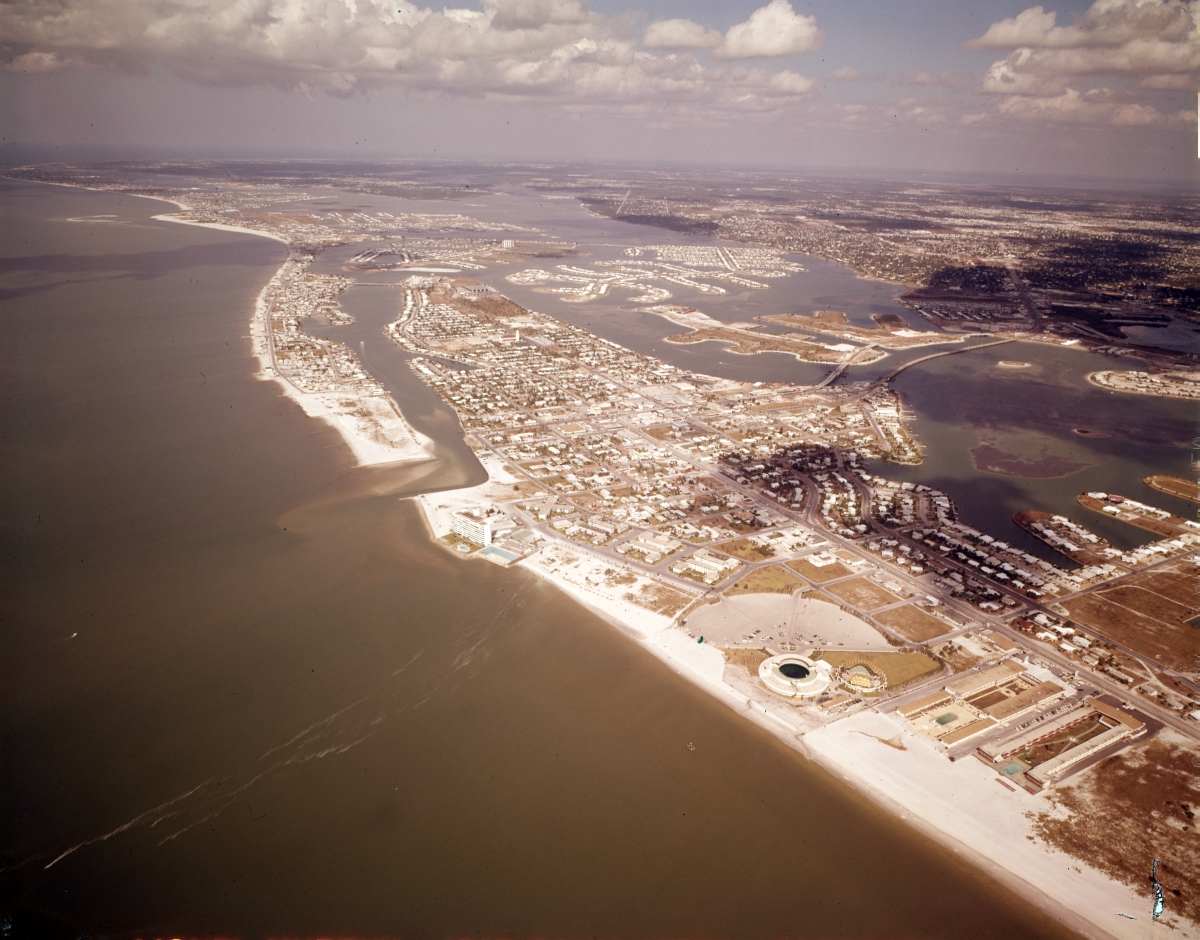
Mid-Century1964 aerial of the Pasadena / St. Pete Beach corridor — the long Gulf-side waterfront that defines the neighborhood's character and its flood exposure.
Florida Memory / State Archives of Florida — DC072619
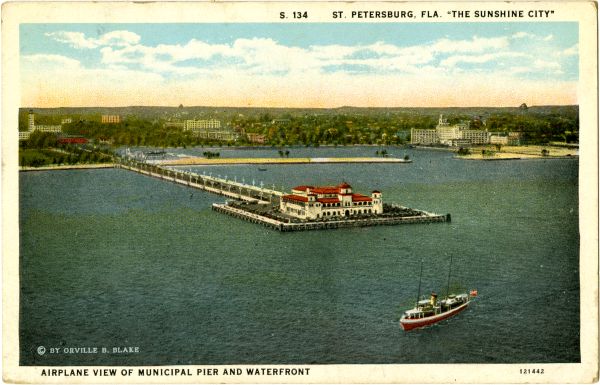 Boom (1920s)
1926 aerial of St. Petersburg from the air — the year Pasadena-on-the-Gulf was at the peak of construction, before the bust hit later that year.
Florida Memory / State Archives of Florida — PC13231
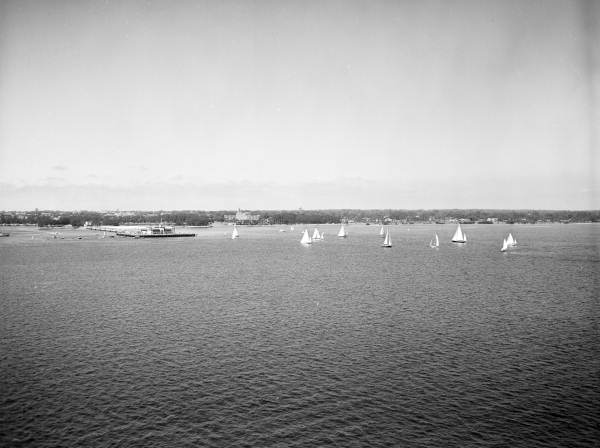 Mid-Century
1955 aerial of St. Petersburg's Gulf-side waterfront — the staging ground for the historic St. Pete-Havana Yacht Race and the kind of waterfront access that defined Pasadena's appeal.
Florida Memory / State Archives of Florida — C20865
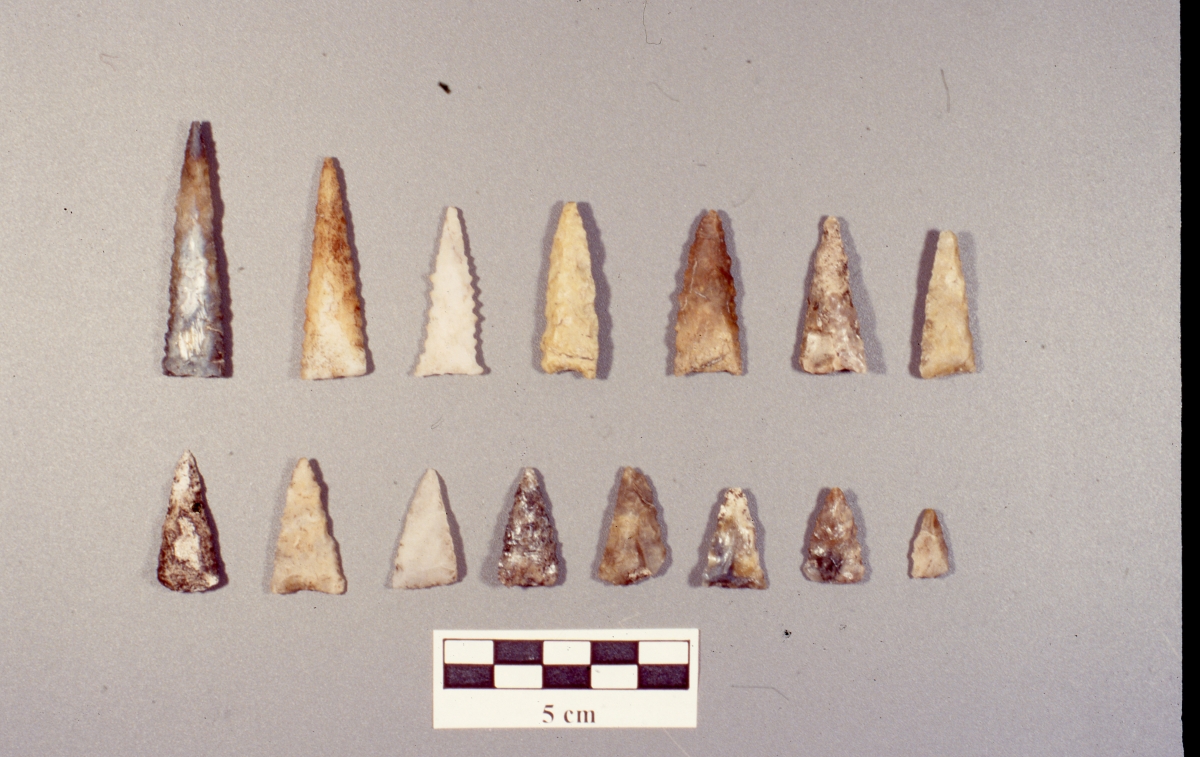 Pre-development
Jungle Prada de Narváez Park, just north of Pasadena — the pre-Columbian Tocobaga site that anchored the western edge of the city long before Handsome Jack Taylor arrived.
Florida Memory / State Archives of Florida — MSF-PI54
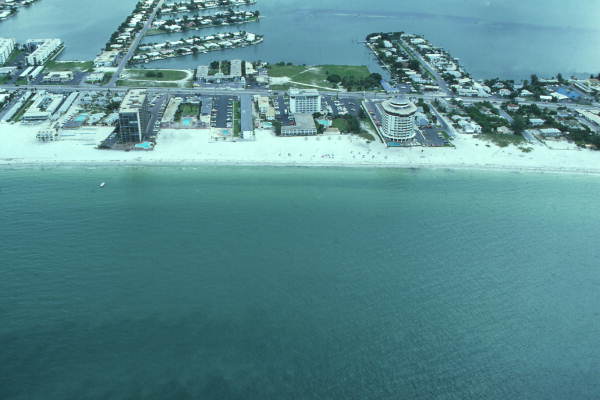 Late Mid-Century
1976 aerial looking east from St. Pete Beach over the Pasadena corridor — by this point the 1920s estates had been joined by mid-century ranch infill on Bear Creek and the side streets.
Florida Memory / State Archives of Florida — K024244
Commute Times
Click any destination to see the mapped route with real-time traffic estimates.
Pros & Cons
The Pros
- Most concentrated collection of genuine 1920s Spanish and Mediterranean Revival estates in Pinellas County
- Walking or biking distance to St. Pete Beach and Treasure Island — 8 minutes by car
- Extraordinary architectural pedigree: Walter Hagen's home, Schooley estates, Babe Ruth lived here, Spanish Castle, Casa Ronda
- Pasadena Yacht & Country Club — the only gated waterfront and golf community in Pinellas County, with a Wayne Stiles course renovated by Arnold Palmer
- Wide mature streets — Park Street is brick-paved in stretches, mature canopy throughout
- Strong neighborhood associations (Old Pasadena, Pasadena Bear Creek) coordinating on flood resilience and overdevelopment concerns
- Lower entry price than Snell Isle or Old Northeast for comparable historic stock — entry around $500K, signature estates $1.5M-$3M
The Cons
- Heavy waterfront exposure — most Gulf-side blocks sit in flood zone AE, Helene's 2024 storm surge hit hard
- Insurance on pre-1930 stucco-over-hollow-tile homes runs high and requires 4-point and wind-mitigation inspections
- Not a locally-designated historic district — exterior changes and demolitions are not protected by COA review (unlike Roser Park or Granada Terrace)
- Walk Score is moderate — most errands require driving (Tyrone Mall ~2 mi, downtown ~15 min)
- Rapid development is eliminating green space — recent rezoning approved ~20 new homes on what were soccer fields, raising drainage concerns
- Confusing geography — Pasadena (city of St. Pete), South Pasadena (separate municipality), and Gulfport all border each other and are commonly conflated
- Original 1920s mechanicals and systems — knob-and-tube, cast iron drains, galvanized supply lines — are common in unrenovated Schooley homes
What You Need to Know
Who Should Live Here
Buyers who want a 1920s Spanish or Mediterranean estate with documented provenance, the beach a short drive away, and the option of golf-course or waterfront frontage. This is the corridor for the buyer who wants Old Florida grandeur without the inventory tightness of Roser Park or the price of Snell Isle. Pasadena Yacht & Country Club fits the buyer who wants gated, golf, and yacht-basin access in one community. Bear Creek fits the buyer who wants a 1950s ranch on a brick street with oak canopy at a more accessible price point. This is not the right fit for a buyer who wants walkability, modern construction, or distance from waterfront flood exposure.
What to Watch For
Verify the specific lot's flood zone and elevation certificate — the Gulf-side blocks west of Park Street are AE and took surge during Helene. On the historic estates: get a thorough inspection of the hollow-tile-and-stucco wall system (cracking is common after a century of hurricane cycles), the original tile roof (lifecycle is 50-80 years but barrel-tile roofs over wood deck need careful evaluation), the electrical (knob-and-tube hides behind plaster), the cast-iron drain stacks, and the supply lines. Insurance must be quoted before, not after, you go under contract — pre-1930 stucco homes near open water are a niche underwriting category. Pasadena is not a locally-designated historic district, which means there's no architectural review board protecting the neighborhood from demolitions and out-of-scale infill — overdevelopment is the active concern raised by the Old Pasadena Neighborhood Association, and recently rezoned lots are bringing in roughly 20 new homes on what were soccer fields.
What to Expect
A neighborhood with three distinct experiences depending on which pocket you land in. Park Street and the Gulf-side: stately century-old Spanish estates, quiet, minutes from St. Pete Beach, with real waterfront and real flood exposure. Pasadena Yacht & Country Club: gated, newer construction, golf and yacht-basin access, a different demographic and price point. Bear Creek: 1950s ranches on oak-canopied brick streets, more affordable, no waterfront, closer to Gulfport. The connective tissue is the architectural legacy of Schooley, Taylor, and the 1920s boom — and the proximity to the beach. Expect to drive for most errands, expect to talk to your insurance agent more than once a year, and expect a strong neighborhood association presence on the questions that matter (flooding, drainage, infill development).
Aaron's Honest Take
Aaron & Aubrey Chand
Living in St. Pete · Excellecore Real Estate
Pasadena is a conversation about trade-offs. The architecture here is the best Spanish revival you can buy in Pinellas — Schooley estates, Walter Hagen's house, Casa Ronda, the Spanish Castle. If you want a 1920s Mediterranean home with documented provenance and the beach a five-minute drive away, this is the corridor. The price of admission is real waterfront exposure: Helene took the Gulf-side blocks in 2024, and the rapid infill happening right now is making drainage harder, not easier. The Old Pasadena Neighborhood Association is fighting that fight publicly with the city's flood task force.
The other thing buyers need to understand is that Pasadena is not Roser Park. There's no local historic district designation, no architectural review board, no Certificate of Appropriateness process. That cuts both ways. On the upside, you can renovate without going through preservation review. On the downside, your neighbor can knock down a 1920s Schooley estate and put up a stucco box, and there's nothing the neighborhood can do about it. If protected character matters to you, look at Granada Terrace or Roser Park instead. If you want Pasadena's architectural pedigree without the rules, that's available — but understand that the surrounding context isn't guaranteed.
Three pockets, three different deals. Park Street and the historic Old Pasadena core are where the 1920s estates live — entry around $1M, signature estates north of $3M. Pasadena on the Gulf is the waterfront tier with the heaviest flood exposure and the boating access. Pasadena Yacht & Country Club is gated, newer, golf-and-marina lifestyle. Bear Creek is the affordable ranch alternative — mid-century homes on oak-canopied streets at $400K-$500K. Across the past couple years we've helped over 50 buyers relocate to Tampa Bay, and the question I get most about Pasadena is always the same: what does my insurance look like? Get that quote before you go under contract — not after. Everything else flows from that conversation.
The Buying Reality
~45-60 days for fairly-priced historic estates; 25-40 days for Bear Creek ranches; PYCC homes vary widely
Moderate — typically 8-15 active listings across the four pockets at any time
Less common than in Snell Isle or Old Northeast — most properties take a single offer, but renovated turnkey homes under $750K can move fast
Get insurance quoted before you write — this is the biggest deal-killer in the neighborhood. Pre-approval letter, flexible inspection timeline, and a willingness to accept the home's age. Don't ask for cosmetic repair credits on a 100-year-old Spanish estate — sellers walk. On waterfront, request the elevation certificate up front.
Schools & Zoning
Magnet Options
Private / Independent
Pinellas County operates a controlled-choice attendance system, so neighborhood zoning is one factor among several. Most addresses in Pasadena fall within Bear Creek Elementary, Azalea Middle, and Boca Ciega High — but verify the specific address using the PCSB School Zone Locator at https://www.pcsb.org/zone before relying on this. Pasadena Fundamental Elementary is a magnet (application required), as are the South County application-area middle schools and the AVID/AICE programs at Boca Ciega High. Three strong private options sit within 15 minutes — Farragut on Boca Ciega Bay, Shorecrest in Old Northeast, Canterbury near Snell Isle.
Insurance & Maintenance Reality
Pre-War Home Considerations
Insurance for a Pasadena historic estate is its own conversation — start it before you make an offer. Carriers will require a 4-point inspection (roof, electrical, plumbing, HVAC) and a wind-mitigation report. On homes built before 1930, expect questions about the wall system (hollow clay tile under stucco is unfamiliar to many underwriters), the original tile roof age, knob-and-tube wiring still hiding behind plaster, cast-iron drain lines reaching the end of service life, and galvanized supply lines.
Flood is the bigger conversation. Most of the Old Pasadena core north of Park Street sits in flood zone X, but the Gulf-side blocks west of Park Street and along Boca Ciega Bay are AE — and the FEMA Special Flood Hazard Area designation requires flood insurance for any federally-backed mortgage. Helene's 2024 surge confirmed which lots take water in a real Cat 4 surge event. Per the Old Pasadena Neighborhood Association president, about 8% of homes in the historic core flooded during Helene — and almost all of those were Gulf-side waterfront. Get an elevation certificate before you write an offer on anything west of Park Street.
The upside: this is a corridor where renovation budgets pencil out because the underlying real estate is undervalued relative to the architecture. A $500K renovation on a $1.5M Schooley estate produces a different financial outcome than a $500K renovation on a $1.5M ranch. Talk to a contractor and an insurance agent who specifically work with 1920s stucco-over-tile construction before you fall in love with a specific home — they'll tell you what's hiding behind the plaster, and what your premium is going to look like.
Storm Impact: Helene & Milton
Pasadena had a tale of two storms in 2024. Helene's surge on September 26 hit the Gulf-side waterfront — the western blocks of Old Pasadena, Pasadena on the Gulf, and parts of the Pasadena Yacht & Country Club peninsula. According to the Old Pasadena Neighborhood Association president, roughly 8% of homes in the historic core flooded, with almost all of those on waterfront. The Old Pasadena ridge along Park Street and inland to Pasadena Avenue largely stayed dry. Bear Creek is landlocked and saw rain-driven flooding rather than surge.
Hurricane Helene
Sep 2024Storm surge from Helene flooded the Gulf-side waterfront and pushed water into the lower-elevation lots adjacent to Boca Ciega Bay. The Old Pasadena Neighborhood Association President Shannery Barnes told Bay News 9 that 8% of homes in Old Pasadena flooded, primarily those on the water. Resident Mary Beth Singh told the station: "We lucked out on this last storm. There wasn't too much in our neighborhood, but we had a lot of surface here where it can drain. That's all going to be gone" — a reference to current rezoning that would replace soccer fields with about 20 new homes.
Hurricane Milton
Oct 2024Milton came through inland from the south two weeks after Helene with 16+ inches of rain in St. Petersburg. Pasadena's primary damage was wind-driven rain, downed trees, and roof issues on already-stressed roofs. No widespread surge given Milton's track. The combined recovery effort across St. Petersburg involved 2.1 million cubic yards of debris collected from both hurricanes — the largest volume the city has ever cleared.
Blocks to Watch
Gulf-side blocks west of Park Street (64th, 65th, 66th, 67th Streets S between Boca Ciega Bay and Park Street); waterfront lots within Pasadena Yacht & Country Club; the Sunset Drive S / 1st Avenue S intersection near Sunset Park (residents identified the storm drains there as inadequate during heavy rainfall). Verify elevation certificate before purchasing on any of these blocks.
Community & Events
Old Pasadena Neighborhood Association Social Gatherings
Throughout the year
Volunteer-run association hosting seasonal celebrations and neighborhood events for the Old Pasadena historic core (1st Ave S to Park Street S, between Pasadena Ave and city limits).
Pasadena Yacht & Country Club events
Year-round (members and guests)
Private club with three dining venues, golf tournaments, yachting events, and member functions on the gated peninsula. Walter Hagen and Bobby Jones played part of the "Match of the Century" here; Babe Ruth, Arnold Palmer, Babe Zaharias, and Michael Jordan all played the course.
Bear Creek Park
Daily, year-round
Neighborhood park with bird-watching, playground, ballfield, and cricket field. The Pinellas Trail crosses the south side and gives a 30-minute bike ride to downtown St. Pete.
Pasadena Community Church (William B. Harvard Sr. sanctuary)
Sundays / year-round
Active United Methodist congregation in a striking late-1960s mid-century-modern sanctuary by William B. Harvard Sr., AIA — same architect as the Williams Park Bandshell and the Inverted Pyramid pier. The original Pasadena Church on the site dates to March 25, 1925.
What Residents Are Saying Online
Forum and resident commentary on Pasadena consistently flags three things: it's convenient (close to St. Pete Beach, Tyrone Mall, downtown), boundaries are confusing (Pasadena vs. South Pasadena vs. Gulfport vs. Pasadena Lake), and overdevelopment plus drainage are the active concerns. Verified resident quotes are limited — the Old Pasadena Neighborhood Association is relatively new (incorporated May 2025) and most online discussion happens on closed Facebook groups rather than public forums.
“Pasadena Lake and Pasadena are two neighborhood areas of St. Petersburg. Both are good places to live.”
“Perfect for those who want to be near the Tyrone Mall or the beach.”
“It is convenient to Downtown St. Pete, St. Pete Beach, the Tyrone area, and all points northward along 66th Street.”
“The concern in our neighborhood is rapid development.”
“We lucked out on this last storm. There wasn't too much in our neighborhood, but we had a lot of surface here where it can drain. That's all going to be gone.”
Further Reading & Resources
Civic & Preservation
City of St. Petersburg — Flooding & Resilience
Official city .gov resource for flooding, FEMA flood zone lookups, elevation certificates, and the Resilient St. Pete program that toured Old Pasadena in May 2025.
City of St. Petersburg — Helene & Milton Recovery
Official city portal for Helene and Milton recovery resources.
Preserve the 'Burg
Citywide historic preservation nonprofit. While Pasadena does not have a local historic district designation, Preserve the 'Burg's resources on Mediterranean Revival architecture and renovation guidance apply to Schooley estates here.
Journalism
St. Pete Catalyst — A Mediterranean Estate in Old Pasadena (Casa Ronda)
Long-form architectural feature on Casa Ronda (7211 3rd Avenue S, 1925) — Spanish revival estate built for NYC attorney William G. Marvin, inspired by Ronda, Spain.
St. Pete Catalyst — The Story of 'Handsome Jack' Taylor (Part 1)
Investigative profile of I.M. "Handsome Jack" Taylor — the New York banker who arrived in 1922, bought 1,800 acres on the west side, and created Pasadena-on-the-Gulf before going bust by 1926.
St. Pete Catalyst — The Story of 'Handsome Jack' Taylor (Part 2)
Part 2 of the Taylor profile — the bust, his abandonment of his workers and creditors, and the legacy left behind in the Pasadena Yacht & Country Club, the Rolyat (now Stetson Law), and the Mediterranean revival estates.
The Gabber — Handsome Pasadena History near Bear Creek
Local history feature on Pasadena, the Coquina Rock Gates, the Rolyat Hotel, and Bear Creek's transformation from marsh to subdivision.
The Gabber — The Rolyat: A Gulfport Masterpiece for a Century
Detailed history of the 1926 Rolyat Hotel — Taylor spelled backwards — from luxury hotel to Stetson University College of Law campus.
St. Pete Rising — The Enchanting History of Gulfport's Hotel Rolyat
Long-form architectural history of the Rolyat — Taylor's marketing of Pasadena-on-the-Gulf, the Spanish feudal castle design inspired by Seville's Torre Del Oro, and the conversion to Stetson Law.
Bay News 9 — St. Pete Flood Task Force Tours Old Pasadena
May 2025 coverage of the Resilient St. Pete Resident Task Force tour of Old Pasadena, including quotes from Neighborhood Association President Shannery Barnes on the 8% Helene flood rate and rapid-development concerns.
Jungle Country Club History Project — Walter Hagen at 320 Park Street
Detailed primary-source research on Walter Hagen's Pasadena home — Hagen's $30,000 contract, the Babe Ruth visits, the Faith Mansion / Tony Little ownership history.
Neighborhood Association
Old Pasadena Neighborhood Association
Volunteer-run association for the Old Pasadena historic core (1st Ave S to Park Street S, between Pasadena Ave and city limits). Events, history, neighborhood resources.
CONA St. Pete — Council of Neighborhood Associations
Citywide directory of neighborhood associations including Old Pasadena, Pasadena Bear Creek, and Sunset Drive South.
Pasadena Bear Creek Neighborhood Association
Active neighborhood association for the Bear Creek pocket — the landlocked, mid-century portion of greater Pasadena.
Schools
Pinellas County Schools — School Zone Locator
Official PCSB tool to verify the zoned elementary, middle, and high school for any specific Pasadena address.
PCSB Magnet & Fundamental Application Areas
South County Application Area information — including the Pasadena Fundamental magnet and the Azalea/Bay Point/Hopkins/Meadowlawn/Tyrone middle school options.
Cultural
Pasadena Yacht & Country Club — Club History
Official PYCC history page covering Walter Hagen and Jack Taylor's 1924 founding, the Wayne Stiles design, the Hollins ownership era, US Steel's 1980s development, and Dr. Jeffrey Paonessa's 2016 acquisition.
Pasadena Community Church (William B. Harvard Sr. sanctuary)
Active United Methodist congregation in a mid-century-modern sanctuary designed by William B. Harvard Sr. — same architect who designed the Williams Park Bandshell and the Inverted Pyramid St. Pete Pier.
Stetson University College of Law — History
Stetson Law's history of the former Hotel Rolyat campus — built 1925-26 as part of Handsome Jack Taylor's Pasadena-on-the-Gulf vision, repurposed as a law school in 1954.
What's Nearby
Pasadena Yacht & Country Club
in district
Bear Creek Park
in district
Pinellas Trail (south Pasadena segment)
in district
Stetson University College of Law (former Rolyat Hotel)
0.5 mi
Coquina Rock Gates (1920s entry walls, 64th St near Emerson Ave S)
in district
St. Pete Beach (Pass-a-Grille)
3 mi / 8 min
Treasure Island Beach
2.5 mi / 8 min
The Don CeSar (Pink Lady)
3.5 mi
Tyrone Square Mall
2 mi
Gulfport Casino & Waterfront District
2 mi
Pasadena Community Church (William B. Harvard Sr. sanctuary)
in district
Jungle Prada de Narváez Park (archaeological site)
1.5 mi
Elevation & Flood Risk
8ft average elevation
FEMA Flood Zone X (north of Park Street ridge), AE on Gulf-side waterfront and along Boca Ciega Bay — flood insurance required
Thinking about Pasadena?
We've helped over 50 buyers relocate to Tampa Bay. Let's talk about whether Pasadena is the right fit for you.
Explore more neighborhoods
View All in Relocation Guide