Old Southeast
Bungalows, Hex Sidewalks, Bay at the End of the Block
1905 (Bayboro Investment Co.)
Established
C.A. Harvey & A.F. Freeman
Original developer
August 1994
Hex Block Overlay District
2014 (one of two in St. Pete)
Artist Enclave Designation
20-25 min
Walk to Downtown
Folk Vernacular pre-1910 through 1950s
Construction era
Neighborhood Overview
Old Southeast is one of St. Petersburg's original neighborhoods — platted in 1905 by C.A. Harvey and A.F. Freeman of the Bayboro Investment Company, who bought the land east of 4th Street South between Salt Creek, Booker Creek, and Bayboro Harbor. Harvey had arrived in St. Pete from Georgia in 1903 with a lumber background and a vision: drain the marsh, build the deep-water harbor, and surround it with a residential neighborhood. The harbor designation came around 1910, and Old Southeast filled in around it through the 1910s and 1920s land boom alongside Roser Park.
What sets Old Southeast apart from the rest of historic St. Pete is the architecture. The city's design guidelines specifically document two styles here that are rare or absent elsewhere: Folk Vernacular (also called Frame Vernacular), the oldest and simplest building type in the city — utilitarian, built from available materials, minimal ornamentation; and Queen Anne cottages from 1880-1910, found only in Old Southeast and Downtown. On top of that you have Craftsman bungalows, mid-century homes, and the colored hexagonal-block sidewalks that earned the area its own city overlay district in 1994. Lassing Park anchors the bay side of the neighborhood. The Polish American Society and the Chattaway are anchor institutions that have been here for decades.
The trade-off is that Old Southeast is genuinely mixed — block-by-block variation in condition, recent gentrification pressure, and a flood-zone reality that gets serious near Lassing Park. The eastern blocks along Beach Drive SE sit in flood zone AE; further inland transitions to X. Helene's 6.3-foot surge reached Lassing Park and the lowest blocks. Salt Creek redevelopment is bringing $44 million in new investment to the industrial edge. This is an authentic, quiet, residential neighborhood that's still figuring out what it becomes next — which is exactly why entry-level pricing into a true historic St. Pete neighborhood still exists here.
History & Origins
Platted 1905
C.A. Harvey & A.F. Freeman (Bayboro Investment Company)
Pre-Boom + 1910s-1920s Land Boom (1905-1926)
C.A. Harvey arrived in St. Petersburg from Georgia in 1903, age 41, leaving behind a lumber business. The St. Pete he found was barely a city — incorporated only the year before, marshy, sparsely settled, with no deep-water port. Harvey saw the opportunity that nobody else did. In 1905, he and A.F. Freeman formed the Bayboro Investment Company and bought the swampland east of 4th Street South, bounded by Salt Creek to the south, Booker Creek to the north, and Tampa Bay to the east. The plan was straightforward and ambitious: drain the marsh, lobby the city to designate Bayboro as the deep-water commercial harbor, and develop the surrounding land as a residential neighborhood.
It worked. The city approved Bayboro Harbor as the deep-water port around 1910, and Old Southeast filled in alongside Roser Park through the next two decades — both neighborhoods carrying Harvey's fingerprints. The earliest homes in Old Southeast are Folk Vernacular: simple wood-frame cottages built by working families, the kind of house that didn't have an architect because it didn't need one. The city's own design guidelines list Old Southeast as one of the only places in St. Pete where this style is documented in any concentration. Queen Anne cottages from the 1880-1910 period also survive here, another rare St. Pete category. Then the 1920s land boom layered Craftsman bungalows on top, and the 1940s-50s added mid-century homes after the bust and WWII.
Two pieces of the neighborhood's history shape what it is today. In 1924, Judge Robert B. Lassing donated waterfront acreage to the city with the stipulation that it stay public recreation forever — what's now the 12.5-acre Lassing Park, officially dedicated in 1942 and expanded multiple times since. And in August 1994, the city created the Old Southeast Hexblock Sidewalk District — a preservation overlay that protects the colored hexagonal-block sidewalks laid here a century ago by Hope Farmer's Farmer Concrete Company, the same company that pressed dated hex blocks into sidewalks across St. Pete starting around 1914. In 2014 the city added an Artist Enclave overlay — one of only two in St. Pete — letting artists run home studios, galleries, and instructional spaces. That layered history is why the neighborhood feels older and more textured than its price tag suggests.
Architecture & What You'll Be Buying
Predominant Styles
Typical Year Built
1905-1955 (oldest Folk Vernacular and Queen Anne cottages 1890s-1910; bungalow peak 1915-1930; mid-century infill 1945-1958)
Typical Size
1,000-2,300 sq ft on 50x125 to 60x130 ft lots; corner lots and waterfront-adjacent lots run larger
Construction
Predominantly wood-frame with clapboard or shingle siding on pier foundations; some block infill from the 1950s. One to two stories with deep front porches, original heart-pine floors, and plaster walls in unrenovated bungalows. The Folk Vernacular cottages are smaller, simpler, and lower to the ground than the Craftsman bungalows that came later. Many homes still have original wood double-hung windows, transom panels, and screened sleeping porches — features that are protective of value if preserved and expensive to replace if not.
Materials & Streetscape
The defining material here is the colored hexagonal concrete sidewalk block — six-sided pavers cast and tinted by Farmer Concrete Company starting around 1914, protected since the 1994 overlay district designation. Many streets retain original red brick paving with granite curbs. Foundation systems are typically wood pier or concrete block piers; original front setbacks of 20-25 feet are largely preserved by the neighborhood's character even where not formally regulated.
Notable Homes & Landmarks
246 21st Ave SE
Built 1932
Two-story semi-colonial frame home with four bedrooms, two tile baths, a servants' cottage, two-car garage, and views overlooking Tampa Bay. Originally built for $25,000 in 1932 — a serious sum during the Depression and a sign of how Old Southeast was already the address for buyers who wanted bay proximity without paying Snell Isle prices.
Built for Paul Benjamin Chandler (b. 1887, Lowell, MA — Exeter Academy and Cornell University) and his wife Margaret Ellsworth Britton, who married in 1925. Paul was the longest-tenured employee at Tourtelot Real Estate Co., where he sold St. Pete homes for 32 years. The Chandlers lived in this home for 46 years (1932-1978). Paul died in 1960, age 73.
104 22nd Ave S
Built 1940
Classic Old Southeast bungalow: 4 bedrooms, 3 baths, 2,291 sq ft on a 0.23-acre corner lot a block from Lassing Park. Renovated head-to-toe in 2024 — new electrical, new plumbing, hurricane impact windows and doors, mini-split heat pumps with room zoning, saltwater pool, and a detached garage with EV charging. Listed in early 2025 at $1.08M after being purchased for $265,000 in 2020 — the kind of price arc that captures Old Southeast's recent gentrification curve.
2041 Beach Dr SE
Built 1924
Vintage 1924 home overlooking Lassing Park with Tampa Bay sunrises from the open front porch. Renovated 2022-2023 to honor 1920s origins — restored original wood floors, new electrical wiring, new plumbing, updated AC. Listed at $3.25M in 2024, on a double lot. One of the most architecturally significant homes still standing in the neighborhood and a clear example of what a fully-restored Old Southeast bayfront-block home now trades for.
501 22nd Ave SE
Built 1957
Mid-century home with unobstructed views of downtown St. Petersburg, Lassing Park, and on a clear day, downtown Tampa. Features a Florida room running the full length of the back of the house, a stacked-stone wood-burning fireplace, original terrazzo floors, and a two-car attached garage. Sold March 2024 for $1.28M — a useful comp for what mid-century Old Southeast homes near the bay are clearing in the post-2020 market.
Beach Drive SE near 14th Ave S (Polish American Society)
Built 1956
Not a residence but the cultural anchor of the neighborhood's east side. The Polish American Society of St. Petersburg was founded January 9, 1951, after a parking-ticket conversation between two Polish-American couples. The current building was constructed in 1956 by architect J.H. Messineo and features a 'floating' dance floor surrounded by original artwork depicting traditional Polish provincial costumes. The club applied for landmark designation in 2021 on its 70th anniversary. 'Thirsty Thursdays' there have been an Old Southeast tradition for decades.
Then & Now
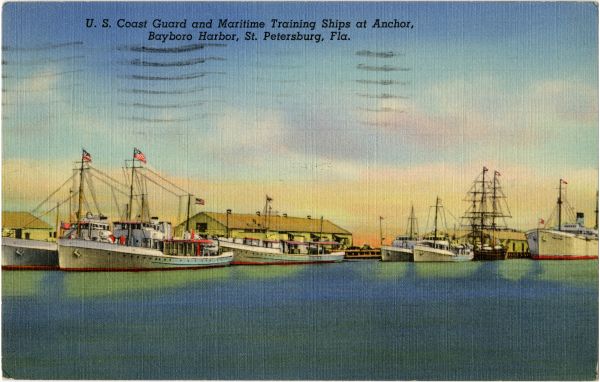
1940Bayboro Harbor in 1940 — the deep-water port whose 1910 designation drove Old Southeast's residential development.
Florida Memory / State Archives of Florida — pc14055
 1900
1900Bayboro Harbor circa 1900, before C.A. Harvey's Bayboro Investment Company platted the surrounding land that became Old Southeast.
Florida Memory / State Archives of Florida — c672103b
 1925
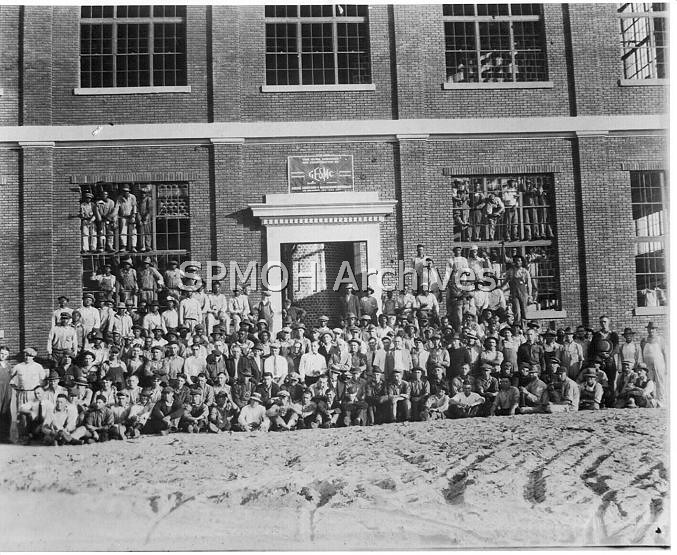
1925Bayboro Power Plant in 1925 — the kind of industrial neighbor that shaped the south edge of Old Southeast through the boom years.
St. Petersburg Museum of History — p07754
 1900
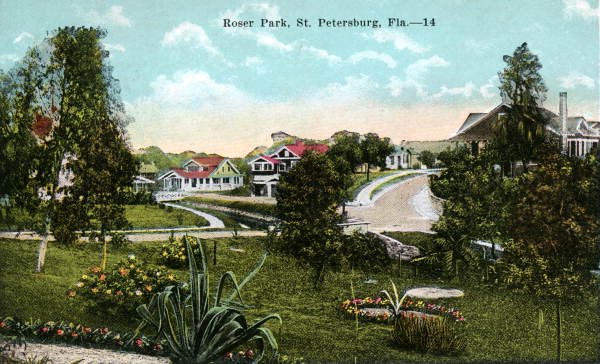
1900Pre-1910 St. Pete dwellings — the same Folk Vernacular and Queen Anne cottage typology that the city's design guidelines document specifically in Old Southeast.
Florida Memory / State Archives of Florida — pc5631
 1900
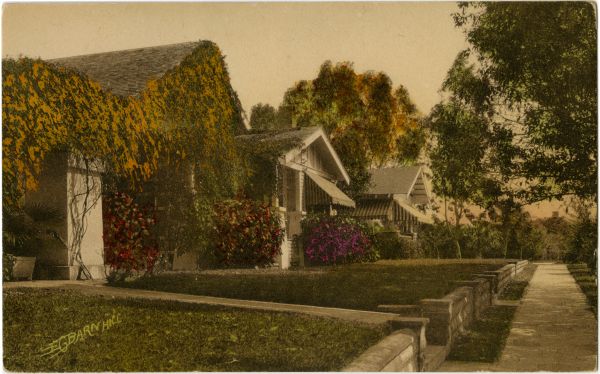
1900Early St. Pete homes from the same era and area as the oldest surviving Old Southeast cottages.
Florida Memory / State Archives of Florida — pc13350
 1900
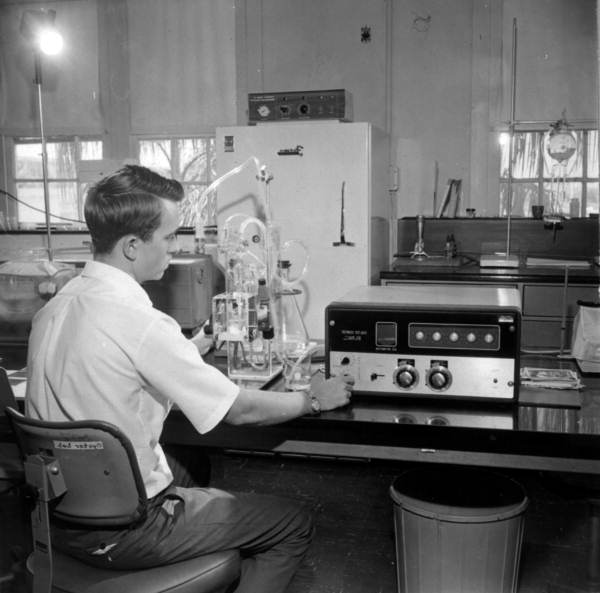
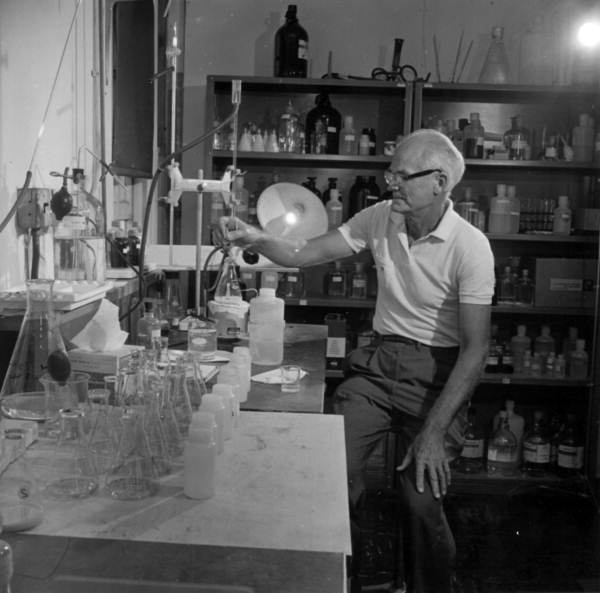
1900Bayboro Harbor scientific work circa 1900 — the harbor's institutional and research uses ran in parallel with the residential development of Old Southeast.
Florida Memory / State Archives of Florida — c672124b
Commute Times
Click any destination to see the mapped route with real-time traffic estimates.
Pros & Cons
The Pros
- Entry pricing into a true historic St. Pete neighborhood — bungalows still exist in the $500s-$700s
- Folk Vernacular and Queen Anne cottages here are documented by the city and rare or absent in other neighborhoods
- Original colored hex-block sidewalks protected by the 1994 Hex Block Overlay District
- Lassing Park — 12.5 acres of bayfront greenspace at the end of the block, with active living-shoreline restoration
- Walk to Downtown St. Pete and the Innovation District (USF St. Pete, Poynter Institute) in about 20-25 minutes
- Less Airbnb pressure and tourist traffic than Old Northeast or Beach Drive blocks
- Artist Enclave designation supports a real residential creative scene (one of only two in St. Pete)
- Strong, active neighborhood association (OSNA) with regular events and the Artist Studio Tour
The Cons
- Eastern blocks along Beach Dr SE and near Lassing Park sit in flood zone AE — Helene's 6.3-ft surge reached here
- Most homes are wood-frame and pre-1940 — knob-and-tube wiring, cast-iron drains, and old galvanized supply lines are common surprises
- Block-by-block condition variation is real — a renovated bungalow can sit two doors from a tear-down
- Significant gentrification pressure in recent years; long-time residents and affordability advocates have raised real concerns
- Salt Creek industrial-zone redevelopment ($44M+ investment underway) will reshape the south edge — opportunity and uncertainty
- No major grocery within walking distance — you'll drive for most errands
- The Hex Block Overlay protects sidewalks but not buildings — there is no architectural review on home exteriors here
What You Need to Know
Who Should Live Here
Buyers who want genuine historic character — Craftsman bungalows, Folk Vernacular cottages, mature trees, brick streets, hex sidewalks — without paying Old Northeast or Snell Isle prices. Strong fit for creatives (the Artist Enclave designation is real), bay walkers and dog people who'll use Lassing Park, and buyers who'd rather have a quieter, more residential feel than the Beach Drive crowd. Not the right fit for buyers who need new construction, a fully turnkey home, or a neighborhood with an architectural review board policing what gets built next door.
What to Watch For
Flood-zone diligence is the single biggest item. The eastern blocks near Lassing Park and along Beach Drive SE are in AE; the inland blocks west toward 4th Street are in X. Helene reached the bay-side blocks in September 2024 — verify the elevation certificate on the specific lot, get the actual insurance quote in writing before you go under contract, and assume any wood-frame home over 80 years old needs a thorough inspection of the foundation, electrical (knob-and-tube hides in plaster walls), plumbing (cast iron and lead are common), and roof. The Hex Block Overlay protects sidewalks, not structures — so unpermitted exterior work won't follow you the way it would in Roser Park, but it also means the lot next door has fewer rules constraining what gets built.
What to Expect
Brick streets in pockets. Hex-block sidewalks tinted in original colors that nobody else in St. Pete has. Folk Vernacular cottages, Craftsman bungalows, and mid-century homes mixed on the same block. Mature live oaks, tropical landscaping, and a neighborhood association that runs Plant Swaps at the Chattaway, Holiday Markets, and an annual Artist Enclave Studio Tour. Walk to Lassing Park for sunrise. Walk to downtown for dinner. A neighborhood that feels like a quieter, more bohemian version of St. Pete from a hundred years ago — and one that's clearly in transition right now.
Aaron's Honest Take
Aaron & Aubrey Chand
Living in St. Pete · Excellecore Real Estate
Here's what I tell buyers who ask me about Old Southeast: this is the neighborhood you buy when you want the historic St. Pete character but you're not willing to pay the Old Northeast premium. The architecture documented here is genuinely rare — Folk Vernacular cottages and Queen Anne cottages from before 1910 are styles the city's design guidelines say barely exist anywhere else. You're getting bungalows from the 1920s land boom, mid-century homes from after the bust, and the only colored hex-block sidewalks in the city. The walk to downtown is real — about 20 to 25 minutes — and very pleasant. The walk to Lassing Park and the bay is even shorter.
The honest cons: the flood-zone reality near the bay is exactly what you'd expect. Helene's 6.3-foot surge reached the eastern blocks in September 2024. Beach Drive SE and the streets right around Lassing Park are in AE — get the elevation certificate, get the insurance quote, do not skip this part. Inland the blocks transition to X and the math gets a lot more comfortable. Most homes here are 80-plus years old and built when wood-frame was the standard, which means knob-and-tube wiring, cast-iron drains, and old plumbing are real maintenance items that can run $5K to $30K each. None of it is a dealbreaker if you go in eyes-open.
The other thing buyers should know is that Old Southeast is in transition. The Hex Block Overlay protects the sidewalks but not the buildings, so the architectural rules are softer than Roser Park or Mirror Lake. That means more flexibility if you want to renovate aggressively, and less protection from a neighbor doing the same. There's also $44 million in Salt Creek redevelopment moving the industrial south edge of the neighborhood — that's going to reshape the area over the next five years. We've helped over 50 buyers relocate to Tampa Bay in the past couple years, and Old Southeast is the neighborhood I send buyers to when they want historic St. Pete on a bungalow budget and they're comfortable with the trade-offs. If you want everything settled and protected, look at Roser Park. If you want everything turnkey, look elsewhere. If you want the real neighborhood at the real price, this is it.
The Buying Reality
~30-45 days for fairly-priced homes; well-renovated bungalows under $750K can go in under three weeks
Moderate — typically 6-12 active listings across the ~500-home neighborhood
Common on renovated bungalows under $750K and on any home a block or two from Lassing Park
Get pre-approved before you tour. Line up insurance quotes with the elevation certificate before you write the offer — bay-side AE quotes can swing $3K-$8K and change what the home actually costs to own. Don't ask for credits on cosmetic items in pre-1940 homes; sellers expect cosmetic compromise here. On waterfront-adjacent blocks, write with the flood-zone risk priced in rather than negotiated after.
Schools & Zoning
Magnet Options
Private / Independent
Pinellas County operates a controlled-choice attendance system, so zoned schools are one factor among several and magnet placements don't depend on neighborhood. Most Old Southeast buyers using public schools end up at one of the magnets — particularly Bay Vista Fundamental for elementary, the Hopkins Middle journalism magnet, or Lakewood High's Center for Advanced Technologies. Verify current zoning at pcsb.org/zone with the specific address before you write the offer.
Insurance & Maintenance Reality
Pre-War Home Considerations
Insurance for an Old Southeast home is its own conversation — start it before you make an offer, especially east of about 14th Street SE. Carriers will require a 4-point inspection (roof, electrical, plumbing, HVAC) and a wind-mitigation report. Roof age matters most: anything over 15 years on a wood-frame home will narrow your carrier options sharply, and over 20 years can become uninsurable through standard markets.
The AE blocks near Lassing Park and Beach Drive SE require flood insurance, and post-Helene the rates have moved meaningfully. Get a quote in writing — both windstorm/HO3 and a separate flood policy — before you go under contract. The elevation certificate is the single document that determines flood-rate variation between blocks, sometimes by a factor of two or three. Inland blocks west toward 4th Street sit in X and don't require flood insurance, though many buyers still carry a low-cost X-zone flood policy after Helene's reach surprised the region.
The most common surprises specific to Old Southeast: knob-and-tube wiring still hiding behind plaster walls in unrenovated Folk Vernacular and 1920s bungalows, cast-iron drain lines reaching the end of their service life, original cloth-wrapped supply lines, original wood pier foundations needing sistering or shimming, and active galvanized water mains under century-old yards. None are dealbreakers, but each can add $5K-$30K to a renovation budget. Talk to a contractor experienced with pre-war wood-frame homes before you fall in love with one.
Storm Impact: Helene & Milton
Old Southeast came through Helene meaningfully harder than Roser Park or inland districts but better than Shore Acres, Snell Isle, or the Old Northeast east blocks. The eastern half of the neighborhood — Beach Drive SE, the streets within two blocks of Lassing Park, and the lowest blocks south toward Salt Creek — saw storm-surge flooding into yards and ground-floor living spaces. The western half toward 4th Street sat above the surge and stayed largely dry. Milton came through inland two weeks later as a wind event for this neighborhood, with no significant additional surge.
Hurricane Helene
Sep 2024September 26, 2024. The 6.3-foot St. Pete storm-surge record reached Lassing Park and the Beach Drive SE blocks. Living-shoreline mitigation work that had been underway since 2021 took serious damage and the park is still recovering — over 20 feet of shoreline loss accumulated at the northern end across multiple storms and sea-level rise. Homes immediately along Beach Drive SE saw water in finished living spaces; homes a block or two inland generally saw water in yards and crawl spaces but not interior. Wind damage was typical: downed limbs, some roof damage on older homes, scattered fence loss.
Hurricane Milton
Oct 2024October 9, 2024. Came through inland from the south two weeks after Helene; no significant additional storm surge to Old Southeast. Wind-driven rain and roof damage on already-stressed roofs were the main events. Some homes that had drying out underway from Helene took secondary water intrusion through compromised roofs.
Blocks to Watch
Beach Drive SE between roughly 14th Ave SE and 22nd Ave SE; the 1900-2200 blocks along the bay; properties immediately west of Lassing Park; and lower blocks adjacent to Salt Creek on the south edge. Verify the specific elevation certificate before purchasing on any of these blocks. The further west and the higher the elevation certificate, the better the post-storm position.
Tax & Preservation Incentives
Historic District Status
Old Southeast is not a full local historic district. Instead, the city's Old Southeast Hexblock Sidewalk District (designated August 1994) is an overlay district that protects the colored hexagonal-block sidewalks — not building exteriors. There is no Certificate of Appropriateness review on home renovations here. The neighborhood is also designated as an Artist Enclave Overlay District (2014) — one of only two in St. Pete — which permits residents to operate home studios, galleries, and instructional spaces.
10-Year Ad Valorem Exemption
The city's 10-year ad valorem tax exemption on approved historic renovations is not directly available here in the same way it is in Roser Park, Mirror Lake, or designated Old Northeast/Kenwood sub-sections, because Old Southeast is not a local historic district. Individual properties listed on the local register or eligible historic-property designations may qualify case-by-case — verify with the city's Historic Preservation Division before relying on this for budgeting.
Federal 20% Rehab Tax Credit
The federal 20% Historic Rehabilitation Tax Credit applies only to income-producing certified historic structures within National Register listings or otherwise designated as certified historic. Old Southeast does not currently sit inside a National Register district, so this credit is generally not available for typical Old Southeast renovations. Confirm the specific property's status with the State Historic Preservation Office before assuming eligibility.
If tax incentives are central to your buying thesis, Roser Park, Mirror Lake, Granada Terrace, and the Kenwood/Old Northeast sub-districts are the better fits — Old Southeast's protections are real but narrower (sidewalks and artist-use, not building exteriors). The flip side: fewer rules means more renovation flexibility.
Community & Events
OSE Artist Enclave Studio Tour & Market
Annual (most recent: October 2025)
Self-guided tour of more than a dozen Old Southeast artists exhibiting in their studios and residences — painters, potters, printmakers, sculptors, and wood turners. The signature event of the Artist Enclave designation.
OSNA Plant Swap & Raffle
Annual
Annual plant exchange where neighbors swap cuttings and garden items. Hosted at the historic Chattaway restaurant with complimentary breakfast — a fixture of the neighborhood's calendar.
OSNA Summer Social
Annual (summer)
Neighborhood picnic with potluck sides, raffle prizes, and bay views. One of the year's bigger gatherings.
OSE Holiday Market & Holiday Party
Annual (December)
Artist Enclave Holiday Market plus the OSNA Holiday Party — food, raffle, Santa visit, and neighborhood fundraising.
Polish American Society 'Thirsty Thursdays'
Weekly
A multi-decade Old Southeast tradition at the Polish Club on Beach Drive SE — Polish food, the original 1956 floating dance floor, and provincial-costume artwork lining the walls.
What Residents Are Saying Online
Pulled from City-Data Tampa Bay Forum and Trulia neighborhood reviews. Residents consistently call out three things: an artistic, multicultural community that feels distinct from the rest of St. Pete; Lassing Park as the daily anchor (sunrise walks, dogs, paddling); and a real, honest awareness of flood-zone variation between bayfront and inland blocks. Honest cons mentioned include cars speeding through residential streets, parking pressure during parties, and the fact that the bayside bench at low tide isn't really a beach in the gulf-side sense.
“I love Old SE. It's an interesting community of artists, activists, etc.”
“Old SE is not necessarily in a flood zone.”
“SE OR NE would be in a flood zone.”
“Lassing park does have a beach of sorts at lowtide for paddlers but it's not really a great beach like the gulf ones.”
“Lassing Park has a small beach.”
“Lassing Park is one of my favorite hidden gems for a sunny day outside.”
Further Reading & Resources
Civic & Preservation
City of St. Petersburg — Historic Preservation Program
Official city .gov page for historic preservation in St. Pete — local register, overlay districts, Certificate of Appropriateness.
St. Petersburg Register of Historic Places (PDF)
City PDF listing all 11 local historic districts plus the Old Southeast Hexblock Sidewalk District as the city's overlay district (designated August 1994).
Lassing Park — Waterfront Parks Foundation
Background on Lassing Park, its 1924 Judge Lassing donation, the 12.5-acre footprint, and the Living Shoreline restoration work.
Lassing Park's Living Shoreline (City of St. Pete)
City press release on the joint City of St. Pete / Tampa Bay Watch shoreline restoration project at Lassing Park.
Preserve the 'Burg
Local historic preservation nonprofit — advocacy, design assistance, and citywide preservation context.
Journalism
St Pete Catalyst — A Vintage 1924 Home in Old Southeast
Real-estate feature on a $3.25M restored 1924 home overlooking Lassing Park — a useful comp for a fully-restored bayfront-block bungalow.
St Pete Catalyst — Old Southeast bungalow for sale ($1.08M)
Feature on the 104 22nd Ave S 1940 bungalow renovated 2024 — $265K (2020) to $1.08M list (2025) is a useful gentrification-curve data point.
St Pete Catalyst — Old Southeast home fetches $1.28M
Feature on the 501 22nd Ave SE 1957 mid-century home with bay and downtown views — closed at $1.28M.
St Pete Catalyst — Will Salt Creek redevelopment alter St. Pete dynamics?
August 2025 long-form on the $44M Salt Creek industrial-zone redevelopment in Old Southeast — Class A office, marine-use tension, and what it changes for the neighborhood.
St Pete Catalyst — Polish Club Seeks Landmark Designation on its 70th Anniversary
October 2021 piece on the Polish American Society's 1956 Beach Drive SE building, founding story, and landmark application.
St Pete Catalyst — Vintage St. Pete: The Chattaway
History of the Chattaway at 4th & 22nd Ave S — built early 1920s as a general store, became the Chattaway in the 1930s, and serves as Old Southeast's anchor restaurant.
Creative Loafing — Polish American Society's Thirsty Thursdays
Photo essay on the Polish Club's weekly tradition — long-form context on a multi-decade Old Southeast institution.
San Pedro Gazette — Lassing Park: A Hidden Gem in Old Southeast St. Pete
June 2025 feature on Lassing Park — 14.2 acres of greenspace, dog-friendly, sunrise views, and the kind of detail that makes the bay side of Old Southeast distinctive.
Tampa Bay Times — Neighborhood Spotlight: Old Southeast
1996 archival neighborhood profile from the Tampa Bay Times — primary-source historical reference.
Southern Spaces — Draining Paradise: A Tour of Salt Creek
Long-form 2023 academic/journalistic piece on Salt Creek's history including its bootlegging-era role and the 'Thrill Hill' humpback bridge that connected Old Southeast.
Neighborhood Association
Old Southeast Neighborhood Association (OSNA)
The neighborhood's official volunteer-run nonprofit — events, history, the Artist Enclave, and how to get involved. Active and well-run.
OSNA — About / History
Detailed neighborhood history page — Bayboro Investment Company, C.A. Harvey, Lassing Park, hex sidewalks, and the Artist Enclave designation.
OSE Artist Enclave
The Artist Enclave Overlay District page — 2014 designation, eligible artist categories, $10 annual membership, Studio Tour information.
Old Southeast Living Shoreline Restoration (OSNA)
Updates on the multi-year Lassing Park living-shoreline project led by Tampa Bay Watch and the City of St. Pete.
What's Nearby
Lassing Park
0.2 mi (in district)
The Chattaway
0.3 mi (in district)
Polish American Society
0.3 mi (in district)
Salt Creek / Salt Creek Marina
0.4 mi
Bayboro Harbor / Innovation District
0.7 mi
USF St. Petersburg
0.7 mi
Downtown St. Pete waterfront
1.0 mi
The St. Pete Pier
1.4 mi
Saturday Morning Market (Al Lang Stadium / Williams Park)
1.0 mi
Al Lang Stadium / Tampa Bay Rowdies
0.9 mi
Beach Drive restaurants
1.5 mi
St. Pete Beach
9 mi
Elevation & Flood Risk
12ft average elevation
FEMA Flood Zone AE near Lassing Park and the bay, X further inland — flood insurance required
Thinking about Old Southeast?
We've helped over 50 buyers relocate to Tampa Bay. Let's talk about whether Old Southeast is the right fit for you.
Explore more neighborhoods
View All in Relocation Guide