Historic Old Northeast
St. Pete's Crown Jewel — With a Flood Caveat
Platted 1911 by C. Perry Snell & J.C. Hamlett
Established
North Shore Historic District, listed Feb 20, 2003 (NRIS 03000040)
National Register
~425 acres, ~3,000 historic buildings — one of two largest NR districts in Florida
District Size
Granada Terrace (1988), 700 Block 18th Ave NE (2017), 200 Block 10th Ave NE (2017), Welch's Mediterranean Row (2018)
Local Historic Districts (within)
Block-by-block — X inland, AE near North Shore and Coffee Pot Bayou
Flood Zone
78 — walk to downtown, the Pier, and waterfront parks
Walk Score
Neighborhood Overview
Historic Old Northeast is the neighborhood most people picture when they imagine St. Pete: brick-paved streets, hexagonal-block sidewalks, mature oaks dripping in Spanish moss, and 1920s bungalows on tree-lined corners. Platted in 1911 by C. Perry Snell and J.C. Hamlett, the district covers about 425 acres and roughly 3,000 historic buildings — making it one of the two largest National Register historic districts in the entire state of Florida. It has been St. Pete's prestige address for more than a century, and the prices reflect it: median values run around $1.4M, with renovated bungalows trading in the $700K-$1.2M range and waterfront homes regularly clearing $2M-$5M+.
But here's what we tell every relocation buyer post-Helene: a meaningful portion of Old Northeast sits in flood zone AE, and on September 26, 2024, Hurricane Helene brought a 6.3-foot storm surge to St. Petersburg — more than two feet higher than any prior recorded surge. The lower-elevation streets near North Shore Park, Coffee Pot Bayou, and the southern Bayshore blocks took on water. Insurance costs in those blocks have jumped, and FEMA's Risk Rating 2.0 has moved the math meaningfully on pre-1975 wood-frame homes near the water. This isn't a deal-breaker — but it is the conversation you have to have before you write an offer.
The good news is Old Northeast isn't a single uniform flood zone. Once you move inland past 4th Street, elevation rises and Zone X starts. The eastern half is harder: the closer you get to the bay, the more carefully you need to evaluate elevation, foundation, post-FIRM construction, and the actual updated insurance quote (not the seller's last bill — those numbers are stale). Plenty of buyers still buy here happily, and the long-term appreciation case for Old Northeast remains one of the strongest in the city. They just go in eyes-open about which streets flood and which don't.
History & Origins
Platted 1911
C. Perry Snell & J.C. Hamlett (with later phases by Snell alone, including Granada Terrace in 1924)
Florida Land Boom (1911-1929) with significant infill through the 1940s
C. Perry Snell arrived in St. Petersburg from Bowling Green, Kentucky in 1899 and partnered with J.C. Hamlett to plat 'North Shore' in 1911 — the city's first deliberately planned upscale residential subdivision. Snell's strategy was patient and ambitious: he extended the streetcar line through the neighborhood at his own expense, built the seawall along the bay, and deeded the waterfront park at 13th Ave N to the city — knowing that municipal park frontage would push lot values sky-high. The original deed restrictions required a minimum $5,000 house, prohibited livestock, and dictated home orientation. They also included explicit racial exclusions (no longer enforceable, but part of the historical record). Marketing pitched 'nothing but desirable residents.' Over the next 40 years Snell would also develop Mirror Lake, Granada Terrace, and Snell Isle, making him the single most consequential figure in St. Pete's residential identity.
The neighborhood developed in clear phases. The southernmost blocks — 5th to 9th Avenue, sometimes called 'Bayshore' — were platted with narrower 45-foot lots for early-1910s homes. From 9th to 22nd Avenue, lots widened to about 60 feet and the homes got bigger as the 1920s land boom hit full stride. The 22nd to 30th Avenue stretch filled in later, often with 1930s and 1940s infill. Granada Terrace, Snell's curated enclave on the west side of Coffee Pot Bayou, was platted in February 1924 with deed restrictions mandating Mediterranean Revival style — Plaza Andalusia and Plaza Valencia were designed into the street plan as public circular plazas, which is almost unheard of in American residential development. The very first spring training game in St. Pete was played in 1914-1915 on a baseball field Snell built where Granada Terrace now stands; in 1915 the Cubs came, every business in town closed for Opening Day, and the streetcar ran riders straight up to the field.
By the time the 1926 land bust hit, most of Old Northeast's significant homes were already standing. The neighborhood weathered the Depression and World War II as one of St. Pete's stable wealth pockets, and started picking up local recognition as 'Old Northeast' — not its original name — in the post-war decades. Granada Terrace became St. Petersburg's second locally-designated historic district in April 1988 (Roser Park was first, in 1987). The full 425-acre North Shore Historic District was added to the National Register on February 20, 2003 (NRIS 03000040), with 2,975 contributing buildings. Three additional one-block local historic districts have since been carved out within the larger neighborhood — the 700 Block of 18th Ave NE (2017), the 200 Block of 10th Ave NE (2017), and Welch's Mediterranean Row on the 100 block of 19th Ave NE (2018). Plus more than ten individually designated landmark properties scattered throughout.
Architecture & What You'll Be Buying
Predominant Styles
Typical Year Built
1910-1945 (period of significance), with 1923-1928 boom-era construction the heart of inventory
Typical Size
1,400-3,200 sq ft on lots running 45-60 ft wide (5th-9th narrower; 9th-22nd wider) and 100-127 ft deep
Construction
Mostly wood frame on pier-and-beam foundations through the 1920s, with hollow-tile and stuccoed masonry on the larger Mediterranean Revival and Georgian homes. Many original homes still have heart-pine floors, plaster walls, fireplaces, and screened porches. Garages are typically detached and accessed off rear alleys; many homes have ADUs, carriage houses, or 'garage apartments' built during St. Pete's tourist-economy era. Original brick streets and hexagonal-block sidewalks are protected city-wide assets — in 1941 St. Pete had ~339 miles of red brick streets; only about 81 miles remain, much of it in Old Northeast.
Materials & Streetscape
Wood frame with clapboard or shingle siding (most common), stucco over hollow tile (Mediterranean Revival), brick veneer (Colonial Revival, Georgian). Ludowici tile roofs survive on several Old Northeast homes — same Italian-family-made tile used on the Pennsylvania State House and the Plaza Hotel. Granada Terrace adds rolled clay Spanish tile, wrought iron, balconettes, arched loggias, and the locally-made Magnesite Stucco found on a handful of 1929 homes.
Pockets Within the Neighborhood
Granada Terrace
C. Perry Snell's curated enclave on the west side of Coffee Pot Bayou — platted February 1924, designated a local historic district in April 1988 (St. Pete's second, after Roser Park). Mediterranean Revival mandate originally written into the deeds. Curvilinear streets, Plaza Andalusia and Plaza Valencia public circles, pergola features along 23rd Ave NE and Coffee Pot Blvd. About 67 houses today.
What sets it apart: Architectural unity. ~51% Mediterranean Revival, ~39% mid-century, ~6% Tudor, ~4% Colonial Revival per the city's design guidelines. The most photographable streetscape in the city, and the most consistent. If you want a true Mediterranean Revival on a curved street with a fountain plaza, this is the eight-block radius to look in.
Welch's Mediterranean Row LHD (100 block, 19th Ave NE)
Designated a local historic district in April 2018 — a single block of 1920s Mediterranean Revival homes by builder Thomas Welch. Tucked just north of Sunken Gardens.
What sets it apart: One of the most architecturally consistent one-block districts in the city. The kind of place you stumble into on a walk and stop to look at every house.
700 Block 18th Ave NE LHD
Designated March 2017 — a one-block local historic district protecting an exceptionally intact run of 1920s craftsman bungalows and airplane bungalows.
What sets it apart: If you buy here, your block is permanently protected from teardowns. Trade-off: any exterior change requires Certificate of Appropriateness review.
200 Block 10th Ave NE LHD
Designated November 2017 — another one-block district inside the broader Old Northeast National Register district.
What sets it apart: Concentrated 14-house block of high-integrity 1920s homes. Same COA-review requirement applies as the other locally-designated blocks.
Bayshore (5th-9th Ave NE)
The southernmost and earliest-developed phase of Old Northeast. Narrower 45-ft lots, smaller bungalows, very close walk to downtown and the Pier. Lower elevation — significant flood zone AE exposure on the east side.
What sets it apart: Cheapest entry point into Old Northeast and best walk to downtown — but it's also the most flood-exposed slice of the neighborhood. The diligence has to be sharper here than anywhere else in the district.
17th & 18th Avenue NE — 'Halloween Central'
The two blocks that go full Hollywood for Halloween every year. Residents on 17th Ave NE between Cherry and Poplar pull a permit to shut the street down; 18th Avenue rivals them but doesn't always get the permit. As many as 2,000 trick-or-treaters arrive on October 31.
What sets it apart: A neighborhood institution — and a tell about what the social fabric here actually is. If you want a quiet Halloween, don't buy on these blocks. If you want to be part of one of the most legendary neighborhood traditions in Tampa Bay, you've found it.
Notable Homes & Landmarks
1311 Beach Drive NE — 'Wedding Cake House'
Built 1923
One of Old Northeast's most-photographed homes, with distinctive tobacco-leaf stucco detailing that gives it the 'wedding cake' nickname. Designed by Henry Taylor Wendell — the same architect responsible for the Fenway Hotel in Dunedin. The home was almost demolished in the 1990s before being saved and restored.
Original ownership ties to St. Pete's land boom social fabric; the home has cycled through several stewardship-minded owners since the late-1990s save.
106 23rd Ave NE (Granada Terrace)
Built 1929
Mediterranean Revival with a notable domed tower — eight rooms, two baths, a two-car garage, on a 61x100 lot plus a 20-foot water lot on Coffee Pot Bayou with yacht mooring. The exterior is finished in Magnesite Stucco, an unusual cement-free material manufactured in St. Pete only during 1929 (calcined ground marble, asbestos, sand, and magnesium chloride imported from Germany). One of the photogenic anchors of Granada Terrace's local historic district.
Standing and modified as of 2021.
445 18th Ave NE
Built 1924
Built by Clarkson & Rowland for Edward Marsh Fisher — a Baldwin Wallace University-educated patent attorney who relocated from Washington DC in 1920. Construction cost $10,000 (about $185K today). Four upstairs bedrooms, two baths, a glassed sleeping porch, sun porch, oak floors, fireplace, radiator heat, maid's room, and a two-car garage. Possibly a 120x110 lot. Fisher was a 32nd-degree Mason and active in early St. Pete civic life.
Fisher died at the home in 1951.
405 18th Ave NE
Built Pre-1932
Five large bedrooms, glassed sleeping porch, three tile baths, two fireplaces, a music room, sun parlor, and corner-lot setting. Home of Alfred Ferdinand Thomasson (1868-1950) — VP of Central National Bank (1913-1930), three-time City Commissioner, and St. Pete City Manager from 1935-1937 during the worst of the Depression-era recovery. His wife Alice was a Belmont and Cincinnati Conservatory-trained singer who founded the St. Petersburg Art Club.
Thomasson family residence 1936-1951.
806 18th Ave NE
Built 1923
Single-story Airplane Bungalow — a regional Arts & Crafts variant — eight rooms with rubble-brick porch columns and chimney. Built for $10,000. The home anchors what is now the 700 Block of 18th Ave NE Local Historic District (designated March 2017), an entire block protected for its architectural integrity. Long-term Sam McFall ownership (1931-1958, 27 years).
Sam McFall — Akron, Ohio native who became superintendent at Robinson Clay Products by age 33 and later owned Universal Sewer Pipe Corporation.
Then & Now
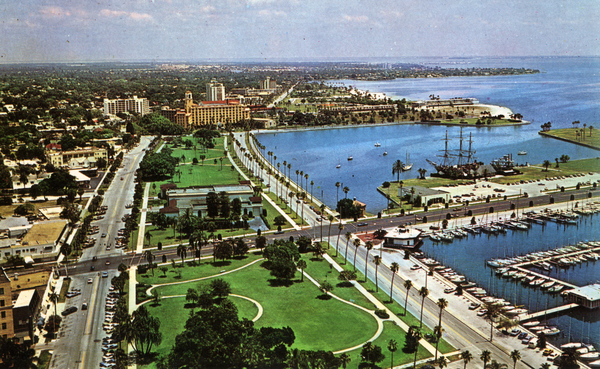
c. 1900Bayshore Drive looking north — the future Old Northeast waterfront before Snell platted the neighborhood in 1911.
Courtesy of State Archives of Florida, Florida Memory. fm_pc11958.
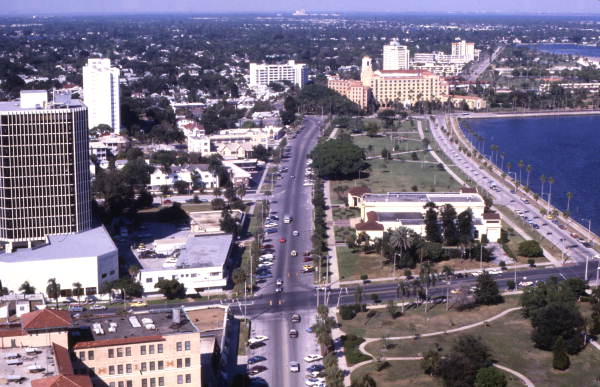 c. 1970
Looking north over Waterfront Park toward the Vinoy — Old Northeast's southern boundary as it appeared in 1970.
Courtesy of State Archives of Florida, Florida Memory. fm_k024078.
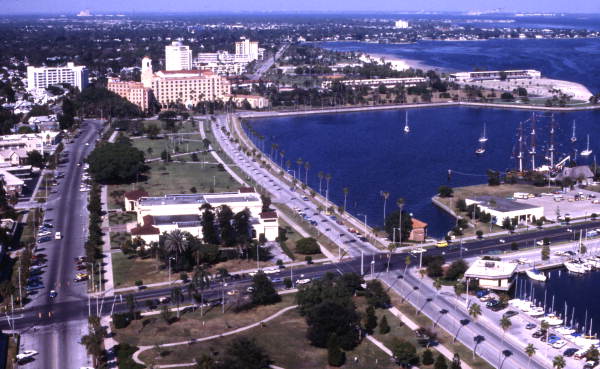 c. 1970
Bayshore Drive at the Vinoy, 1970 — the southernmost stretch of Old Northeast where the neighborhood meets downtown.
Courtesy of State Archives of Florida, Florida Memory. fm_k024057.
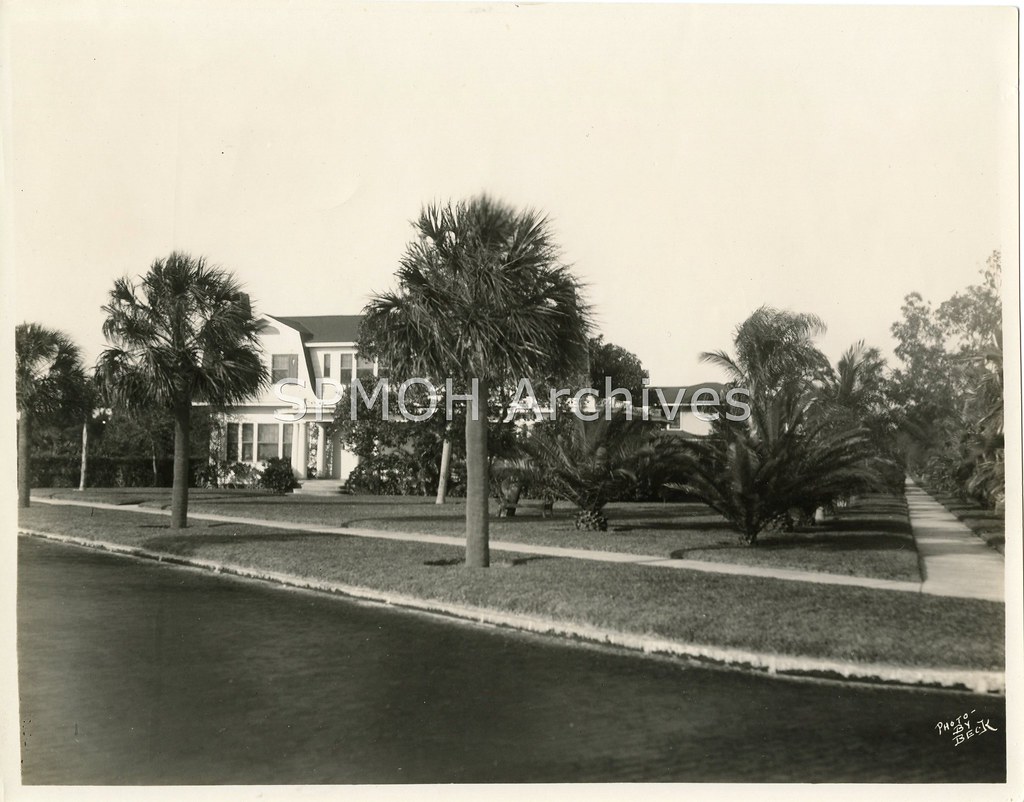 c. 1935
A North Shore Drive residence circa 1935 — typical of the eastern-edge homes that fronted on the bay.
Courtesy of St. Petersburg Museum of History Archives, photo no. p00474.
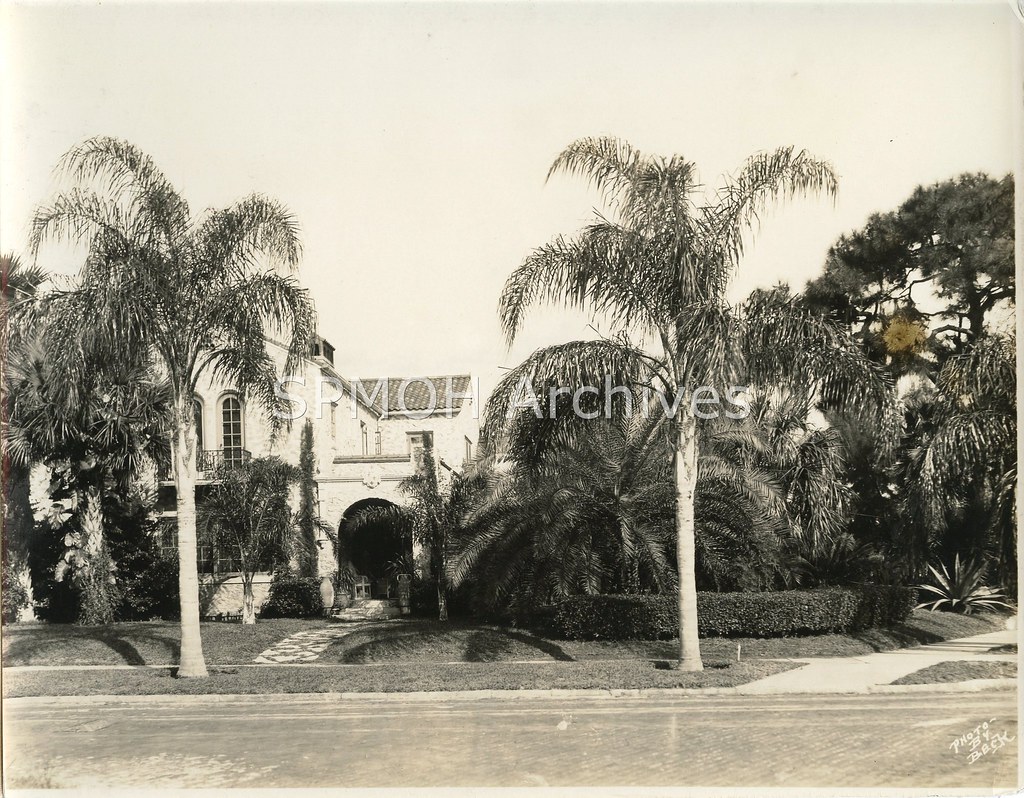 c. 1930
A Beach Drive house circa 1930 — the kind of large 1920s-era residence that anchors the southern blocks of Old Northeast.
Courtesy of St. Petersburg Museum of History Archives, photo no. p00462.
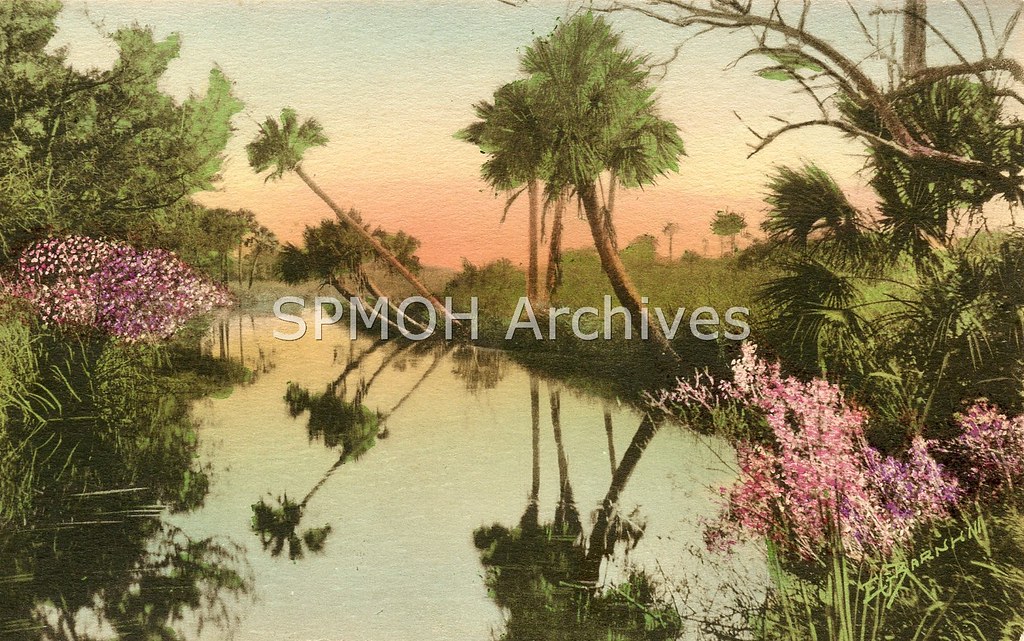 1910-1932
Coffee Pot Bayou — the eastern boundary of Old Northeast and the namesake for Granada Terrace's curated frontage.
Courtesy of St. Petersburg Museum of History Archives, photo no. 40_9_970.
Commute Times
Click any destination to see the mapped route with real-time traffic estimates.
Pros & Cons
The Pros
- One of two largest National Register historic districts in Florida — ~3,000 historic buildings on 425 acres
- Walk to downtown St. Pete, the Pier, North Shore Park, Vinoy Park, and Beach Drive restaurants
- Brick streets, hexagonal sidewalks, granite curbs, and a continuous mature oak canopy
- Most architecturally diverse historic neighborhood in the city — Mediterranean, Craftsman, Colonial Revival, Prairie, Tudor, Georgian all on the same blocks
- Granada Terrace and four block-level local historic districts protect the most significant streetscapes
- Active Historic Old Northeast Neighborhood Association (HONNA, est. 1974) — Candlelight Tour of Homes, monthly porch parties, July 4th parade, legendary Halloween, Easter egg hunt
- Coffee Pot Bayou waterfront walk, manatee sightings in cooler months, two-mile path to Snell Isle bridges
- Long-term appreciation has been among the strongest in the city — historic districts in St. Pete grew 119% over 14 years vs 85% citywide
The Cons
- Significant portions of the eastern half are in flood zone AE — Helene's 6.3-foot surge took on water in lower-elevation blocks
- Insurance costs are elevated, especially on pre-1975 wood-frame homes near the bay; FEMA Risk Rating 2.0 has driven quotes 20-70% higher in some AE blocks
- Most homes are 80-110 years old wood frame — 4-point inspections required, knob-and-tube wiring and cast-iron drains still hiding in unrenovated homes
- Million-plus pricing across most of the district; under $700K buys very little, usually a project bungalow
- Within Granada Terrace and the four block-level local districts, exterior changes require Certificate of Appropriateness review through the CPPC
- Tight lots, mostly detached/alley garages, limited on-site parking — this is an urban historic neighborhood, not suburban
- Halloween night, holiday tour weekend, and 4th of July parade days can be a parking and traffic nightmare for residents
What You Need to Know
Who Should Live Here
Buyers who want the prestige St. Pete address, who value walkable historic character over square footage, and who are financially equipped to absorb higher insurance and maintenance costs on an older wood-frame home. Best for buyers willing to pay up for location and willing to do real flood-zone diligence on the specific block. Old Northeast also rewards buyers who want to plug into a neighborhood — the porch parties, the Candlelight Tour, the 4th of July parade, the Halloween extravaganza on 17th and 18th. If you want a quiet, anonymous suburban experience, Allendale or Disston Heights will fit you better. If you want a 1920s home you can walk out of and be downtown in fifteen minutes, this is it.
What to Watch For
Block-by-block flood zone variation. The street north of yours might be in Zone X while you're in AE, and the elevation drop from 4th Street to the bay is real. Get the elevation certificate, get the FEMA flood map for the specific lot, get the actual updated insurance quote (not the seller's last bill — those numbers are months stale and don't reflect Risk Rating 2.0). Post-Helene, the math has changed. Also: confirm whether the home sits inside one of the block-level local historic districts (Granada Terrace, 700 Block 18th, 200 Block 10th, Welch's Mediterranean Row) — that triggers Certificate of Appropriateness review on any exterior change. If you're buying for full renovation, that review can add weeks and constrain materials.
What to Expect
1910s-1940s craftsman bungalows, Mediterranean Revivals, the occasional Tudor or Georgian, and a smaller share of mid-century infill from the 1950s-60s. Most have been renovated at least once, but the depth of the renovation varies wildly — some homes still have original heart-pine floors, plaster walls, fireplaces, and knob-and-tube wiring all in the same room. Lots are tight, garages are rare and usually detached off rear alleys, and many homes have ADUs or carriage houses. You'll meet your neighbors — Old Northeast is a front-porch neighborhood with active block-level traditions and a strong neighborhood association going back to 1974.
Aaron's Honest Take
Aaron & Aubrey Chand
Living in St. Pete · Excellecore Real Estate
Here's what I tell every buyer who asks about Old Northeast: this is the most St. Pete neighborhood there is. The brick streets, the oak canopy, the 1920s bungalows, the walk to the Pier — it's the postcard. And the prices are the postcard prices. A renovated bungalow under $1M is a rare find, and waterfront on Coffee Pot Bayou is a $2M-$5M conversation. If you want the most-recognizable historic address in St. Pete, you're going to pay for it. The good news: this neighborhood holds value through cycles better than almost anywhere else in the city. Place Economics' study put historic-district appreciation at 119% over 14 years versus 85% citywide. Old Northeast is the biggest historic district in that data set.
The honest part of this conversation is the flood zone. Old Northeast is not Roser Park — it doesn't sit on a bluff. A meaningful portion of the eastern half is in flood zone AE, and Helene's 6.3-foot surge got into homes near North Shore Park, Coffee Pot Bayou, and the southern Bayshore blocks. The closer you get to the water, the more carefully you need to evaluate elevation, foundation type, and the actual insurance quote — not the seller's last bill. FEMA's Risk Rating 2.0 has changed the math, and a 1930 wood-frame home a block off the bay is a different financial conversation than the same home four blocks inland. We've helped over 50 buyers relocate to Tampa Bay, and the Old Northeast diligence is more block-specific than any other neighborhood we work in. Flip side: the western blocks past 4th Street climb into Zone X. Plenty of buyers go in eyes-open, pick the right block, and never look back.
Last thing. If you're buying inside Granada Terrace or one of the four block-level local historic districts, you're agreeing to the Certificate of Appropriateness process on any exterior change. The CPPC takes its job seriously. Some buyers love that — it's why your neighbor can't tear down their 1925 Mediterranean and put up a stucco box. Other buyers find it frustrating. Both reactions are legitimate. The thing nobody talks about: most of Old Northeast is in the National Register district but outside any of the local block-level districts, which means honorary designation but no COA obligation on private renovations. So a buyer who wants the prestige and the long-term protection of being in 'Old Northeast' but the flexibility to renovate without architectural review can absolutely find that here. You just have to know which blocks are which.
The Buying Reality
~25-40 days for fairly-priced homes; renovated bungalows under $900K go in under two weeks
Medium — 30-60 active listings across the full 425-acre district at any given time
Common on renovated bungalows under $1M and on Granada Terrace Mediterranean Revivals at any price point
Pre-approved with cash reserves, insurance quotes lined up before you go under contract (especially east of 1st Street NE), be flexible on cosmetics, and don't ask for repair credits on cosmetic items in tight inventory. Sellers in Granada Terrace and the local-district blocks often walk from contingency-heavy offers.
Schools & Zoning
Magnet Options
Private / Independent
North Shore Elementary is the heart-of-the-neighborhood school — it's been operating since 1927 and many longtime residents are alumni. Pinellas County operates a controlled-choice attendance system, so zoning is one factor among several, and magnet placements are competitive but not zone-dependent. Shorecrest Prep is the dominant private option and sits less than two miles from the neighborhood; many Old Northeast families opt for it through middle and high school.
Insurance & Maintenance Reality
Pre-War Home Considerations
Insurance for an Old Northeast home is its own conversation — and on the eastern blocks, it's often the deciding conversation. Carriers will require a 4-point inspection (roof, electrical, plumbing, HVAC) and a wind-mitigation report on any home over 30 years old. On a pre-1975 wood-frame home in flood zone AE, you should also expect to be quoted by Citizens Insurance (Florida's insurer of last resort) more often than not — multiple Old Northeast residents on City-Data report Citizens being the only carrier willing to write the policy.
FEMA's Risk Rating 2.0 (rolled out 2021-2023) prices flood policies based on property-specific elevation, distance to water, and claims history rather than blanket zone designations. For Old Northeast, that has been a meaningful upward adjustment in AE blocks — local Tampa Bay reporting shows 20-70% premium increases on some properties post-Helene. The National Flood Insurance Program caps building coverage at $250,000 and does not cover loss-of-use (no temporary housing), which left a lot of post-Helene homeowners short on the rebuild math.
The most common insurance surprises in Old Northeast: roof age (anything over 15 years on a wood-frame home narrows your carrier list sharply, over 20 years can become uninsurable through standard markets), knob-and-tube wiring still hiding behind plaster in unrenovated homes, original cast-iron drain lines, and galvanized water mains under century-old yards. None of these are dealbreakers — but each can add $5K-$30K to a renovation budget and change which carriers will write the policy. Get the quote before you go under contract, not after.
Storm Impact: Helene & Milton
Old Northeast was one of the hardest-hit historic neighborhoods in St. Pete during Hurricane Helene (Sept 26, 2024). The 6.3-foot storm surge — more than two feet higher than any prior recorded surge at Albert Whitted Airport, breaking the August 1985 Hurricane Elena record — pushed water across North Shore Drive, Coffee Pot Bayou, and into homes on the eastern half of the district. The western blocks past 4th Street, sitting at higher elevation, saw wind damage but generally not interior flooding. This was a genuinely block-specific event and the recovery has been similarly block-specific.
Hurricane Helene
Sep 2024Catastrophic interior flooding on the lowest-elevation blocks near the bay and Coffee Pot Bayou — particularly along North Shore Drive, Bayshore Drive south of 9th Ave NE, and the eastern blocks of Coffee Pot Blvd. St. Pete Catalyst documented widespread FEMA claim denials and slow payouts. Many pre-1975 wood-frame homes hit the FEMA '50% rule' threshold, meaning repair costs exceeded 50% of depreciated market value — those homes have to be elevated to current code on rebuild, which has reshaped several blocks. Inland blocks west of 1st Street NE were largely dry inside but lost trees, fences, and roofing.
Hurricane Milton
Oct 2024Came through inland from the south two weeks after Helene (October 9, 2024). Milton's primary impact in Old Northeast was wind-driven rain and additional roof damage on already-stressed roofs. No widespread surge given Milton's track. The cumulative blow of the two storms two weeks apart compounded recovery timelines — many neighborhood Helene cleanups were still in progress when Milton hit.
Blocks to Watch
North Shore Drive (entire eastern frontage), Bayshore Drive south of 9th Ave NE, Coffee Pot Blvd south end, the eastern half of 5th-9th Ave NE, and Cherry Street's south end have AE flood zone exposure and saw water in Helene. 4th Street NE blocks generally drop into Zone X. Always pull the FEMA flood map for the specific lot — the line shifts mid-block in places.
Tax & Preservation Incentives
Historic District Status
The North Shore Historic District is on the National Register (NRIS 03000040, listed Feb 20, 2003) but most of the district is honorary federal designation only. Within the larger neighborhood, four properties are subject to local historic district COA review: Granada Terrace (designated April 1988), the 700 Block of 18th Ave NE (March 2017), the 200 Block of 10th Ave NE (November 2017), and Welch's Mediterranean Row at the 100 Block of 19th Ave NE (April 2018). Plus more than ten individually-designated landmark properties throughout the district. Local designation triggers Certificate of Appropriateness review on exterior changes through the city's Community Planning and Preservation Commission (CPPC).
10-Year Ad Valorem Exemption
St. Petersburg offers a 10-year exemption from the increase in ad valorem taxes attributable to approved historic renovations, capped at $100,000 for single-family homes. Available for properties within the locally-designated districts and individual landmarks. On a $200K renovation, this can save $3,000-$5,000 per year for a decade. The renovation must be reviewed and approved by the city's preservation staff before work begins.
Federal 20% Rehab Tax Credit
Income-producing certified historic structures (full-time rentals, true STR operations as a business, mixed-use) within the National Register district qualify for the federal 20% Historic Rehabilitation Tax Credit on certified rehabilitation expenditures. Owner-occupied primary residences do not qualify, but homes used as long-term rentals or business STRs do. The credit is taken against federal income tax liability and can be carried forward.
Both incentives require pre-approval before construction. Talk to the City of St. Petersburg's preservation planning staff (Derek Kilborn, Division Manager; Cindy Kochanek, Historic Preservationist) before pulling permits — projects done out-of-process are not eligible retroactively. Important nuance: a property can sit inside the broad National Register district while falling outside any block-level local sub-district — that means no COA obligation but also no city ad-valorem exemption eligibility. That distinction is worth knowing before you write an offer.
Community & Events
Historic Old Northeast Candlelight Tour of Homes
Annual, first Sunday in December
HONNA's signature event, going on its 27th edition. 7-8 historic homes opened to ticket-holders for a self-guided tour, paired with live holiday music and a refreshment station between 19th and 20th Avenues on Cherry Street. Tickets sell out — buy early via honna.org. Proceeds replenish the neighborhood tree canopy.
Halloween on 17th & 18th Avenue NE
October 31
The most legendary Halloween night in Tampa Bay. Residents on 17th Ave NE between Cherry and Poplar pull a permit to close the street; 18th Avenue rivals them. Estimated 2,000+ trick-or-treaters arrive each year. Decorations go up weeks in advance — themed displays, electric chairs, guillotines, full Thriller re-enactments in past years. HONNA has run a decoration competition since 1996 with 200+ households entering.
4th of July Children's Parade
July 4
Old Northeast's bike-and-stroller patriotic parade, organized by HONNA. One of the longest-running neighborhood Independence Day traditions in St. Pete.
Old Northeast Annual Yard Sale
Annual, mid-March
Sixty-plus participating homes across the entire district, with a digital map of sale addresses available on the morning of the sale at honna.org/events/yardsale. A neighborhood institution since the early 2000s.
Monthly Porch Parties
Monthly, year-round
Hosted at rotating member homes — a HONNA-organized way for neighbors to meet on each others' front porches. The phrase 'porch party' shows up repeatedly in resident reviews of the neighborhood.
What Residents Are Saying Online
Pulled from public discussion on City-Data Tampa Bay, Trulia neighborhood reviews, and post-Helene Tampa Bay Times coverage. Residents consistently call out four things: the walkability to downtown (Halloween, porch parties, the Pier, Beach Drive), the front-porch neighborly culture and HONNA's events programming, the flood-zone reality on the eastern blocks, and the genuine character of the brick streets and historic homes. Honest cons mentioned include car break-ins (urban-edge neighborhood), insurance hassles for older wood-frame homes near water, parking strain on event nights, and the price-of-entry vs. nearby Northeast Park.
“It felt incredibly safe to me when I was there over the weekend... one of the safest feeling urban neighborhoods I have come across in America.”
“Halloween on 17th and 18th ave ne is so busy and the houses go all out! It's perfect for kids and families.”
“I've lived in this neighborhood for 33 years, and it's a wonderful place to live with lots of trees, families, dogs and more. It's a 5-minute walk to the waterfront parks, and a 10 minute walk to downtown, with restaurants, museums, the new pier and lots of shops.”
“We have a wonderful Holiday tour of homes, monthly porch parties for all neighbors, Easter Egg hunt for kids, a Garden tour of homes, 4th of July neighborhood parade and celebration and an epic celebration of Halloween. These are public displays of affection by neighbors for neighbors and the community.”
“There's no parking or yard space! It's also flood evacuation zone A. If you have kids and a dog, I wouldn't recommend buying anywhere in a flood zone. Google pinellas county evacuation zones — you will see parts of st Pete where property is available to purchase outside of the flood zones. These are located on the disston ridge.”
“The only company who would insure her in that area was Citizens (the insurer of last resort). Citizens has a bad reputation because they're the insurer of last resort... have a high risk pool. This translates to high premiums and annual hikes.”
Further Reading & Resources
Civic & Preservation
City of St. Petersburg — Historic Preservation Program
Official city .gov page for design guidelines, Certificate of Appropriateness process, local register, and the COA review path through the Community Planning and Preservation Commission.
City of St. Pete — Property Owner Tax Incentives
10-year ad valorem tax exemption program for qualifying historic-district renovations within Granada Terrace and the block-level local districts.
City of St. Petersburg — Community Planning & Preservation Commission
The body that reviews historic-district renovations and Certificates of Appropriateness in St. Pete.
National Register of Historic Places — North Shore Historic District Listing
Official federal NRHP listing page for the North Shore Historic District (also known as Old Northeast), listed February 20, 2003.
NPS — North Shore Historic District NRHP Registration Form (PDF)
Original NRHP nomination document with the full architectural inventory, district boundaries, and statement of significance.
NPS — Federal Historic Preservation Tax Incentives
Federal program for the 20% Historic Rehabilitation Tax Credit on income-producing certified historic structures within the North Shore Historic District.
Preserve the 'Burg
St. Pete's local historic preservation nonprofit. Active advocate for the Granada Terrace and block-level local district designations.
Preserve the 'Burg — Local Historic District Designation FAQ
Plain-English overview of how local historic district designation works in St. Pete, with specific reference to Granada Terrace as the city's second-designated district (1988).
Wikipedia — North Shore Historic District (St. Petersburg)
Wikipedia entry covering the federal designation date, district boundaries, contributing-building count, and architectural styles.
Journalism
Northeast Journal
Bi-monthly print magazine published since September 2004 — hand-delivered to Old Northeast households, with deep historical features on neighborhood homes, residents, and preservation milestones.
St Pete Catalyst — Hurricane Helene historic flooding coverage
Local journalism on the September 26, 2024 storm surge, the 6.3-foot mark at Albert Whitted, and the immediate impact on Old Northeast and surrounding neighborhoods.
St Pete Catalyst — Candlelight Tour of Homes Returns
Coverage of HONNA's 26th annual Candlelight Tour of Homes — useful context on the neighborhood's signature December event.
Tampa Bay Times — In St. Petersburg, Hurricane Helene flooding is unprecedented
Tampa Bay Times' on-the-ground reporting from Helene night, including the 6.3-foot tide-gauge mark at Albert Whitted and the Edgemoor / Old Northeast / Shore Acres flood lines.
Tampa Bay Times — Best place to trick or treat: Spooktacular Old Northeast
Long-form feature on the 17th and 18th Avenue NE Halloween tradition, including HONNA's 1996-era decoration competition and the 200+ households that now enter.
Tampa Bay Times — These Tampa Bay residents moved before a new hurricane season
Six-month-after analysis of Helene's effect on Pinellas neighborhood real estate dynamics — with commentary on insurance-driven migration patterns.
Green Bench Monthly — St. Petersburg's Historic Districts
Local magazine overview of all six (now eleven) local historic districts in St. Pete, with detail on Granada Terrace's 1988 designation and the three block-level Old Northeast LHDs.
St Pete Rising — 1927 Mediterranean Revival in Granada Terrace
Architecture-focused listing feature on a Coffee Pot Bayou Mediterranean Revival in Granada Terrace — useful for understanding what 'original' construction in the local district looks like.
Northeast Journal — Cressy House Gets Historic Designation
Northeast Journal coverage of an Old Northeast individual landmark designation — useful primary source on the local-designation process.
Neighborhood Association
Historic Old Northeast Neighborhood Association (HONNA)
The neighborhood's official association, organized 1974 — events calendar, Candlelight Tour of Homes tickets, yard sale map, Halloween coordination, newsletter archive.
Northeast Journal — Rebranding HONNA
2025 piece on HONNA's brand refresh and the 2025 Candlelight Tour of Homes.
What's Nearby
North Shore Park & Aquatic Complex
in district
Vinoy Park
0.4 mi
Coffee Pot Bayou Waterfront Walk
in district
The St. Pete Pier
1.0 mi
Sunken Gardens
0.7 mi
Renaissance Vinoy Resort & Golf Club
0.5 mi
Beach Drive Restaurants & Galleries
0.7 mi
Old Northeast Tavern
in district
Black Crow Coffee (Old Northeast)
in district
Saturday Morning Market
1.0 mi
Great Explorations Children's Museum
0.8 mi
St. Pete Beach
8 mi
Watch Our Full Breakdown
Elevation & Flood Risk
12ft average elevation
FEMA Flood Zone Mixed — X on most western blocks, AE through eastern half toward the bay and Coffee Pot Bayou — flood insurance required
Thinking about Historic Old Northeast?
We've helped over 50 buyers relocate to Tampa Bay. Let's talk about whether Historic Old Northeast is the right fit for you.
Explore more neighborhoods
View All in Relocation Guide