Jungle Terrace / Jungle Prada
West-Side Live Oaks, High Ground, and a Pre-Columbian Mound
22nd to 38th Aves N; Boca Ciega Bay to 66th St N
Boundaries
Developed 1909-1926 by H. Walter & Walter P. Fuller
Established
X for most of district; AE on Park St waterfront
Flood Zone
20-40 ft (high ground for west St. Pete)
Elevation
Mostly 1940s-1960s mid-century, with 1920s pockets near Park St
Construction
50 (Walter Fuller Park, Tyrone Square within reach)
Walk Score
Neighborhood Overview
Jungle Terrace and the adjoining Jungle Prada neighborhood occupy the west side of St. Pete, perched on the higher ground above Boca Ciega Bay. The 'Jungle' name predates anything cute about it — when developer H. Walter Fuller and his son Walter P. Fuller pushed the trolley line west from downtown between 1909 and 1917, the area was a dense subtropical hammock of live oaks, palms, and palmetto. Most of those original oaks are still here, and they are the single most defining feature of the neighborhood. The canopy is unmatched anywhere else on the west side of the city.
Jungle Prada itself is a piece of national history hiding inside a residential neighborhood. The 24-acre site at the corner of Park Street North and Elbow Lane contains some of the few surviving Tocobaga Indian mounds in the Tampa Bay area — a 12-foot ceremonial plaza mound and a 23-foot midden mound that stretches into the private 'Sacred Lands' preserve. Carbon dating puts active Tocobaga occupation at the site between roughly 1000 and 1600 CE. In April 1528, Spanish conquistador Pánfilo de Narváez landed near here with 600 men, kicking off the disastrous expedition that produced Cabeza de Vaca's account — the first written description of Native Americans in what is now the United States. Father Juan Xuárez celebrated the first Catholic Mass in Florida on this shore the next morning. The Jungle Prada Site was added to the National Register in 2003.
Pricing here trails Kenwood, Crescent Lake, and the Old Northeast despite similar elevation, similar mature canopy, and arguably more historical depth. Most of that gap is geography — you're 15 minutes from downtown instead of 5 to 10 — but it cuts the other direction too. You're 12 minutes to St. Pete Beach instead of 18 to 20, with Treasure Island and Pass-a-Grille not much farther. For a buyer whose primary axis is beach-bound rather than downtown-bound, Jungle Terrace and Jungle Prada are an under-the-radar pick where you still get high elevation, a real tree canopy, and a neighborhood story you can't manufacture.
History & Origins
Trolley extended west 1909-1917; major Jungle development 1924-1926
H. Walter Fuller and Walter P. Fuller
Pre-Columbian Tocobaga site → Pre-Boom & Boom (1909-1926)
The land has been continuously occupied for roughly a thousand years. The Tocobaga people built a village here that at its peak covered about 24 acres along Boca Ciega Bay, with a complex of ceremonial, burial, and midden mounds stretching more than three miles up and down the bay. Most of those mounds were dismantled in the 1920s and used as fill for road construction — a fate that wiped out almost every other indigenous mound in St. Pete. Two of the largest mounds at Jungle Prada survived, partially because they sat on private land that wasn't developed. Today the site is split between Jungle Prada de Narváez Park (boat ramp, fishing pier, picnic area) and the privately-owned Sacred Lands preserve, where guided tours let you stand on the actual midden. It is the most archaeologically significant piece of land in St. Petersburg.
Modern Jungle Terrace is a Fuller family project. Beginning in 1909, H. Walter Fuller bought up land along Boca Ciega Bay in an area he called 'The Jungle' — a name his son Walter P. Fuller would turn into a brand. Between 1915 and 1926, the Fullers extended the streetcar line west from downtown, paved 16 miles of city streets, opened the Sunset Hotel at Park and Central in 1915, opened the St. Petersburg Country Club (renamed the Jungle Country Club in 1923) on January 1, 1916, and built the Jungle Prado retail center in 1924. The crown jewel was the Jungle Country Club Hotel at 501 Park Street North — a 100-room Mediterranean Revival landmark designed by Henry Taylor (the architect of the Vinoy Park Hotel) and built specifically to attract Babe Ruth, who had moved Yankees spring training to St. Pete in 1925. Ruth played the Jungle course more than 100 times and celebrated his birthday at the hotel each February. The course's clubhouse was demolished to build the hotel, and the par-72 layout was eventually subdivided into what is now the Azalea residential area to the north.
The 1926 Florida land bust took the air out of the Fuller empire, but the bones of the development survived. The Jungle Country Club Hotel was sold to Admiral Farragut Academy in 1944 for $300,000 and is now Farragut Hall — a locally-designated historic landmark since 1992. The Jungle Prada / Prado building still stands at 1700 Park Street North, where it housed the legendary Gangplank speakeasy in the 1920s (Count Basie and Duke Ellington played there; the Babe-Ruth-was-married-here rumor is local lore that historians have largely disproven). Most of the housing in Jungle Terrace itself was built between 1940 and 1969 as the area filled in with mid-century ranches, post-war bungalows, and a scattering of pre-war Mediterranean Revival homes that survive on the older blocks closer to Park Street. The Walter Fuller name attaches to the 133-acre Walter Fuller Park, the recreational anchor of the neighborhood, dedicated in 1972.
Architecture & What You'll Be Buying
Predominant Styles
Typical Year Built
1940-1969 majority; pockets of 1920s near Park St; scattered 2000s+ infill on waterfront
Typical Size
1,400-2,400 sq ft on 60-90 ft wide lots; waterfront lots run larger
Construction
The mid-century housing stock is mostly concrete block with stucco — a meaningful insurance advantage over the wood-frame bungalows that dominate Kenwood and the Old Northeast. Roof age and 4-point inspections still drive insurance, but you're not fighting a 100-year-old wood frame. The 1920s pocket near Park Street has hollow tile, rusticated block, and wood frame in roughly equal measure; expect 4-points to surface knob-and-tube and cast iron in the unrenovated stretches.
Materials & Streetscape
Concrete block / stucco for the mid-century majority. Original 1920s homes near Park Street are hollow tile, rusticated concrete block, and wood frame with stucco or clapboard. The native landscape — grand live oaks, sabal palms, sea grape, and royal poinciana — is the visual signature of the neighborhood and a protected feature in many lots.
Pockets Within the Neighborhood
Jungle Prada (south of Jungle Terrace proper)
The smaller, more upscale pocket immediately south of Jungle Terrace, bounded roughly by 22nd Ave N down to Park Street and the bay. Anchored by the historic Jungle Prada / Prado building at 1700 Park Street, the Tocobaga mound complex, and the cluster of pre-war Mediterranean Revival homes along Park Street and 5th Avenue North.
What sets it apart: Smaller, older, more architecturally distinctive housing stock than Jungle Terrace itself. Median sale price runs $200K-$300K higher than Jungle Terrace, partly because the historic 1920s homes here are limited and don't change hands often. This is where the Mizner home, the Jungle Country Club Hotel, and the Jungle Prada Tavern all sit.
Jungle Shores (waterfront west of Park Street)
The narrow strip of waterfront lots running west of Park Street to Boca Ciega Bay. Home to most of the highest-priced sales in the neighborhood, including waterfront ranches, custom new builds, and a few survivors from the 1920s.
What sets it apart: True waterfront with private docks and direct bay access. Trade-off is real flood exposure — most of these lots sit in flood zone AE, and Helene's surge pushed water through here in September 2024. The 'Jungle Terrace' branding north of 22nd Ave N covers a much larger footprint of mid-century interior streets.
Jungle Terrace east of Park Street
The bulk of the neighborhood — rectangular grid of mid-century block homes between Park Street and 66th Street North, bounded by 22nd Ave N to the south and 38th Ave N to the north.
What sets it apart: Where most of the actual inventory is. Smaller homes, smaller lots, mid-century construction, and the most affordable entry point into the Jungle name. Walter Fuller Park, Azalea Elementary, and Tyrone Square Mall are all in or adjacent to this section. Flood zone X across most of these blocks.
Notable Homes & Landmarks
501 Park Street North (Farragut Hall)
Built 1925-1926
Originally the Jungle Country Club Hotel — a 100-room Mediterranean Revival resort designed by Henry Taylor (architect of the Vinoy Park Hotel) and built by Walter P. Fuller specifically to host Babe Ruth and the Yankees during spring training. Ruth's complimentary suite overlooked the first tee of the par-72 Jungle golf course. He played the course more than 100 times and once made a double eagle on the 17th hole that he later called one of the greatest thrills of his life. Jack Dempsey, Jimmy Walker, Walter Hagen, and Gene Sarazen all spent time at the hotel during its decade-long peak.
Sold to Admiral Farragut Academy in 1944 for $300,000. Designated a local historic landmark by St. Petersburg City Council on November 5, 1992. Currently in active use as Farragut Hall, the residence for Admiral Farragut Academy cadets.
1700 Park Street North (The Jungle Prada / Jungle Prado)
Built 1924
Designed by the Ritchie, Parsons and Taylor firm — including Henry L. Taylor of Vinoy fame — and opened December 1924 as St. Petersburg's first shopping center. The 340-foot Spanish-style building had keyhole doorways, copper turrets, and the city's first terrazzo floors. Original tenants included the Gangplank speakeasy (Pinellas County's first nightclub, where Count Basie and Duke Ellington played and rum came in by tunnel from the bay), a drug store, grocery, photography shop, hardware store, and a public waiting room for streetcar passengers.
Converted to apartments in 1941 by owner Ottilie Gobel. Sold to Swiss chef Walter Hesser in 1954 for $150,000 and became the Jungle Prada Restaurant until 1968. Multiple ownership changes since. Still standing and still in commercial use today as the Jungle Prada Tavern and event space.
510 Park Street North (Casa Coe da Sol)
Built 1931
The only Gulf Coast residence designed by Addison Mizner — the architect who defined Mediterranean Revival in Palm Beach. Seventeen rooms, a 36-foot rotunda with lighted skylight, double flying staircase, columned art gallery with glass walls opening to the garden, octagonal room with imported marble fireplace, two master suites finished in Carrara marble, paneled dining room overlooking Boca Ciega Bay, and a formal sunken garden. Original construction cost was $5,000 just for the slab.
Built for Frank Caldwell Williams, the only child of a Cincinnati insurance executive (Western & Southern Life). Williams made 57 overseas trips collecting art and died in 1939 at age 49. Sold in 1966 to General Lacey V. Morrow (brother of broadcaster Edward R. Murrow), who died by suicide in 1967. The Petronis family owned it for decades and gave it the Casa Coe da Sol name. Listed on the National Register of Historic Places in 1980. Sold in 1997 for $2.1 million.
Jungle Prada de Narváez Site (1700 Park Street N + private Sacred Lands)
Built ~1000-1600 CE
The Tocobaga village site that anchors the neighborhood's identity. Two surviving mounds — a 12-foot ceremonial plaza mound and a 23-foot, 900-foot-long, 300-foot-wide midden mound — sit between the public Jungle Prada de Narváez Park and the private Sacred Lands preserve. A plaque near the dock commemorates the April 1528 landing of the Pánfilo de Narváez expedition, and a second plaque marks the site of the first Catholic Mass in Florida on April 16, 1528. Of the 300 men who came ashore that week, only four — including Cabeza de Vaca and Estevánico, the first Black explorer of North America — survived an eight-year, 3,500-mile trek to Mexico City.
The portion within Jungle Prada de Narváez Park is owned and maintained by the City of St. Petersburg. The privately-held Sacred Lands portion contains the 'archaeologically pristine' sections of the mound, an on-site archaeological test pit, and the Greenhouse Museum. The site complex was added to the National Register of Historic Places in 2003.
Then & Now
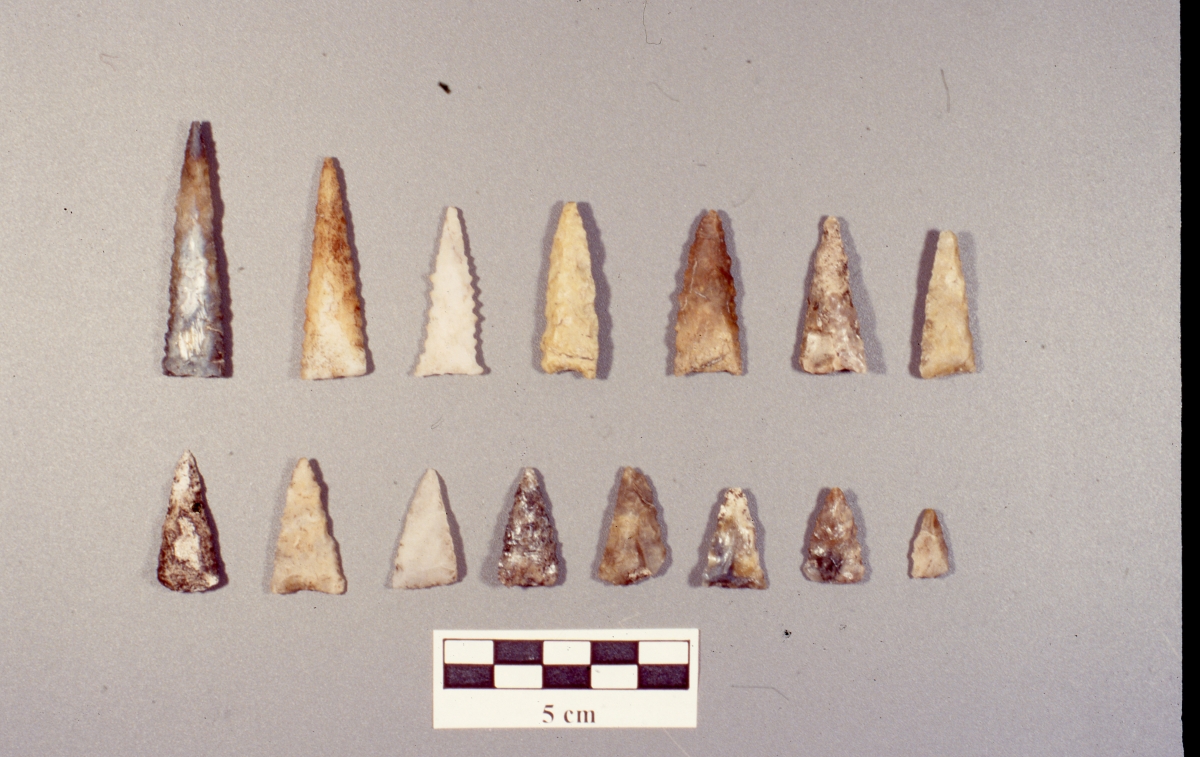
1999 documentation of pre-Columbian siteThe Jungle Prada Site — surviving Tocobaga mounds at the heart of the neighborhood, occupied from roughly 1000 to 1600 CE.
Florida Memory / State Archives of Florida — MSF-PI54
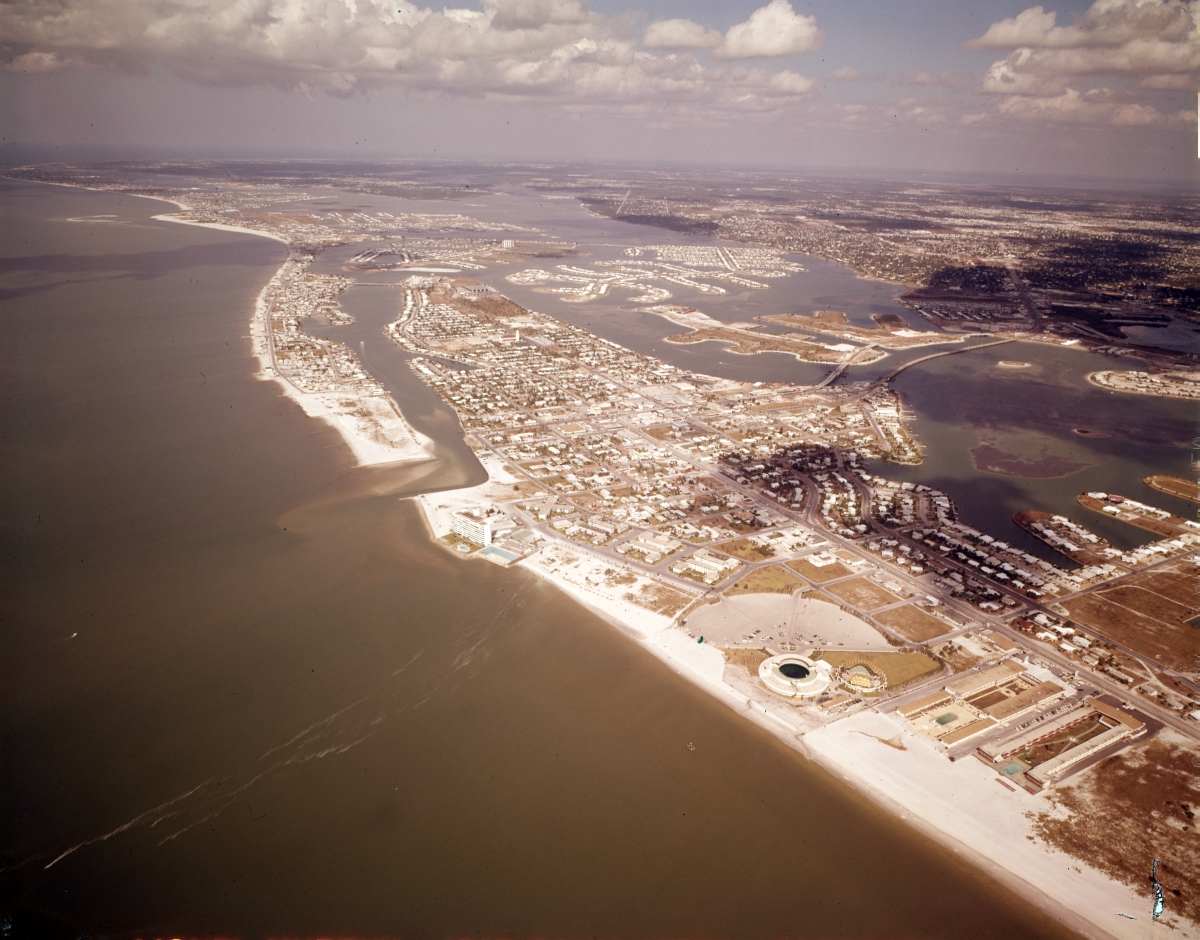 1964
19641964 aerial view showing the Boca Ciega Bay corridor west of Jungle Terrace, with Pasadena and the barrier islands beyond — the geography that puts the neighborhood 12 minutes from the beach.
Florida Memory / State Archives of Florida — DC072619
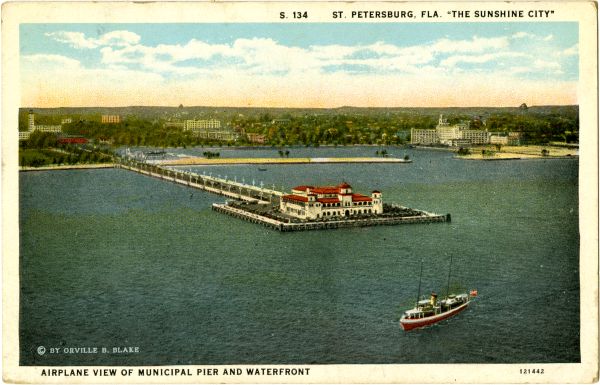 1926
19261926 aerial of St. Petersburg the year the Jungle Country Club Hotel opened — the height of the Florida land boom that built the neighborhood.
Florida Memory / State Archives of Florida — PC13231
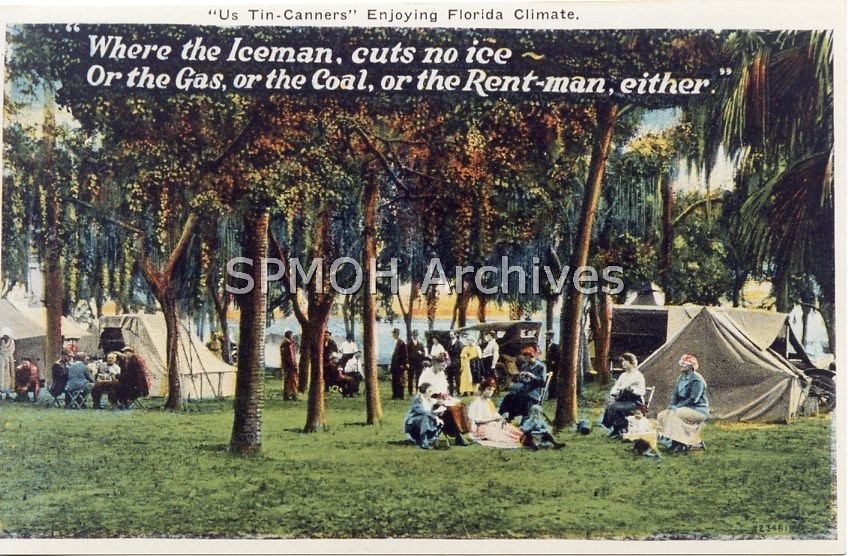 1915
19151915 campground in west St. Pete — the same era the Fullers were extending the trolley line out to the Jungle and platting what would become Jungle Terrace.
St. Petersburg Museum of History — P01748
Commute Times
Click any destination to see the mapped route with real-time traffic estimates.
Pros & Cons
The Pros
- Most of the neighborhood sits in flood zone X — solid elevation by St. Pete standards (20-40 ft)
- Live oak canopy is the densest on the west side of St. Pete, and a lot of the trees predate the development
- 12 minutes to St. Pete Beach, Treasure Island, and Pass-a-Grille — closer than any non-waterfront neighborhood with comparable elevation
- Jungle Prada Park / Sacred Lands site is a working National Register archaeological site and a real neighborhood asset, not a marketing tagline
- Mid-century concrete block construction = lower insurance friction than the wood-frame bungalows in Kenwood / Old Northeast
- Walter Fuller Park (133 acres, pool, soccer, tennis, pickleball, dog park, Jungle Lake nature trail) is inside the neighborhood
- Pricing trails comparable east-side neighborhoods despite similar elevation and comparable historic depth
The Cons
- 15 minutes to downtown — meaningfully further than Kenwood, Crescent Lake, or Old Northeast
- Walk Score in the 40s-50s — the neighborhood is not a Central Ave-style walking neighborhood; you'll drive for groceries and most dining
- Architectural mix is broad — 1940s ranch next to a 1990s rebuild next to a 1925 Mediterranean — so cohesion is lower than Kenwood or Roser Park
- Park Street waterfront blocks (the Jungle Shores section) are flood zone AE with real Helene exposure
- Brand recognition with relocation buyers is lower than the east-side historic neighborhoods, which can mute resale narrative
- Limited high-end dining inside the neighborhood — Tyrone Square area and downtown St. Pete are the dining hubs
What You Need to Know
Who Should Live Here
Buyers whose primary axis is beach-bound rather than downtown-bound, who want mature tree canopy and real flood-zone safety, and who are willing to trade five minutes of downtown commute for those benefits. A strong fit for buyers who care about Florida history and want to live in a neighborhood with genuine pre-Columbian and 1920s boom-era depth, not a manufactured one. Also a smart pick for buyers who want concrete-block construction (better insurance, lower maintenance) over a 100-year-old wood-frame bungalow.
What to Watch For
Verify the specific lot's flood zone before you make an offer — the Park Street waterfront blocks (Jungle Shores) sit in AE, and Helene flooded portions of the area in September 2024. Most of the interior sits in X, but never assume. On 1920s homes near Park Street, get a serious 4-point inspection: knob-and-tube, cast-iron drains, and galvanized supply lines are all still hiding. On the mid-century housing stock, the priorities flip to roof age (15+ years narrows your insurance options sharply), original electrical panels, and original cast-iron drains under slabs. Get insurance quotes before you go under contract, not after.
What to Expect
A quiet residential neighborhood where front yards are full of live oaks, neighbors know each other by name, and the streets carry low traffic compared to anything east of 4th Street. Walter Fuller Park is the social center — Green Thumb Festival every April brings 40,000+ people to the neighborhood, and the recreation center handles youth soccer, pickleball, basketball, swimming, and group fitness year-round. The Jungle Prada Tavern at the foot of Park Street is the legacy waterfront hangout, sitting on the same ground where the Gangplank speakeasy operated in 1925. Five minutes north and you're at Tyrone Square Mall and the new Doc Ford's location. Twelve minutes west and you're at the beach.
Aaron's Honest Take
Aaron & Aubrey Chand
Living in St. Pete · Excellecore Real Estate
Here's what I tell buyers who ask about Jungle Terrace and Jungle Prada: this is the trade you make when you want elevation, you want real trees, you want the beach close, and you're willing to give up five minutes on the downtown side. The numbers back it up. Most of the neighborhood is flood zone X, the housing stock is mid-century concrete block (not wood frame), and you're 12 minutes to St. Pete Beach. Compare that to Kenwood, where you've got similar elevation but a 100-year-old wood-frame bungalow and you're 18 to 20 minutes to the sand. Different buyers, different priorities.
The hidden value here is the history. Jungle Prada is a real National Register archaeological site — the Tocobaga lived on this exact ground for six hundred years, and Narváez landed his expedition here in 1528. That's the first inland exploration of North America by Europeans. Then the Fullers come along in the 1920s, build the Jungle Country Club Hotel for Babe Ruth, build St. Pete's first shopping center next door, and turn the area into a destination. Most of that history is still standing. Farragut Hall is the original hotel. The Jungle Prada building still has tenants. The mounds are still there. None of that gets priced into the comps the way 'historic district' gets priced in on the east side, which is part of why the deal works.
The honest cons. Walk Score is moderate — this is not Central Ave. You'll drive for most things. The Park Street waterfront blocks took water during Helene, so verify the elevation cert before you go under contract on anything west of Park. Brand recognition with out-of-state relocation buyers is lower than Kenwood or Old Northeast, which can show up at resale if you're holding less than five years. And the architectural mix is broad — you've got a 1925 Mediterranean Revival next to a 1956 ranch next to a 2018 contemporary, which some buyers love and some don't. If you want the homogeneity of a deeper historic district, look at Roser Park or Kenwood. If you want the best price-per-square-foot in a high-elevation, beach-adjacent west-side neighborhood with real history, this is one of the best long-term holds in the city.
The Buying Reality
~42-50 days for fairly-priced homes (longer than east-side historic neighborhoods); renovated homes under $750K go faster
Moderate — typically 30-50 active listings between Jungle Terrace and Jungle Prada combined
Less common than Kenwood or Crescent Lake; happens on renovated homes near Park Street and on waterfront under $1.2M
On waterfront, get the elevation certificate from the seller before you offer. On interior mid-century, focus on roof age (under 15 years materially changes your insurance picture) and 4-point readiness. Sellers here aren't fighting Kenwood-style bidding wars, so a clean offer with a reasonable inspection contingency wins most deals.
Schools & Zoning
Magnet Options
Pinellas County Schools operates a controlled-choice attendance system, so neighborhood zoning is one factor among several. Use the Pinellas County School Zone Locator (pcsb.org/departments/district-services/student-registration/school-zone-locator) for the specific zoning on any given address. Azalea Middle's Academy of Engineering magnet is a strong draw for families inside the neighborhood. Admiral Farragut Academy — the original 1925 Jungle Country Club Hotel — is the marquee private school option and sits inside the neighborhood itself.
Insurance & Maintenance Reality
Pre-War Home Considerations
Insurance in Jungle Terrace is generally easier than in Kenwood, Roser Park, or the Old Northeast — the dominant 1940s-1960s concrete-block construction is more carrier-friendly than pre-war wood frame. You'll still need a 4-point and a wind-mitigation report on anything older than 30 years; roof age remains the single biggest variable. Roofs over 15 years narrow your carriers; over 20 starts to push you out of the standard market.
The complication is the waterfront. Anything west of Park Street, including most of the Jungle Shores section, sits in flood zone AE. Helene's surge in September 2024 flooded portions of these blocks, and that's now baked into how carriers are pricing both flood and homeowners on those parcels. Get the elevation certificate from the seller, get a flood quote before you go under contract, and assume that AE waterfront in this part of the city now carries flood premiums in the $4K-$10K+ per year range depending on lot.
For the interior of the neighborhood — the bulk of Jungle Terrace east of Park Street — flood insurance is optional (the lender usually won't require it), and standard homeowners policies are more available than in pre-war historic districts. The 1920s pocket near Park Street and the mound site is the exception: those homes are wood-frame or hollow-tile, often unrenovated, and underwriting is closer to what you'd expect in Old Northeast.
Storm Impact: Helene & Milton
The interior of Jungle Terrace came through Helene and Milton on the better end of the St. Pete spectrum, thanks to elevation and distance from the open bay. The Park Street waterfront and Jungle Shores took meaningful damage during Helene's surge in September 2024 — the same surge event that destroyed parts of Shore Acres, Gulfport, and the barrier islands. Milton two weeks later was primarily a wind event for the neighborhood, though it added to the cleanup load.
Hurricane Helene
Sep 2024Helene's storm surge on September 26-27, 2024 set a new St. Pete record at 6.3 feet above average high tide at the Albert Whitted gauge. The surge pushed up Long Bayou and Boca Ciega Bay and flooded the western edge of the neighborhood — the Jungle Shores blocks west of Park Street, the Jungle Prada boat ramp area, and the lowest waterfront homes. The new Doc Ford's location in Jungle Terrace, near Long Bayou, had five large boats from neighboring waters end up in their parking lot. Most of the interior of the neighborhood, sitting at 25-40 feet, stayed dry with typical wind damage — downed limbs, roof shingle loss, fence damage.
Hurricane Milton
Oct 2024Milton made landfall near Siesta Key on October 9, 2024, two weeks after Helene, and tracked through the area as primarily a wind and rain event. Pinellas County recorded gusts above 100 mph and 18+ inches of rain in some pockets. In Jungle Terrace, the most photographed damage was downed live oaks — large trees that had survived Helene's wind toppled in saturated ground during Milton. WUSF documented residents in the Jungle Terrace neighborhood clearing a downed oak from the street on the morning after the storm. The neighborhood's interior was not in a surge evacuation zone for Milton (the surge that was forecast did not materialize because Milton's eyewall passed south of the bay), and most homes had wind damage rather than flood damage.
Blocks to Watch
The flood concern is concentrated west of Park Street, particularly the Jungle Shores blocks running between Park Street and Boca Ciega Bay, and the lots immediately adjacent to the Jungle Prada boat ramp and Long Bayou. The interior grid east of Park Street was largely dry through both storms.
Community & Events
Green Thumb Festival
Annual, last weekend of April (Arbor Day weekend)
St. Petersburg's official Arbor Day celebration, hosted at Walter Fuller Park inside the neighborhood. 40+ years running, draws 40,000+ attendees over two days, with 120+ garden, plant, and flower vendors, the Garden Club of St. Petersburg's annual flower show, free pine seedling giveaways, and youth workshops. Free and open to the public. The Jungle Terrace Civic Association runs a tent each year.
Multi-Neighborhood Garage Sale Weekend
Annual, paired with Green Thumb Festival weekend
Azalea, Jungle Prada, and Jungle Terrace combine on a single weekend each April for a coordinated neighborhood-wide yard sale. Map and participating-house list released the week before.
Jungle Terrace Civic Association meetings
Monthly
Active 501(c)(3) civic association covering the Jungle Terrace neighborhood. Member of the Council of Neighborhood Associations. Hosts community events, sponsors landscape and trail improvements, and was awarded the city proclamation 'Jungle Terrace Day' in 2014.
Jungle Prada Site History Tour
Year-round, by reservation
Guided 75-minute history tour of the Sacred Lands portion of the Jungle Prada site, including one of the best-preserved Tocobaga mounds in Florida and the private seaside garden. Recognized as 'Best of the Best' by Tripadvisor in 2023 and 2024. Reservations required.
What Residents Are Saying Online
Pulled from public Trulia and Niche reviews of Jungle Terrace and Jungle Prada. Residents consistently call out three things: the live oak canopy and proximity to Walter Fuller Park, the easy walk/short drive to Tyrone Square and the beaches, and the high-and-dry feel of the neighborhood. Honest cons that come up include some perimeter areas with crime variance and the standard Florida tradeoff of moderate walkability away from Central Ave.
“Mostly owner owned homes, well kept neighborhood. High and dry. Centrally located - Close to everything”
“Nestled between the Boca Ciega Bay and Walter Fuller park, you'll find Jungle Estates with many tree lined streets that canopy the roads and lend to the nature aspect. There are many shops, restaurants, the mall, the Pinellas Trail, and the beaches are very close as well.”
“Green Thumb Festival every year. Great parks, rec center, soccer fields. Walking distance to Tyrone Mall. Close to Pinellas Trail, 10 mins to 3 beaches, close to restaurants, 15 mins to DTSP”
“Close to boat ramp, mall, restaurants, grocery stores. Peacocks can be spotted frequently. Three parks close by.”
“I've lived here for 4 years. My neighbors are very nice. We have a street Halloween party every year that many people from outside our neighborhood attend. Everyone decorates for the holidays too.”
“These live oak trees are ancient; some have been here since before this place was the Jungle. It is its name, and it's our goal to keep it that way.”
Further Reading & Resources
Civic & Preservation
Jungle Prada Park — City of St. Petersburg / Visit St Pete-Clearwater
Official visitor profile of Jungle Prada de Narváez Park — boat ramp, fishing pier, picnic area, and the public portion of the mound complex.
Walter Fuller Park & Recreation Center
133-acre park inside the neighborhood — pool, recreation center, soccer / baseball fields, pickleball / tennis courts, dog park, Jungle Lake nature trail. Hosts the annual Green Thumb Festival.
City of St. Petersburg — Historic Preservation Program
Citywide historic preservation program. Farragut Hall (the former Jungle Country Club Hotel) is a designated local historic landmark; design-review and tax-incentive programs apply.
National Register of Historic Places — Jungle Prada Site
Official federal listing record for the Anderson-Narváez / Jungle Prada Site, listed on the National Register in 2003.
Preserve the 'Burg
St. Petersburg's primary historic preservation nonprofit. Has covered Jungle Country Club Hotel, Jungle Prada, and west St. Pete history extensively.
Journalism
St Pete Catalyst — Built for the Babe: Jungle Country Club Hotel turns 100
Long-form 2026 feature on the centenary of the Jungle Country Club Hotel, the Babe Ruth connection, and the Fuller / Lang partnership that built it.
St Pete Rising — Historically St. Pete: How the Jungle Country Club Hotel Became Admiral Farragut Academy
Architectural and historical feature on the building's 100-year arc from 1925 boom hotel to Admiral Farragut Academy.
Tampa Bay Times — Did you know the first Black explorer of North America landed in St. Petersburg in 1528?
Feature on Estevánico, Cabeza de Vaca, the Narváez expedition, and the Jungle Prada landing — including local historian James MacDougald's 15-year research project.
Tampa Bay Times — Neighborhood Profile: Jungle Terrace
Tampa Bay Times neighborhood profile defining the boundaries of Jungle Terrace and Jungle Prada, the Jungle Shores subsection, and the historical context.
Fox 13 — Historic Jungle Prada Park in St. Pete offers glimpse into the past
Local TV feature on the 24-acre Tocobaga / Narváez park and the city's preservation work.
WUSF — Pinellas County residents focus on recovery after Hurricane Milton (Jungle Terrace)
Reporting from the morning after Milton in October 2024, with on-the-ground footage from the Jungle Terrace neighborhood as residents cleared downed trees.
Homes.com — About Jungle Terrace neighborhood guide
Local guide quoting Dr. Ed Carlson, president of the Jungle Terrace Civic Association, on the live oak canopy and Walter Fuller Park.
Neighborhood Association
Jungle Terrace Civic Association
Official 501(c)(3) civic association for the Jungle Terrace neighborhood. Newsletters, meeting schedule, history documents, and event calendar.
Jungle Terrace Civic Association — Jungle History
Long-form neighborhood history compiled by the JTCA — covers the Fuller family's development of the Jungle, the streetcar extension, the Jungle Country Club, and the Jungle Prada / Gangplank story.
Schools
Pinellas County Schools — School Zone Locator
Official zoning lookup tool for any Pinellas County address — required to verify the zoned elementary, middle, and high school for any specific home.
Admiral Farragut Academy
Pre-K through 12 private military preparatory school operating on the original Jungle Country Club Hotel campus inside the neighborhood. Locally-designated historic landmark since 1992.
Cultural
Sacred Lands Preservation & Education — Jungle Prada Site Tours
Private nonprofit operating the archaeological site and tours of the better-preserved Tocobaga mounds at Jungle Prada. 'Best of the Best' Tripadvisor recognition 2023-2024.
Jungle Country Club History Project
Independent research blog documenting the 1916-1944 Jungle Country Club, the Jungle Country Club Hotel, the Jungle Prada / Prado building, and Babe Ruth's St. Petersburg years. Primary-source-heavy.
Jungle Prada Site — Wikipedia
Encyclopedia entry on the Tocobaga mound complex, the Narváez landing, and the National Register of Historic Places listing (added 2003).
What's Nearby
Jungle Prada de Narváez Park (Tocobaga mound site, boat ramp, fishing pier)
in district
Walter Fuller Park (133 acres — pool, recreation center, dog park, Jungle Lake trail)
in district
Sacred Lands Preservation (private archaeological tours of the larger Tocobaga mound)
in district
Jungle Prada Tavern (the original 1924 Jungle Prado retail building)
in district
Admiral Farragut Academy / Farragut Hall (the original Jungle Country Club Hotel)
in district
Tyrone Square Mall
1.5 mi
Pinellas Trail (paved rail-trail running 47 miles across the county)
0.5 mi
War Veterans' Memorial Park (112 acres — boat ramp, sundial, military memorial)
3.5 mi
Treasure Island Beach
4 mi
St. Pete Beach
5 mi
Pass-a-Grille
7 mi
Doc Ford's Rum Bar & Grille (Jungle Terrace location)
1 mi
Elevation & Flood Risk
30ft average elevation
FEMA Flood Zone X (most of the neighborhood), AE on waterfront blocks west of Park Street — flood insurance required
Thinking about Jungle Terrace / Jungle Prada?
We've helped over 50 buyers relocate to Tampa Bay. Let's talk about whether Jungle Terrace / Jungle Prada is the right fit for you.
Explore more neighborhoods
View All in Relocation Guide