Historic Kenwood
St. Pete's Bungalow Capital
1912 by Charles R. Hall
Platted
August 4, 2003 (NRIS 03000729)
National Register
4 sub-districts inside Kenwood
Local Historic Districts
375 acres, 2,203 buildings
District Size
>50% of homes are 1920s craftsman
Bungalow Share
30-40 ft (mostly flood zone X)
Elevation
Neighborhood Overview
Historic Kenwood is the bungalow neighborhood. Charles R. Hall, a Philadelphia developer, platted 160 acres of avocado groves in 1912 and marketed it specifically to St. Pete's emerging middle class — a deliberate contrast to C. Perry Snell's wealthy-buyer focus across town in the Old Northeast. Today the district covers 375 acres, 2,203 historic buildings, and the highest concentration of craftsman bungalows in the entire Southeast. National Register listing came in August 2003. Streets are tree-lined, the architecture is consistent, and the community is unusually tight: monthly Friday porch parties, an annual BungalowFest tour every November, an Artist Enclave designation, and a March Tour of the Arts where artists open their home studios to the public.
It's also one of the rare historic St. Pete neighborhoods that sits comfortably in flood zone X. Elevation here runs 30-40 feet — high enough that Hurricane Helene didn't cause widespread flooding the way it did in Shore Acres, Snell Isle, or the lower edges of Old Northeast. Milton was a different story for one specific area: a retention pond near 28th Street and 15th Avenue N overflowed during Milton's 18-plus inches of rain and put water in homes in North Kenwood that had never flooded before. That's worth knowing — but it was a rain/drainage event, not coastal surge, and it didn't touch the Historic Kenwood core.
The honest trade-off is inventory and price. Kenwood doesn't trade often. Renovated bungalows go in under two weeks, often with multiple offers, and the well-restored examples regularly clear $750K-$1M for homes that are 1,400-1,800 square feet. North Kenwood (north of 5th Ave N) is less walkable but materially more affordable — median sales there are around $387,500 versus the Historic Kenwood proper median that runs significantly higher. The combination of historic character plus flood safety is what's driving the premium, and we don't see it cooling off.
History & Origins
Platted 1912
Charles R. Hall (Philadelphia)
Pre-Boom & 1920s Florida Land Boom (1912-1945)
Charles R. Hall came down from Philadelphia and bought 160 acres of avocado groves northwest of downtown in 1912 — well before the Florida land boom and well before most of the streetcar suburbs that would follow. Hall's pitch was different from C. Perry Snell's. While Snell was selling waterfront lots to wealthy Northerners on the Old Northeast bluff, Hall platted Kenwood for the city's working and middle class. The original model home, built in 1918 at Central Avenue and 30th Street (now Craftsman House Gallery & Café), was placed deliberately on Central Ave so streetcar commuters from downtown could see it on their way home. That marketing strategy worked — Kenwood became St. Pete's first true year-round residential suburb, in contrast to the seasonal tourist character of downtown blocks at the time.
The 1920s Florida boom built most of what's standing today. Craftsman bungalows went up by the hundreds — large front porches, heart-pine floors, wood-burning fireplaces, 8-9 foot ceilings, keyhole entrances, exterior colors in sage, coral, lemon, and aqua. Brick streets and hexagonal concrete sidewalks (stamped with the Farmer Concrete Company date) were laid through the 1920s. St. Petersburg High School opened in 1926 right inside the neighborhood at 2501 5th Ave N — marketed at the time as 'the nation's first million-dollar high school.' The 1926 Florida bust slowed but didn't stop construction; building continued through the 1930s and into the 1940s.
Then came the 1930s house-moving phenomenon. During the Depression, approximately 170 bungalows were physically relocated into Kenwood from elsewhere in St. Pete — the houses sat on piers, so movers could slide I-beams underneath, jack them up, and roll them through town. That further concentrated the bungalow identity here. After WWII, suburban flight and interstate construction (I-275 cut the eastern edge in the 1960s) sent the neighborhood into 30 years of decline. Revitalization began in the 1990s, led significantly by the LGBTQ+ community and a wave of preservation-minded buyers. National Register listing came August 4, 2003. Local historic district sub-sections followed: Seminole Park LHD (November 2017), Southeast Kenwood LHD (June 2018), Northwest Kenwood LHD (April 2019), and SW Central Kenwood LHD (April 2021). In 2020, Neighborhoods USA named Historic Kenwood the national 'Neighborhood of the Year.'
Architecture & What You'll Be Buying
Predominant Styles
Typical Year Built
1912-1945 (period of significance, with the 1920s boom producing the bulk)
Typical Size
1,200-1,800 sq ft on 50-foot lots — bungalows are smaller by modern standards
Construction
Predominantly one-story wood-frame on pier foundations (the same construction that made the 1930s house-moving possible). Heart-pine floors, plaster walls, original double-hung wood windows, screened front porches, 8-9 ft ceilings, and wood-burning fireplaces are common in unrenovated examples — and a genuine rarity in Florida. Many homes have rear alleys, which is the architectural reason ADUs and house hacking are a real strategy here. Original brick streets and hexagonal concrete sidewalks remain in pockets.
Materials & Streetscape
Wood clapboard or shingle siding, with stucco on the Mediterranean and Mission Revival examples. Exterior color palette historically included sage, coral, lemon, and aqua — the Artist Enclave has kept that tradition. Hex-block sidewalks are protected by city ordinance (1992).
Pockets Within the Neighborhood
Historic Kenwood proper (1st Ave N to 5th Ave N)
The protected core south of 5th Avenue N — most of the bungalows, most of the brick streets, most of the hex sidewalks, and the closest walking distance to Central Avenue and the Grand Central District. This is what people mean when they say 'Historic Kenwood.'
What sets it apart: Walkable to Grand Central in 5-10 minutes. Most homes are inside one of the four local historic district sub-sections (Seminole Park, Southeast Kenwood, NW Kenwood, SW Central Kenwood) — which means Certificate of Appropriateness review on exterior changes, but also eligibility for the city's 10-year ad valorem tax exemption and the federal 20% rehab credit. Premium pricing — restored bungalows clear $750K-$1M for 1,400-1,800 sf.
Seminole Park LHD
The first locally-designated sub-section of Kenwood, designated November 2017. A small concentrated cluster around the Seminole Park area inside the broader Historic Kenwood district.
What sets it apart: Highest level of preservation protection inside Kenwood. Best architectural integrity — exterior changes require a Certificate of Appropriateness from the city, which keeps the streetscape consistent. Eligible for the full tax-incentive package.
Southeast Kenwood LHD
Designated June 2018 — the second Kenwood local district. Closest to downtown of the sub-sections, which makes it the most expensive on a price-per-square-foot basis.
What sets it apart: Walkability to downtown St. Pete plus historic protection. Homes here have appreciated faster than the rest of Kenwood since designation — local district status was associated with values pushing past $300/sf according to neighborhood leaders at the time of designation.
SW Central Kenwood LHD
The newest sub-district — designated April 2021 after a 2020-2021 homeowner vote (86 of 150 parcels in favor, 6 opposed). Covers 26th and 28th Streets between 1st Ave N and 5th Ave N — about 12 blocks, 150 parcels, homes mostly built 1917-1958.
What sets it apart: Smallest of the four sub-districts but a useful tell on what's coming — Kenwood is gradually adding local protection block by block. If you're buying inside this sub-section, you have COA obligations on exterior changes from day one.
North Kenwood (north of 5th Ave N)
The blocks north of 5th Avenue N, up toward 22nd Avenue N. Generally outside the National Register district and outside any of the four local historic sub-sections. Has its own neighborhood association (NKNA, nkna.org) that's separate from the Historic Kenwood Neighborhood Association.
What sets it apart: Materially more affordable — median around $387,500 versus the $700K-plus typical of Historic Kenwood proper. Less walkable to Grand Central, less consistent architectural character, less preservation protection. North Kenwood is also where Hurricane Milton's October 2024 retention-pond overflow (28th Street at 15th Ave N) put water in homes that had never flooded before — homeowners are still in dispute with the city over wastewater discharge from manholes during that event. Worth verifying the specific block's drainage history before buying north of 5th.
Notable Homes & Landmarks
2727 Central Avenue (Craftsman House Gallery & Café)
Built 1918
The original model home built by developer Charles R. Hall to sell the rest of Kenwood. Placed deliberately on Central Avenue so streetcar riders from downtown would see it on their commute. Today it operates as the Craftsman House Gallery & Café under owner Jeff Schorr — a working bungalow restoration showcase that's open to the public. Arguably the single most important surviving structure in the district because it's the marketing piece that built the neighborhood.
Originally Hall's model home (1918). Restored and operated by Jeff Schorr as Craftsman House Gallery & Café — featured in St Pete Catalyst as a centerpiece of the neighborhood's revitalization.
2747 3rd Avenue N
Built 1925
A century-old craftsman bungalow that listed in 2024 for $775,000 — a useful data point on what the upper end of restored Kenwood inventory commands. 1,752 total square feet split between a 1,392 sf two-bed/two-bath main house and a 360 sf one-bed/one-bath detached cottage. The main-house-plus-ADU configuration is exactly the house-hacking setup buyers ask us about most in this neighborhood.
Listed for sale 2024 — covered in St Pete Catalyst's 'Places This Week' real-estate column.
2661 4th Ave N
Built 1926
Three-gabled white frame bungalow with yellow Colonial trim. 5 rooms, hardwood floors, 1-car garage, three blocks from St. Petersburg High School. Owned 1941 onward by Frank Nathan 'Red' Allen and Gertrude Lockmiller — both Athens, TN natives who met in St. Pete. A 1941 Tampa Times feature described the interior in 'dusty rose, turquoise, peach, aqua, yellow, and moss green' — the literal Kenwood color palette of the period. Frank ran sales at Hough Motor (Dodge/Plymouth), enlisted in 1943, and finished his career at Nichols Bros Motor Co. Died 2003 at 96. Documented by historian Howard Knapp at StPeteWiki.com.
Frank Nathan 'Red' Allen and Gertrude Lockmiller, 1941-2003
3300 8th Ave N
Built 1937
Late-period Colonial bungalow built by George Deeb Construction — 99-year Dutch Lap shingle roof, two-car garage, well with electric pump, central oil heat, all-electric kitchen, attic fan, two tile baths. The Annie DuMont ownership tenure is the headline: she lived here for 40 years (1949-1989), one of the longest single-owner tenures documented in the neighborhood. Daughter Belle Amelia DuMont Ferris held it until her death in 1991 at age 98. The kind of multi-generational stability that's typical for the well-built Kenwood homes.
Jean M. Gordon (1937-43) → James McGovern (1945) → Annie DuMont (1949-1989, 40 years) → Belle DuMont Ferris (1989-90)
Then & Now
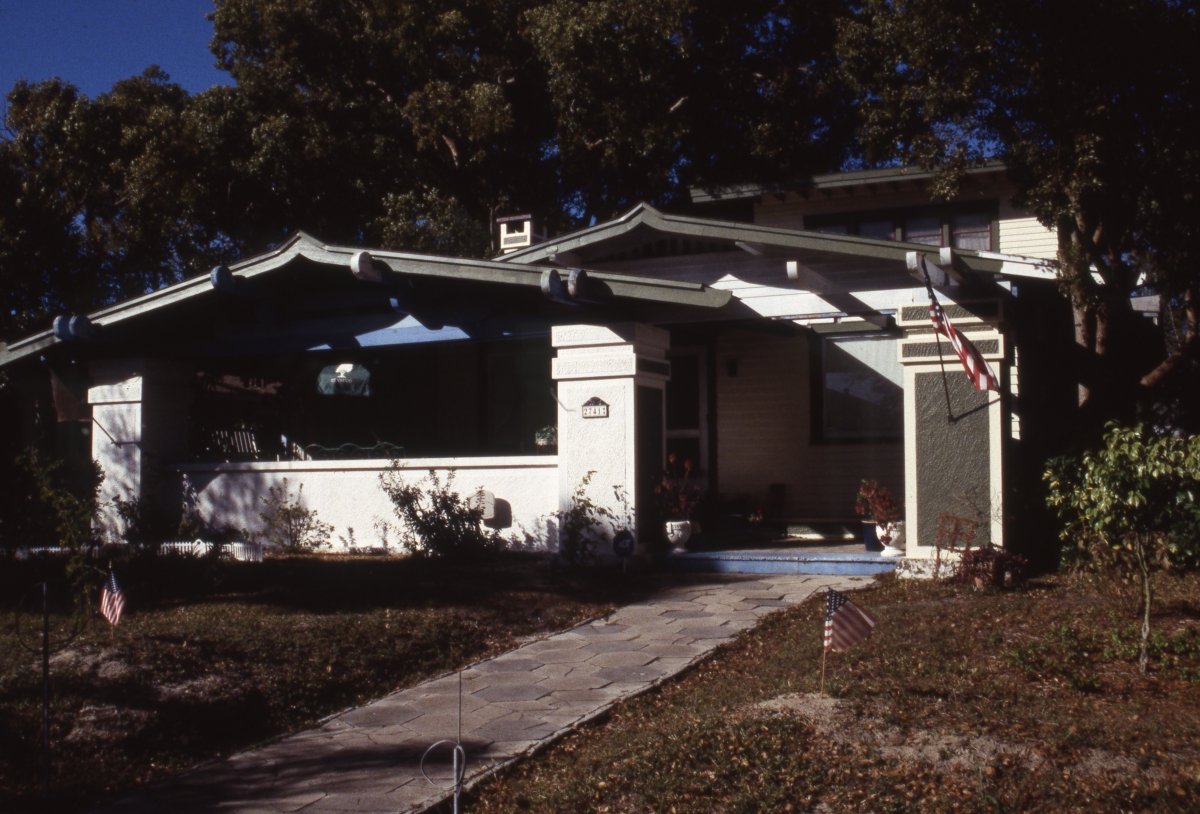
1920Classic 1920s Kenwood craftsman bungalow — the dominant style across 375 acres and 2,203 historic buildings.
Florida Memory / State Archives of Florida — MSF-PI712-001
 1925
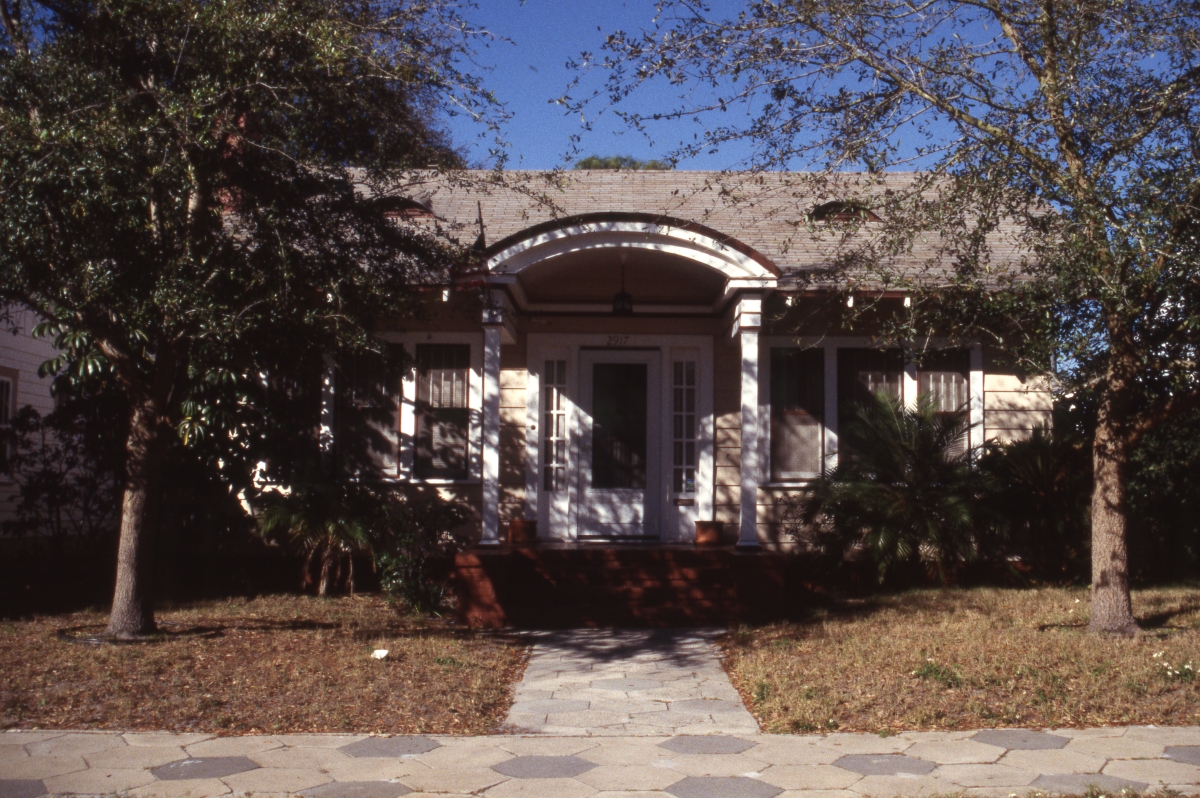
1925Colonial Revival example showing Kenwood's architectural diversity beyond pure craftsman — built 1925.
Florida Memory / State Archives of Florida — MSF-PI7072-001
 1925
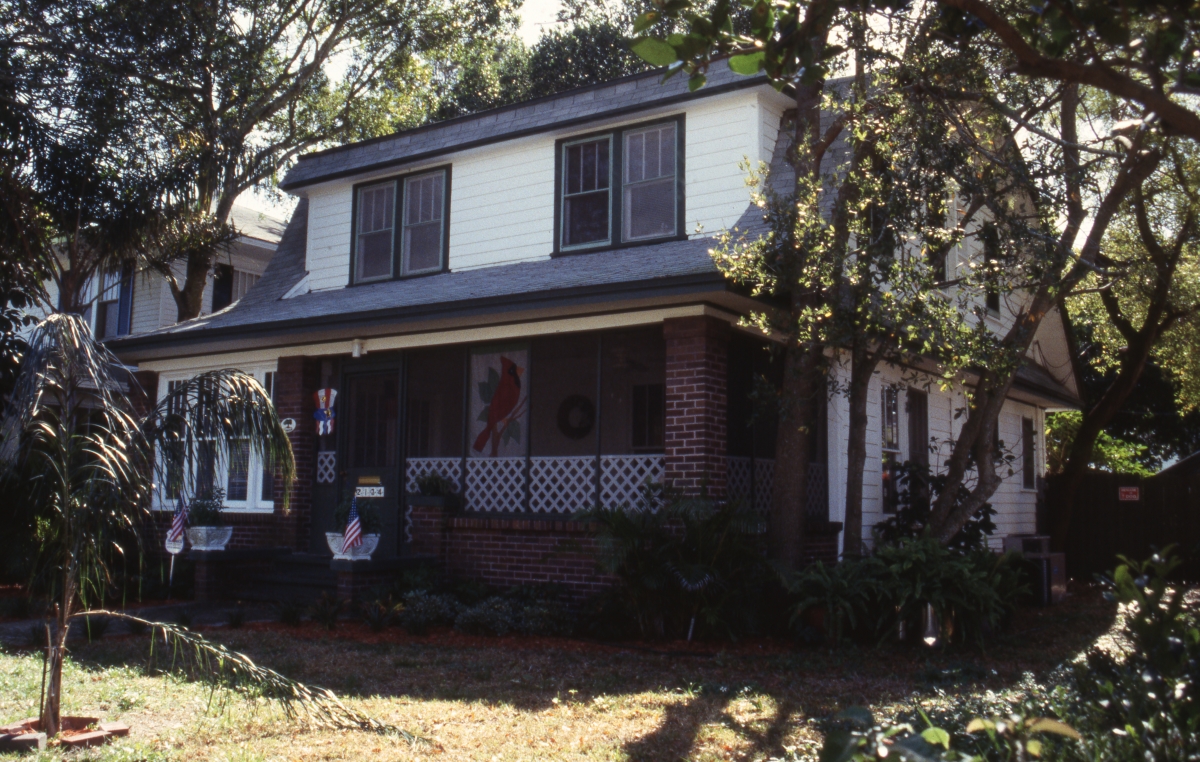
1925Dutch Colonial Revival in Kenwood, 1925 — one of the rarer styles inside the district's largely-craftsman streetscape.
Florida Memory / State Archives of Florida — MSF-PI7124-001
 1926
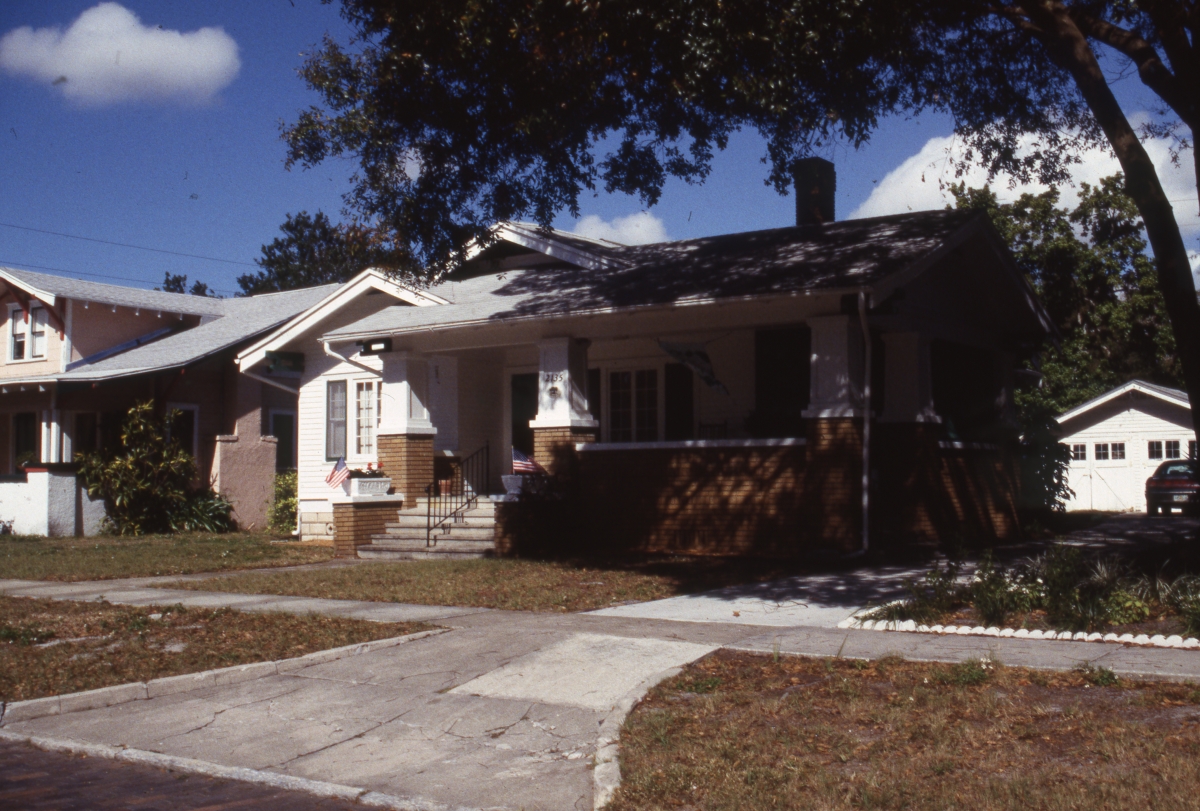
1926Late-period 1926 craftsman bungalow — heart of the Florida boom era construction in Kenwood.
Florida Memory / State Archives of Florida — MSF-PI7125-001
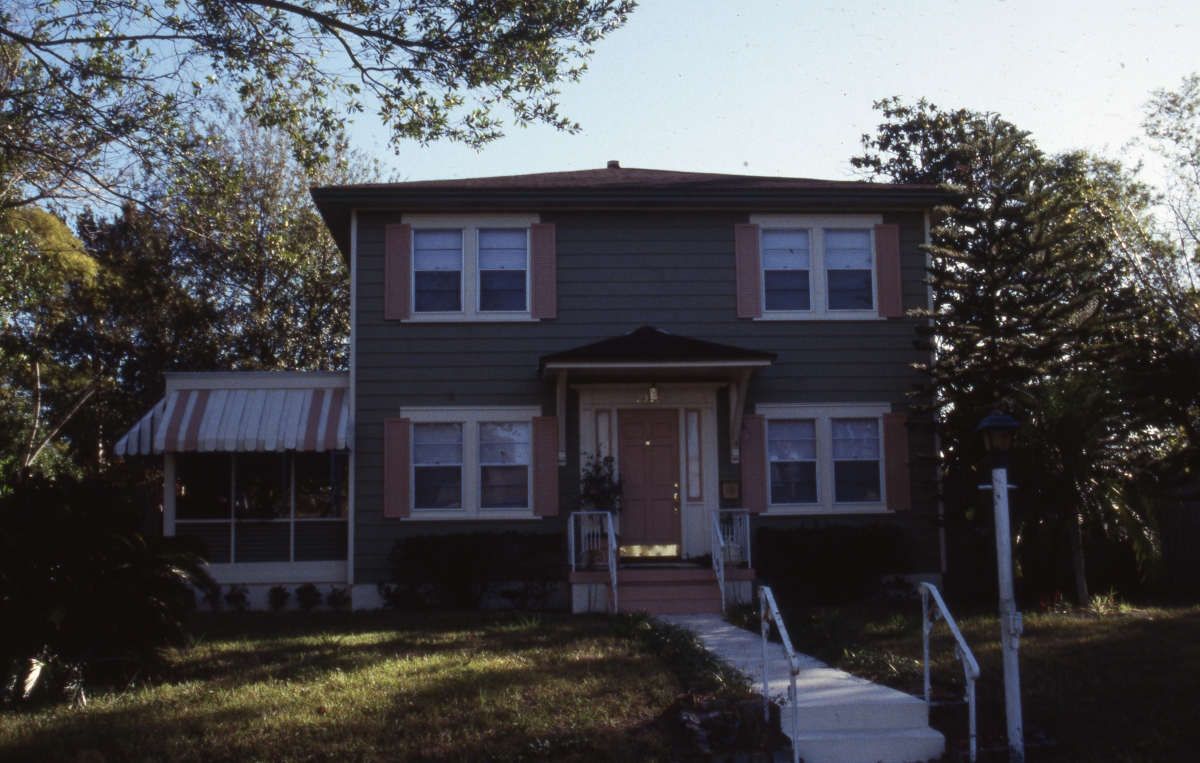 1938
1938Late-period Colonial Revival, 1938 — Kenwood's period of significance ran through 1945, well past most other St. Pete districts.
Florida Memory / State Archives of Florida — MSF-PI7434-001
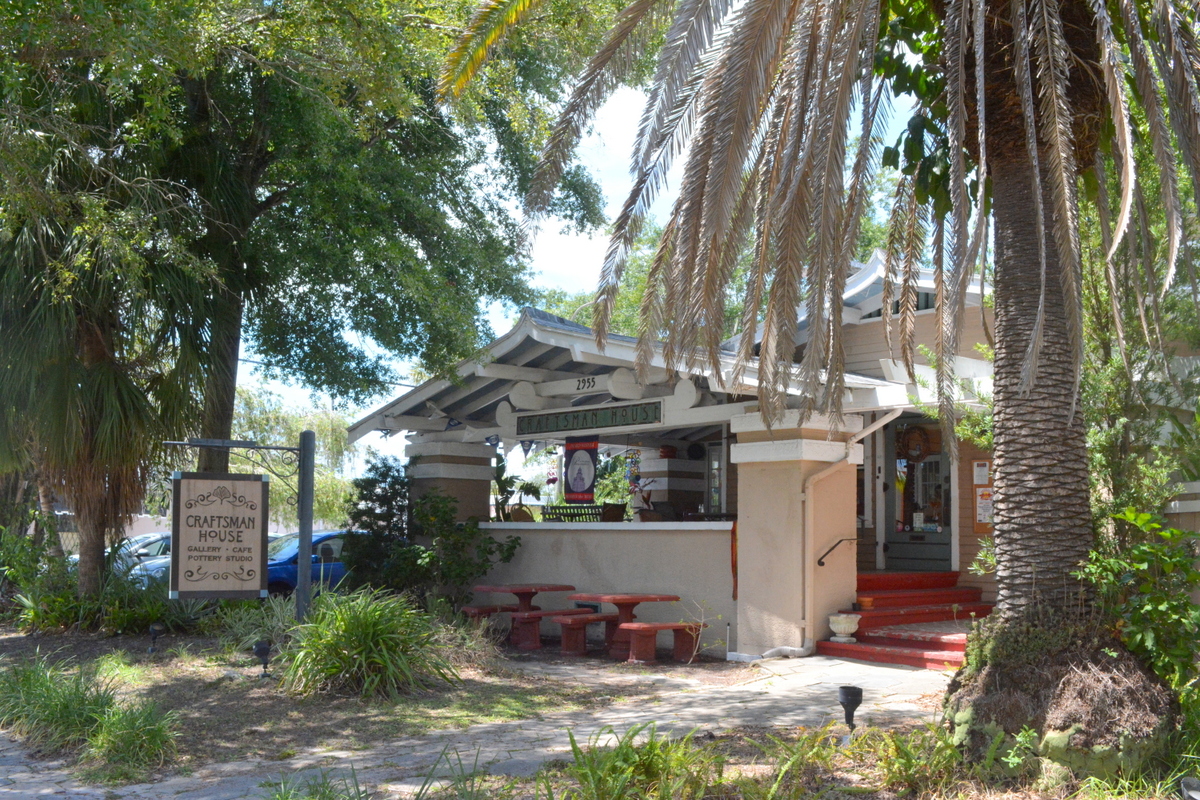 Contemporary
Restored Kenwood craftsman near the Grand Central District boundary — the walkable edge of the neighborhood.
Wikimedia Commons — Jrozwado, CC BY-SA 4.0
Commute Times
Click any destination to see the mapped route with real-time traffic estimates.
Pros & Cons
The Pros
- Highest concentration of craftsman bungalows in the Southeast — 2,203 historic buildings on 375 acres
- Mostly flood zone X with elevation 30-40 ft — among the safer historic neighborhoods, came through Helene with no widespread surge flooding
- Walkable to Grand Central District, Central Avenue, and the Edge District in 5-10 minutes
- Tight-knit community — monthly Friday porch parties, BungalowFest in November, Tour of the Arts in March, Artist Enclave designation
- Four local historic district sub-sections inside Kenwood unlock the city's 10-year ad valorem tax exemption and the federal 20% rehab credit on certified work
- Most homes have rear alleys — backyard ADUs and house-hacking are a real strategy here, not just a pitch
- Strong long-term appreciation: historic plus non-flood zone is rare anywhere in St. Pete
- Named Neighborhoods USA 'Neighborhood of the Year' nationally in 2020
The Cons
- Very limited inventory — homes routinely go in under two weeks, multiple offers are common on renovated bungalows
- Premium pricing for restored examples — $750K-$1M for 1,400-1,800 sq ft is now typical
- Bungalow square footage is small by modern standards — most homes are 1,200-1,800 sf
- Most homes are wood-frame and 90-110 years old — foundation, electrical, plumbing, and roof all need careful inspection
- If you buy inside one of the four local sub-districts, exterior changes require a Certificate of Appropriateness — windows, paint, additions, fences
- North Kenwood (north of 5th Ave N) is materially less walkable and had a Hurricane Milton retention-pond overflow event in October 2024 — verify drainage history block by block
- On-street parking can be tight on the older blocks without driveways
What You Need to Know
Who Should Live Here
Buyers who genuinely want a historic bungalow — not the idea of one — and who value walkability and community over modern open-floor-plan square footage. Ideal for buyers who don't need 3,000+ sf, who want to live where the front porch actually gets used, and who want the safest historic-neighborhood flood profile in St. Pete. Also a strong fit for buyers eyeing a backyard ADU for house-hacking or a primary-plus-cottage setup like the one at 2747 3rd Ave N. Not the right fit if you want new construction, lots of square footage for the price, or a neighborhood without rules.
What to Watch For
Verify two things before you write an offer. First: is the specific lot inside a National Register district AND inside one of the four local historic sub-sections (Seminole Park, Southeast Kenwood, NW Kenwood, SW Central Kenwood)? National Register alone gives you the federal 20% credit on income-producing work; local designation triggers Certificate of Appropriateness review on exterior changes AND unlocks the city's 10-year ad valorem exemption. A property can be in one, both, or neither — the difference is real money. Second: get a thorough inspection. 1920s wood-frame on piers means foundation, electrical (knob-and-tube still hides in unrenovated homes), plumbing (cast iron and lead are common), and roof are all conversations. North of 5th Ave N, also verify drainage and recent flood history — the October 2024 Milton retention-pond overflow was localized but real.
What to Expect
Craftsman bungalows with deep front porches, original heart-pine floors, brick fireplaces, and 8-9 foot ceilings. Brick-paved streets and hexagonal concrete sidewalks in pockets. Mature oak canopy. Front porches that get used — Friday porch parties are a real monthly event. Alleys behind most homes, which is why ADUs and detached cottages are common. An active Artist Enclave with open-studio weekends in March. BungalowFest every November (the 27th annual was held in 2024) bringing hundreds of out-of-town visitors to tour restored homes. A neighborhood that takes preservation seriously — and gets recognized nationally for it.
Aaron's Honest Take
Aaron & Aubrey Chand
Living in St. Pete · Excellecore Real Estate
Here's what we tell buyers about Historic Kenwood: this is the bungalow neighborhood. Old Northeast gets the historic-home headlines in St. Pete, but Kenwood has the highest concentration of craftsman bungalows in the entire Southeast — 2,203 historic buildings on 375 acres — and it sits mostly in flood zone X. That combination is rare. Helene didn't take Kenwood the way it took Shore Acres or the lower parts of Old Northeast and Snell Isle. If you want a historic home and you don't want to be checking storm surge maps every June, this is the shortest list in St. Pete.
The honest cons: inventory is brutal and the bungalows are small. We've put buyers under contract here in under a week because well-restored homes get multiple offers, and a 1,400 sf bungalow at $850K is not a value play if you're comparing to new construction. North Kenwood — north of 5th Ave N — is a materially different neighborhood: more affordable, less walkable, and Hurricane Milton's retention-pond overflow on 28th Street at 15th Ave N in October 2024 put water in homes that had never flooded before. We tell buyers thinking about North Kenwood to verify the specific block's drainage history before falling in love.
The strategy we coach for Kenwood specifically: get pre-approved before you even start touring, line up insurance quotes before you go under contract (1920s wood-frame insurance is its own conversation), and look for homes inside one of the four local historic sub-districts — Seminole Park, Southeast Kenwood, NW Kenwood, or SW Central Kenwood. Those addresses get the city's 10-year ad valorem tax exemption on approved renovations AND the federal 20% rehab credit if you're going to operate as a long-term rental or true STR. The math on a smart renovation in Kenwood beats the math in almost any non-designated neighborhood. In the past couple years we've helped over 50 buyers relocate to Tampa Bay — Kenwood comes up in nearly every conversation about historic St. Pete, and for the buyers who want what it actually is, it's one of the best long-term holds in the city.
The Buying Reality
Under 14 days for restored bungalows; 21-35 days for unrenovated or larger two-story homes that need work
Tight — Historic Kenwood proper typically shows 6-15 active listings across the 375-acre district
Common on restored bungalows under $850K; very common on anything walking distance to Grand Central
Get pre-approved (with insurance pre-quoted on 1920s wood-frame), be flexible on cosmetic items, and don't ask for credits on items the inspection report flags as cosmetic. Identify whether the specific lot is inside a local historic sub-district before writing — that determines both your renovation rules and your tax-incentive eligibility, and it changes your offer strategy.
Schools & Zoning
Magnet Options
Private / Independent
St. Petersburg High School — opened in 1926 as 'the nation's first million-dollar high school' — sits at 2501 5th Ave N, literally inside Historic Kenwood. It also runs an IB program. Pinellas County operates a controlled-choice attendance system, so zoning is one factor among several; magnet placements at Lakewood's Center for Advanced Technologies, John Hopkins's communications magnet, and SPC Collegiate High don't depend on neighborhood. Verify the exact zoned school for any specific address using the PCSB School Zone Locator at pcsb.org/zone.
Insurance & Maintenance Reality
Pre-War Home Considerations
Insurance for a 1920s Kenwood bungalow is its own conversation — start it before you write an offer. Carriers will require a 4-point inspection (roof, electrical, plumbing, HVAC) and a wind-mitigation report. Roof age matters most: anything over 15 years on a wood-frame home will narrow your carrier options sharply, and over 20 years can become uninsurable through standard markets. The good news on Kenwood specifically — most of the district is in flood zone X, which means flood insurance is optional for conventional financing rather than required, and rates are dramatically lower than in AE-zone neighborhoods.
The most common surprises in Kenwood: knob-and-tube wiring still hiding behind plaster walls in unrenovated homes, cast-iron drain lines reaching the end of their service life, original cloth-wrapped supply lines, galvanized water mains, and pier foundations that have settled. None of these are dealbreakers, but each can add $5K-$30K to a renovation budget. Several of the homes that were physically moved into Kenwood during the 1930s also have non-original foundation work that's worth a separate look.
The upside: between the National Register district designation, four local historic sub-sections, the city's 10-year ad valorem tax exemption (capped at $100K of renovation value per single-family home), and the federal 20% rehab credit on income-producing work, the math on a meaningful Kenwood renovation is significantly better than in a non-designated neighborhood. Talk to a contractor who has actually worked in St. Pete historic districts before you fall in love with a specific bungalow — they'll tell you what's hiding behind the plaster and which incentives your specific lot qualifies for.
Storm Impact: Helene & Milton
Historic Kenwood proper came through Hurricane Helene (September 2024) significantly better than most other historic St. Pete neighborhoods. Elevation of 30-40 ft and distance from open water meant minimal storm-surge flooding in the district. Hurricane Milton (October 2024) was a different event for one specific area: a retention pond near 28th Street at 15th Avenue N in North Kenwood overflowed during 18+ inches of rain, putting water in homes that had never flooded before. That was a rain/drainage event, not coastal surge, and it didn't affect the Historic Kenwood core south of 5th Ave N.
Hurricane Helene
Sep 2024Limited impact across Historic Kenwood proper. No widespread interior flooding from storm surge — the district sits well inland from Tampa Bay and the Gulf, and elevation kept the bulk of the homes dry. Wind damage was typical for the storm: downed limbs, scattered roof damage on older shingles, fence loss. The Historic Kenwood Neighborhood Association mobilized volunteer teams to support recovery in harder-hit areas of the city.
Hurricane Milton
Oct 2024Two separate stories. Historic Kenwood proper — minimal flooding, primary damage was wind-driven rain and a handful of trees down. North Kenwood — a retention pond near 28th Street at 15th Avenue N overflowed during Milton's record 18.87 inches of rainfall (St. Petersburg Albert Whitted Airport gauge), and an unknown volume of wastewater was discharged from four nearby manholes. Homeowners reported flooded homes and totaled cars in a non-evacuation, high-elevation area that had no prior flood history. Residents are in ongoing dispute with the city over the response. Tampa Bay Times documented this in an October 10, 2024 feature.
Blocks to Watch
North Kenwood blocks near the 28th Street and 15th Avenue N retention pond — verify drainage history and the city's post-Milton remediation work before buying. Specific blocks at the southern edge of the Historic Kenwood district that approach the lower elevations near Booker Creek can have isolated AE-zone parcels. Always pull the specific FIRM panel and an elevation certificate before writing an offer.
Tax & Preservation Incentives
Historic District Status
Historic Kenwood has been on the National Register since August 4, 2003 (NRIS 03000729). Inside the broader National Register district sit four locally-designated sub-sections: Seminole Park LHD (November 2017), Southeast Kenwood LHD (June 2018), Northwest Kenwood LHD (April 2019), and SW Central Kenwood LHD (April 2021). Local designation triggers Certificate of Appropriateness review on exterior changes AND unlocks the city's 10-year ad valorem tax exemption. National Register listing alone unlocks the federal credit for income-producing properties but does not provide local protection or local tax incentives.
10-Year Ad Valorem Exemption
St. Petersburg offers a 10-year exemption from the increase in ad valorem taxes attributable to approved historic renovations, capped at $100,000 of renovation value per single-family residence. Eligibility requires the property to be inside one of the four local Kenwood sub-districts (or any other local district in the city). On a $200K Kenwood renovation, this can save $3,000-$5,000 per year for a decade. The renovation must be reviewed and approved by the city's preservation staff before work begins.
Federal 20% Rehab Tax Credit
Income-producing historic homes (long-term rentals, true STR business operations, mixed-use) inside the National Register Kenwood district qualify for the federal 20% Historic Rehabilitation Tax Credit on certified rehabilitation expenditures. Owner-occupied primary residences do not qualify; owner-occupied properties with a separate income-producing ADU may qualify on the ADU portion. The credit is taken against federal income tax liability and can be carried forward.
Both incentives require pre-approval before construction. Talk to City of St. Petersburg preservation planning staff before pulling permits — projects done out-of-process are not eligible retroactively. A Kenwood lot can be inside the National Register district while falling outside any of the four local sub-sections, which means federal credit eligibility but no COA obligation and no local tax exemption. That distinction is worth verifying before you write an offer.
Community & Events
BungalowFest Home Tour
Annual, November
The neighborhood's signature event — now in its 27th year. A self-guided tour through restored Kenwood bungalows, with check-in at St. Petersburg High School. Tickets $30 advance / $40 day-of. Proceeds fund neighborhood community-care programs, local artist support, and beautification. Brings hundreds of out-of-town visitors to the neighborhood.
Tour of the Arts (Artist Enclave Studio Tour)
Annual, third weekend in March
Free self-guided tour where Kenwood's resident artists open their home studios to the public. Two days, dozens of working artists in painting, pottery, jewelry, textiles, sculpture, and mixed media. Reflects the neighborhood's official Artist Enclave designation.
Friday Porch Parties
Monthly
A rotating monthly social where neighbors host on their front porches — different host home each month. The literal Kenwood community ritual that comes up in every long-term resident interview about why they live here.
Historic Kenwood Neighborhood Association Meetings
First Tuesday of every month, 6:30 pm, in person at the Barack Obama Main Library (3745 9th Ave N)
Active neighborhood association — among the most engaged in St. Pete. Where you hear about CPPC review of nearby renovations, drainage and infrastructure issues, and any zoning changes affecting the district.
Saturday Morning Market
October-May, Saturdays
Held downtown at Al Lang Stadium — one of the largest weekly markets in the Southeast. About a 10-minute drive (or a 25-minute walk) from the heart of Kenwood.
What Residents Are Saying Online
Sentiment from City-Data forum threads and neighborhood reviews is consistent: residents emphasize walkability to Grand Central, an unusually engaged neighborhood association, monthly porch parties, and a transformation from 'pretty rough' in the 1990s to one of the most desirable historic neighborhoods in the city. The recurring honest cons are parking, the Hurricane Milton retention-pond event in North Kenwood, and the price premium on well-restored bungalows. We pulled fewer quotes than the brief asked for — verbatim resident quotes specifically about Historic Kenwood are limited on the public forums (the City-Data Kenwood thread is dominated by a single neighborhood-association poster), and we'd rather show four verified quotes than fabricate the rest.
“Ten, fifteen years ago, Kenwood was pretty rough but it's really nice now.”
“We are but a short walk to the Grand Central District where there are a lot of places to shop and eat.”
“we pride ourselves on being able to do just the very things you are talking about. Sitting on the front, walking the dog, etc.”
“downtown, it is a about 25 block or 10 minutes and the beaches are about 15 to 20 minutes”
Further Reading & Resources
Civic & Preservation
City of St. Petersburg — Historic Preservation Program
Official city .gov page for the historic preservation program — design guidelines, Certificate of Appropriateness process, local register.
City of St. Pete — Property Owner Tax Incentives
10-year ad valorem tax exemption program for qualifying historic-district renovations.
National Park Service — Historic Preservation Tax Incentives
Federal program for the 20% Historic Rehabilitation Tax Credit on income-producing certified historic structures.
National Register of Historic Places — Kenwood Listing
Official federal listing page (NRIS ID 03000729), listed August 4, 2003.
Preserve the 'Burg
Local historic preservation nonprofit — advocacy, easements, and the regional partner for Kenwood preservation work.
Journalism
St Pete Catalyst — Craftsman House Gallery: 'It's not a home, but it is a home'
Profile of Jeff Schorr's restoration of the 1918 model home at Central Avenue and 30th Street — the original marketing piece for Kenwood.
St Pete Catalyst — Kenwood Homeowners Seek Local Historic District Designation
Coverage of the SW Central Kenwood LHD vote (86 of 150 parcels in favor) and the four-sub-district structure of local Kenwood designations.
St Pete Catalyst — Historic Kenwood Bungalow Listed for $775K
Real-estate-column piece on a 1925 craftsman at 2747 3rd Ave N — useful market-comp data point.
Tampa Bay Times — Historic Kenwood Wins National 'Neighborhood of the Year'
2020 coverage of Neighborhoods USA naming Historic Kenwood the national 'Neighborhood of the Year' for its Public Arts Initiative.
Tampa Bay Times — Kenwood Earns National Honor for Revitalization
Earlier feature on Kenwood's first-place Neighborhoods USA award for the volunteer-and-city-crew home-repair partnership program.
Tampa Bay Times — North Kenwood Hurricane Milton Flooding
October 2024 reporting on the retention-pond overflow at 28th Street and 15th Avenue N that put water in North Kenwood homes during Milton.
Tampa Bay Times — Kenwood Gets Creative
2011 feature on Historic Kenwood's restored craftsman bungalows and the artist community that defined the neighborhood's revival.
Tampa Bay Times — Historic Kenwood Gets Its First Mexican Restaurant
May 2025 food feature on Pepe's Cantina opening in the Shoppes at Kenwood — useful current commercial context.
St Pete Catalyst — Craftsman House's Jeff Schorr Looks Back and Forward
Long-form interview with the owner of the 1918 model home — a primary-source view of the neighborhood's 1990s revitalization.
Neighborhood Association
Historic Kenwood Neighborhood Association
The official neighborhood association — events, history, the Artist Enclave, BungalowFest, Tour of the Arts, and how to get involved.
Historic Kenwood — About Page
Detailed neighborhood history including Charles R. Hall's 1912 plat, the 1918 model home, and the 1990s revitalization.
North Kenwood Neighborhood Association
Separate association for the blocks north of 5th Ave N — useful for buyers considering North Kenwood specifically.
What's Nearby
Grand Central District
0.4 mi
Craftsman House Gallery & Café (1918 model home)
in district
Central Avenue
0.3 mi
Mirror Lake
1.0 mi
Edge District
1.3 mi
Tropicana Field / Historic Gas Plant
1.5 mi
Downtown St. Pete waterfront
2.0 mi
Saturday Morning Market (Al Lang Stadium)
2.0 mi
St. Petersburg High School (1926, 'first million-dollar high school')
in district
Pepe's Cantina (Shoppes at Kenwood)
in district
St. Pete Beach
7 mi
Watch Our Full Breakdown
Elevation & Flood Risk
35ft average elevation
FEMA Flood Zone X (most of district), AE on a few blocks near retention ponds — flood insurance required
Thinking about Historic Kenwood?
We've helped over 50 buyers relocate to Tampa Bay. Let's talk about whether Historic Kenwood is the right fit for you.
Explore more neighborhoods
View All in Relocation Guide