Grand Central District / Edge District
St. Pete's most walkable food and drink corridor
Central Ave from 9th St (MLK) to 31st St — Edge east, Grand Central west
Boundaries (combined)
450+ in Grand Central, 130+ in the Edge
Independent businesses
88 (among the highest in St. Pete)
Walk Score
X across most of the corridor
Flood Zone
28-40 ft
Elevation
SunRunner BRT runs the full length of 1st Ave N
Transit
Neighborhood Overview
The Grand Central District and the Edge District together cover fifteen blocks of Central Avenue between downtown St. Pete and Historic Kenwood — the most concentrated stretch of independent restaurants, bars, breweries, and shops in the city. The Edge District runs from MLK (9th Street) west to 16th Street; Grand Central picks up at 16th and runs west to 31st. Both are designated Florida Main Street and U.S. Main Street commercial districts. Together they're home to more than 450 independently owned businesses, and on a Friday night they're where locals actually go.
Historically, this stretch is older than the downtown core most people picture. The Orange Belt Railroad came into St. Petersburg on June 8, 1888 right at what is now the eastern edge of the Edge District — the train depot stood roughly where MLK and 1st Avenue South meet today. The buildings along Central Avenue between 9th and 16th were built between 1925 and 1940 in a 'masonry vernacular' style — purpose-built for industry (lumber, groceries, tires, furniture) rather than aesthetics. The Wilmer Hotel, Mediterranean Revival, was built for August Hilton, brother of Conrad Hilton of the hotel chain. The Grand Central stretch developed slightly later as 'automobile alley' through the 1940s and 50s. By the 1980s, roughly 80% of the buildings in Grand Central were vacant.
The revitalization that followed is the reason this corridor exists today. Kenwood residents in the 1990s started buying buildings within walking distance of their bungalows. The city changed Central Avenue from four lanes to two and added angled parking. Sidewalk cafes were approved. Florida Main Street designation followed (Grand Central in 2003, Edge in 2014). Twenty-five years later you have rooftop bars at the Moxy Hotel sitting next to 110-year-old commercial buildings, breweries in former tire shops, and a corridor where 60% of the buildings between 1st and 31st Streets predate 1960 — most of them quietly preserved while everything else in St. Pete got torn down.
History & Origins
Original platting 1887; commercial buildup 1925-1940 (Edge), 1940s-50s 'automobile alley' (Grand Central)
E.R. Ward and Jacob Baum (original Wardsville plat); Peter Demens and John C. Williams (Orange Belt terminus)
Railroad terminus through mid-century commercial
Before there was a St. Petersburg, there was Wardsville — a hamlet of about ten buildings near what is now MLK and 1st Avenue South, named for postmaster E.R. Ward. Ward had bought five acres from Jacob Baum, a citrus grower whose grove ran from roughly Mirror Lake to this stretch of Central Avenue. Together Ward and Baum platted the land in anticipation of the Orange Belt Railroad. The Orange Belt — owned by Russian immigrant Peter Demens in partnership with Detroit-born landowner John C. Williams — arrived on June 8, 1888 at what is now the eastern edge of the Edge District. The railroad's depot, hotel, and original commercial cluster grew around 9th Street and 1st Avenue South — which for the first 20 years of its life was named Railroad Avenue. This is, almost literally, where St. Petersburg started.
Central Avenue itself was paved from 9th Street westward starting in 1915, which opened up the corridor for development. The buildings that still line Central between 9th and 16th today were mostly built between 1925 and 1940 in what historian Monica Kile calls 'masonry vernacular' — purpose-built commercial structures for lumber mills, grocery warehouses, tire shops, and furniture stores. The St. Petersburg Hotel, built in 1918 and originally called the Western Hotel, anchors the eastern end. The Wilmer Hotel — Mediterranean Revival, one of the few buildings in the district built in a recognized architectural style — was constructed for August Hilton, the brother of Conrad Hilton. August died at age 28 in 1929; the building today is the Enigma Bar & Lounge. Further west, the Grand Central stretch developed slightly later as 'automobile alley' through the 1940s and 1950s — car dealerships, repair shops, and the supporting commercial uses that came with them.
Both districts collapsed by the 1980s. Roughly 80% of the buildings in Grand Central were vacant; restrictive zoning had banned residential use on the corridor entirely. The revitalization started with Kenwood — residents of the adjacent historic bungalow district began buying empty buildings on Central within walking distance of their homes. The city changed Central from four lanes to two, added angled parking to slow traffic, approved sidewalk cafes, and helped fund the branding that put up the Grand Central signs. Florida Main Street designation followed in 2003 for Grand Central, 2014 for the Edge. The Edge District started its serious commercial revival around 2012 and now hosts 130+ businesses; Grand Central has 450+. The Sun on the Edge sculpture went up in the roundabout at 11th and Central in 2021, and the rest is the corridor you see today: rooftop bars next to 110-year-old buildings, breweries in adapted commercial space, and the only walkable food-and-drink scene in St. Pete that rivals downtown itself.
Architecture & What You'll Be Buying
Predominant Styles
Typical Year Built
1925-1940 commercial; 1915-1930 residential side streets; 2014-present infill
Typical Size
Commercial buildings 2,000-15,000 sq ft on 25-50 ft frontages; new townhomes 1,400-2,200 sq ft; bungalows on the residential side streets 1,100-1,800 sq ft
Construction
Most of the original commercial buildings are unreinforced masonry with stucco or brick fronts, flat roofs, and minimal ornamentation — the district was built for industry, not aesthetics. The Grand Central Master Plan documented that more than 60% of the commercial buildings along Central between 1st and 31st predate 1960, with about 21% built in the 1920s. New construction townhomes and mixed-use buildings have been infilling vacant lots and demolished single-family homes since roughly 2018 (Driftwood on Central, Grand Central Townhomes, the Moxy Hotel and the Edge Collective).
Materials & Streetscape
Original buildings are masonry — concrete block, brick, and stucco. Many retain hex-block sidewalks (the six-sided Farmer Concrete pavers protected by city ordinance since 1992). Side streets in the Kenwood overlap have brick streets and granite curbing. New construction is primarily wood frame with stucco or fiber-cement siding.
Pockets Within the Neighborhood
The Edge District (9th St / MLK to 16th St)
The eastern half — closer to downtown, denser, more recent revitalization. Heavy concentration of restaurants, bars, and the new mixed-use towers (Moxy Hotel, Vantage St. Pete, the Edge Collective, 1701 Central). Tropicana Field and Ferg's Sports Bar sit immediately south. Anchored by the Sun on the Edge roundabout sculpture at 11th and Central.
What sets it apart: Newer construction, more nightlife density, more chain-adjacent (Hawkers, Marriott Moxy). The historic buildings here are commercial — almost no original single-family residential survives. Walkable to downtown proper in 10-15 minutes.
Grand Central proper (16th St to 31st St)
The western half — more eclectic, more independent, longer-tenured small businesses. Heavier concentration of LGBTQ+ owned and ally businesses. Birthplace of St. Pete Pride in 2003. Imagine Museum at 1901 Central. The Dog Bar, Mutts & Martinis, Craftsman House Gallery, Tombolo Books, Bandit Coffee, and the Studio Public House sit along this stretch.
What sets it apart: Lower-rise (most buildings 1-2 stories, height caps in the master plan keep it that way), more residential side streets that overlap with Kenwood, more locally-owned vintage and antique stores. The historic Progressive Pride Mural at 25th and Central anchors the cultural identity.
Residential side streets (1st Ave N and 1st Ave S, plus the Kenwood overlap)
The blocks immediately north and south of Central Avenue between roughly 16th and 26th — a mix of 1920s bungalows, mid-century single-family, new infill townhomes, and small apartment buildings. This is where most of the actual residential inventory in 'Grand Central' sits.
What sets it apart: You're a 2-3 minute walk from Central Avenue dining without sitting on top of the bar noise. Inventory here trades at meaningful discounts to comparable Kenwood bungalows just a few blocks north — same era, same era, different street, lower price.
Notable Homes & Landmarks
Wilmer Hotel — corner of 1st Ave N near 11th St (now Enigma Bar)
Built 1920s
One of the very few buildings in the corridor designed in a recognized architectural style — Mediterranean Revival, modest in scale. The hotel was built for August Hilton, brother of Conrad Hilton (founder of the Hilton Hotels chain). August died at age 28 in 1929 — before the family hotel chain became a household name. The building has been adapted multiple times and now houses the Enigma Bar & Lounge.
St. Petersburg Hotel (originally Western Hotel) — eastern end of the Edge District
Built 1918
Built in 1918, originally named the Western Hotel and renamed shortly after to the St. Petersburg Hotel. One of four hotels built in the Edge District during its early-20th-century commercial buildup. The building was on the demolition chopping block when its developer purchased it in the 2010s, but after meetings with the Edge District Business Association and surrounding residents, the developer agreed to preserve it. It remains a landmark anchor at the eastern end of the corridor.
2636 1st Ave S
Built 1923
Part of a row of residences built during St. Petersburg's 1920s expansion on the side streets immediately south of Central Avenue. Documented in St. Pete's historic homes archive with a 'then and now' comparison (1923 vs. 2022). Representative of the surviving residential infill within Grand Central proper.
Craftsman House Gallery & Cafe — 2955 Central Ave
Built 1918
A 1918 Craftsman bungalow that was carefully adapted into an art gallery and cafe rather than torn down. The cafe operates out of the renovated original kitchen; visitors sip coffee on the front porch or in the courtyard. One of the clearer examples of the 'preservation through reuse' pattern that defines this corridor.
Continuously operated as a gallery and cafe since the early 2000s — one of the longest-tenured small businesses on the western end of the Grand Central District.
1180 Central Ave (Bodega) and 1100 Central building (110 years old)
Built ~1915
The Bodega building at 1180 Central is a local landmark on the corridor — one of the oldest continuously commercial structures, around 110 years old. The PTM Partners Edge Collective master plan that brought the Moxy Hotel was specifically negotiated to retain this building rather than demolish it. The block-long redevelopment unifies new mixed-use towers with the preserved historic frontage.
Then & Now
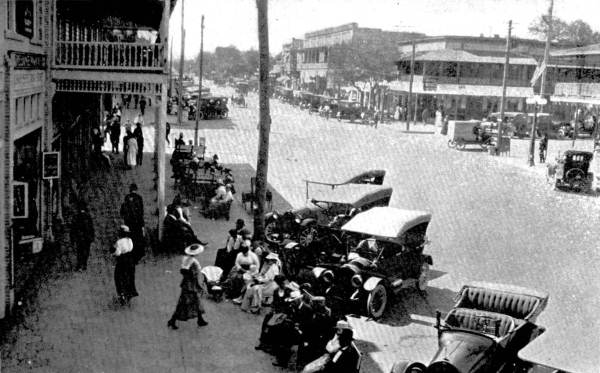
1910sCentral Avenue looking west, c. 1918 — three years after the avenue was paved from 9th Street westward in 1915, opening up the corridor that became Grand Central and the Edge.
Courtesy of State Archives of Florida, Florida Memory. n040202.
 1920s
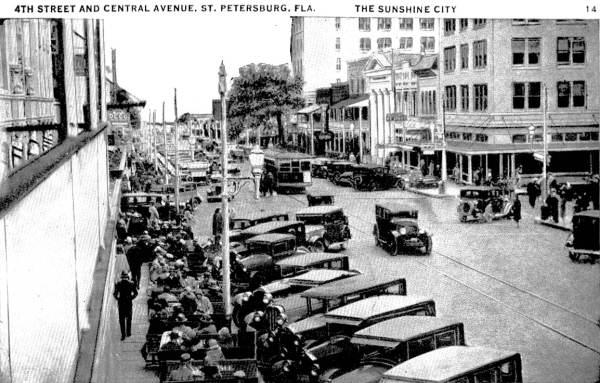
1920s4th Street and Central Avenue looking east, c. 1920 — the same Central Avenue retail corridor that today extends 31 blocks west through Grand Central and the Edge.
Courtesy of State Archives of Florida, Florida Memory. n040185.
 1900s
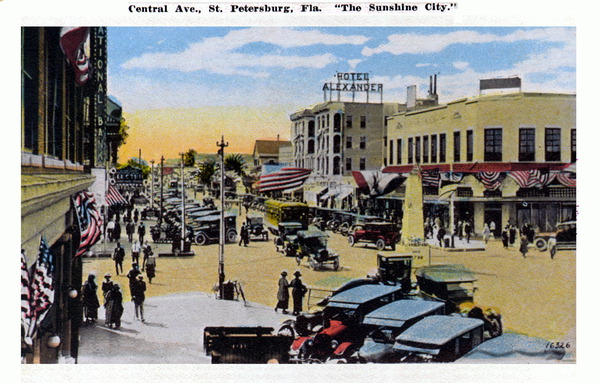
1900sCentral Avenue, c. 1900 — twelve years after the Orange Belt Railroad arrived at what is now the eastern edge of the Edge District in June 1888.
Courtesy of State Archives of Florida, Florida Memory. pc4126.
 1890s
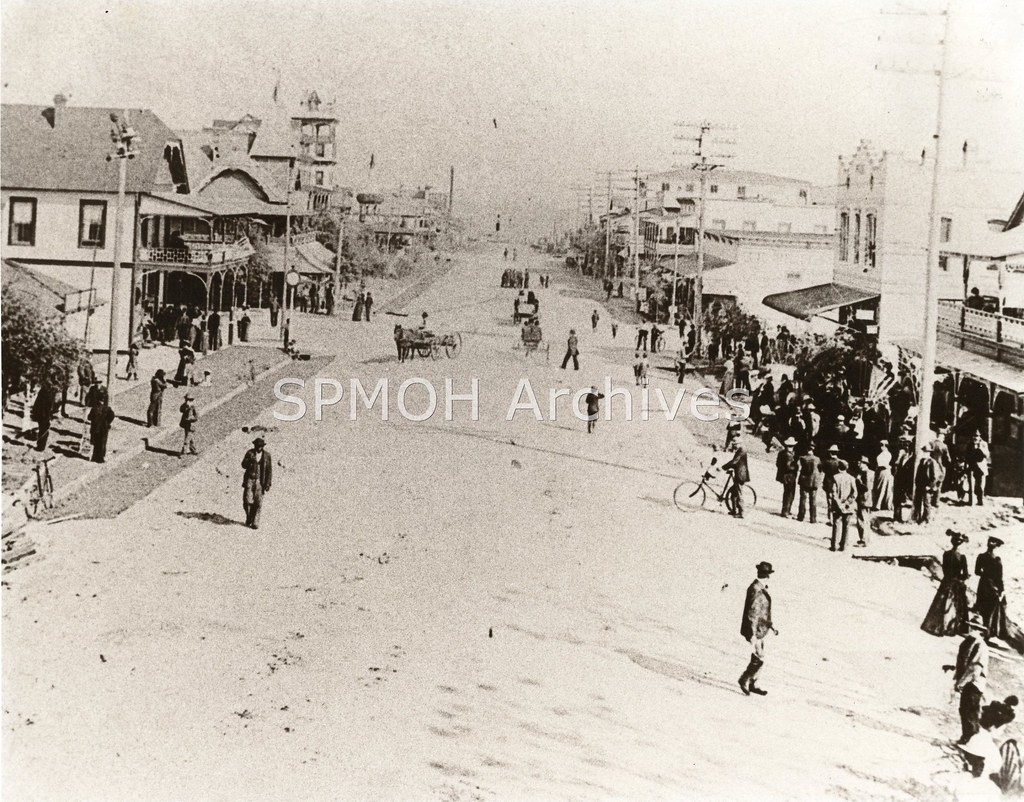
1890sCentral Avenue looking east from 4th Street, 1895 — only seven years after the railroad arrived. The corridor that became today's restaurant-and-brewery main street was already the city's commercial spine.
Courtesy of St. Petersburg Museum of History Archives, photo no. p01504.
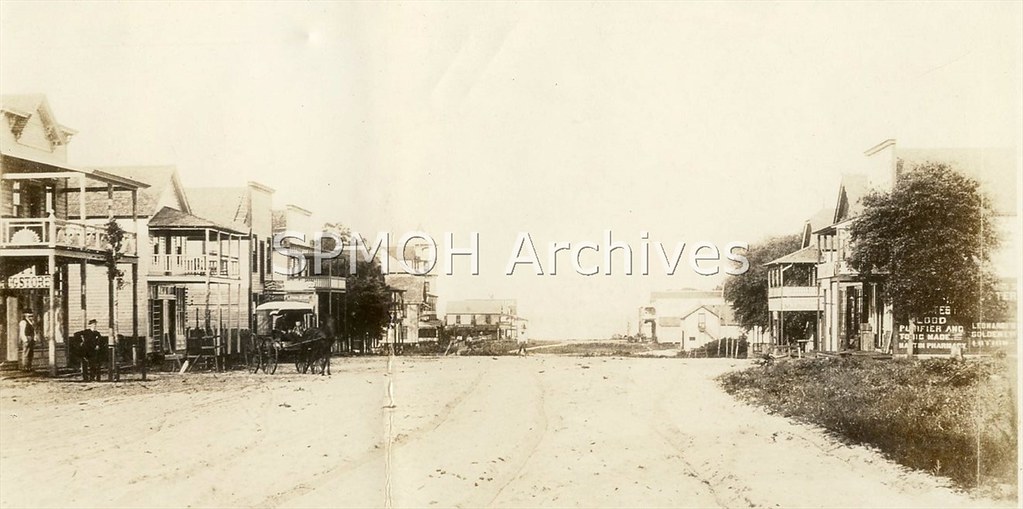 1890s
1890sEast end of Central Avenue, 1895 — the original commercial cluster that grew up around the Orange Belt Railroad terminus near today's MLK and 1st Avenue South.
Courtesy of St. Petersburg Museum of History Archives, photo no. p00203.
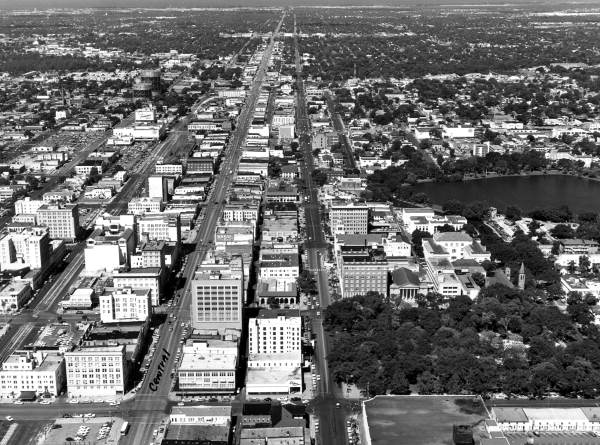 1960s
1960sAerial view looking west along Central Avenue, August 1960 — the 'automobile alley' era that defined Grand Central before the late-20th-century revitalization.
Courtesy of State Archives of Florida, Florida Memory. rc19736.
Commute Times
Click any destination to see the mapped route with real-time traffic estimates.
Pros & Cons
The Pros
- Walk Score 88 — the most walkable corridor in St. Pete outside of downtown proper
- Most concentrated independent restaurant, brewery, and bar scene in the city — locals eat here, not downtown
- Mostly flood zone X — same high-elevation ridge as Kenwood, well above the surge lines
- Helene and Milton barely touched the corridor — wind damage but no widespread interior flooding
- 8-minute drive (or 25-minute walk) to downtown St. Pete; 15-min drive to the beaches via the SunRunner BRT or 1st Ave
- New townhome inventory at $600K-$900K is meaningfully cheaper than comparable Kenwood bungalows or downtown condos
- Active commercial real estate pipeline (Moxy Hotel, Edge Collective, 2730 Central, 2801 Central, multiple townhome projects) — appreciation tailwinds are real
- Florida Main Street designations + the Grand Central Master Plan protect the small-scale, low-rise character
The Cons
- Central Avenue itself can be loud — proximity to bars and breweries matters block by block, especially Thursday-Saturday night
- Limited true single-family inventory directly on or adjacent to Central Avenue — most residential is on the north and south side streets
- New townhomes have HOA dues and varying construction quality — not all builders are equal
- Less mature tree canopy than Kenwood proper — many of the residential side streets feel more exposed
- Bar and restaurant proximity means parking pressure and weekend congestion — and the GCDA itself has flagged 1st Ave N and 1st Ave S as streets people 'treat like a drag strip'
- Active construction pipeline means dust, noise, and crane visibility for the next 3-5 years on multiple blocks
- No NRHP or local historic district protection in the Grand Central / Edge corridor itself — older commercial buildings can still be demolished (the Grand Central Master Plan is a planning document, not a regulatory one)
What You Need to Know
Who Should Live Here
Buyers who want walkable urban living above all else — younger professionals, downsizers, second-home owners, anyone who wants to live without thinking about where they're going to park for dinner. The new townhome inventory has opened up the corridor to buyers who want low-maintenance, modern construction with full walkability. The side-street bungalow buyer in Grand Central is functionally a Kenwood-curious buyer at a lower price point. Not the right fit for buyers who want a quiet, tree-lined, single-family-only block — Kenwood and Crescent Lake will serve them better.
What to Watch For
Verify the specific block. The corridor has real noise variation — a bungalow at 26th and 1st Ave N is a different lifestyle than a townhome on 22nd Street fronting Central. Ask about parking — some new townhomes have one assigned space, which is tight if you have two cars. For the older side-street bungalows, the same diligence applies as anywhere else in pre-war St. Pete: 4-point inspection, wind mitigation, knob-and-tube hiding behind plaster, cast-iron drain lines. New construction townhomes need the same scrutiny — check the builder's track record, look at HOA financials, understand whether the building was built to current windload code. And if you're buying anywhere within two blocks of Central, take an honest walk through the neighborhood at 10 PM on a Friday before you go under contract.
What to Expect
A real urban neighborhood in active transition. Your weekly rhythm: morning coffee at Bandit or Bandits or Hogg Batch, lunch at Pulpo or Trophy Fish, dinner at Wild Child or Baba, drinks at Cycle Brewing or Green Bench or Cage. Saturday Morning Market is a 10-15 minute walk. Halloween on Central in October is the largest open-air Halloween event in the city — 100,000+ attendees on 22 blocks of closed-off Central. The Pride Street Carnival in June still runs through Grand Central even though the main parade moved downtown. Construction crews on at least two blocks at any given time. New restaurants opening every few months. The corridor is not finished — that's the whole point of buying here.
Aaron's Honest Take
Aaron & Aubrey Chand
Living in St. Pete · Excellecore Real Estate
Here's what I tell buyers thinking about Grand Central or the Edge: this is the urban-living value play in St. Pete right now. Downtown condos hit you with HOA dues that look more like a second mortgage. Old Northeast and Snell Isle are protected and gorgeous but the entry point is real. Kenwood bungalows are charming and you get the historic protection, but inventory is tight. Grand Central sits in the middle of all of that — flood zone X, Walk Score 88, side-street bungalows in the high-$500s, new townhomes in the $700s, and you're a 5-minute walk from the best independent restaurant scene in the city. That's a hard combination to beat in St. Pete right now.
The honest cons matter though. Central Avenue is loud on weekends — that's not a complaint, it's the entire reason people want to be here, but you have to know your block. The townhomes are hit-or-miss; some of the newer projects are well-built and some are slap-it-up speculation. And there's no historic district protection for the commercial corridor itself, which means a 110-year-old building can still get torn down if a developer pencils out the math. The Grand Central Master Plan is a planning document, not a binding rule. So you're buying into momentum, not certainty.
The neighborhood I tell people to visit before buying is the one between 16th and 26th, on 1st Ave N or 1st Ave S — the residential side streets that ride the wave of Central without sitting directly on top of it. You get walkable dinner. You get the SunRunner to downtown. You get the Pride mural and the Halloween street fair and the corridor energy. And you're paying meaningfully less than a Kenwood bungalow three blocks north. We've helped over 50 buyers relocate to Tampa Bay in the last couple years, and the ones who land here are the ones who actually use the city — they walk to dinner four nights a week, they know the bartenders, they ride bikes to the Saturday Market. If that's your life, this is your neighborhood.
The Buying Reality
30-45 days for fairly-priced homes; new construction townhomes can sit longer if priced ahead of comps
Moderate — typically 8-15 active listings across the combined corridor, plus rolling new-construction releases
Occasional on side-street bungalows under $700K; less common on new townhomes
Get pre-approved, line up insurance quotes before you go under contract, walk the specific block at 10 PM on a Friday, and be specific with your agent about what corridor noise you can and can't tolerate. For new construction townhomes, ask for the builder's last 3 closings — talk to those buyers.
Schools & Zoning
Magnet Options
Private / Independent
Pinellas County operates a controlled-choice attendance system, so zoning is one factor among several. Most addresses on the corridor zone to Melrose Elementary; the high school zone shifts between St. Petersburg High (north of Central) and Gibbs High (south of Central) depending on the specific block. Use the Pinellas County Schools zone locator at pcsb.org to verify any specific address. Grand Central is also among the closest urban-core neighborhoods to the Lakewood High Center for Advanced Technologies magnet — competitive but accessible from this address range.
Insurance & Maintenance Reality
Pre-War Home Considerations
Insurance for the Grand Central / Edge corridor splits hard between the older commercial buildings (most aren't relevant for residential buyers), the side-street pre-war bungalows, and the new construction townhomes. Each is a different conversation.
For a 1920s bungalow on a residential side street: same playbook as Kenwood. Carriers will want a 4-point inspection (roof, electrical, plumbing, HVAC) and a wind-mitigation report. Roof age is the single biggest factor — anything over 15 years on a wood-frame home will narrow your carrier options, over 20 years can be uninsurable through standard markets. Knob-and-tube wiring, cast-iron drain lines, and galvanized water mains are common surprises and can each add $5K-$30K to the renovation budget.
For a new construction townhome: insurance is dramatically simpler. Modern windload code, hurricane-rated impact windows, new electrical and plumbing — most carriers will write these without much friction. The catch is the HOA's master policy. Read it carefully. Some HOAs cover everything on the building exterior and you only insure the interior; some only cover the foundation and you're responsible for everything from the studs out. The wrong assumption here can cost six figures after a storm.
For any purchase: get insurance quotes before you go under contract, not after. The corridor is mostly flood zone X but a handful of blocks tip into AE near the southern edge — verify the elevation certificate and FEMA flood zone for the specific parcel before signing.
Storm Impact: Helene & Milton
The Grand Central / Edge corridor came through Helene and Milton significantly better than the waterfront neighborhoods. Most of the district sits in flood zone X on the same elevation ridge as Kenwood (28-40 ft). Storm surge from Helene reached the downtown Vinoy and lapped at Bayboro Harbor but didn't penetrate inland to Central Avenue. Wind damage from Milton was the bigger event — downed trees, scattered roof damage, the Tropicana Field roof a few blocks south.
Hurricane Helene
Sep 2024Limited interior flooding for residential blocks. Storm surge stayed east of MLK Street; Central Avenue itself didn't see standing water. A few side-street properties closer to Booker Creek (south of 1st Ave S, west of 22nd Street) saw water in yards but generally not in living spaces. Compared to Shore Acres or Snell Isle — both of which had widespread interior flooding — the corridor was largely dry.
Hurricane Milton
Oct 2024Wind was the story here. 18+ inches of rain in some St. Pete neighborhoods, 100+ mph wind gusts. The Tropicana Field roof tore off (Trop sits in the southern portion of the Edge District). A construction crane fell at 400 Central downtown. Roof damage on older commercial buildings along Central was widespread but generally repairable; some side-street bungalows lost shingles and had soffit damage. A few business interruption claims from the corridor's restaurants, but no widespread flood-driven destruction the way Shore Acres and Treasure Island saw.
Blocks to Watch
Side-street blocks south of 1st Ave S between roughly 22nd Street and 26th Street can drop in elevation toward the Booker Creek drainage. Verify the elevation certificate and FEMA flood zone for any specific lot before purchasing — most are still X, but a handful are AE.
Community & Events
Halloween on Central
Annual, late October
St. Petersburg's largest open-air Halloween celebration. Two miles of car-free Central Avenue from 31st Street to MLK, 100,000+ attendees, 150+ local vendors, live music, trick-or-treat stations, food trucks, costume contests. Launched in 2020 and now the corridor's signature annual event. Organized in partnership between the Grand Central District, Edge District, and the City of St. Pete.
St. Pete Pride Street Carnival in Grand Central
Annual, June (Pride Month)
Grand Central is the birthplace of St. Pete Pride (first parade 2003, now Florida's largest LGBTQ+ celebration). The main parade moved downtown in 2017, but the Sunday Street Carnival on Central Avenue still anchors Pride weekend in the district — 11 blocks of vendors, performers, and live entertainment from 20th to 31st Street.
Second Saturday Art Walk
Monthly, second Saturday of each month
Citywide art walk that runs through Grand Central and the Edge alongside the Warehouse Arts District and Central Arts. Galleries, studios, and many of the corridor's restaurants extend hours. The Imagine Museum (1901 Central) is a frequent anchor stop.
Grand Central District Association events and meetings
Monthly committee meetings; rolling promotions
The 501(c)(3) GCDA runs four standing committees (Economic Vitality, Design, Marketing, Organization) and acts as the neighborhood advocate for residents and businesses alike. Membership is open to anyone in the district.
Edge District Business Association events
Rolling, including the annual Edge District Block Party
The Edge Business District Association runs district-wide promotions and the annual Edge Block Party. The association was instrumental in saving the St. Petersburg Hotel from demolition and shaping the Edge Collective master plan.
What Residents Are Saying Online
Public commentary on Grand Central and the Edge tends to converge on three themes: (1) the corridor is the single most walkable food/drink/retail stretch in St. Pete outside of downtown proper, (2) it's an active construction zone — energy and noise come together — and (3) it's the heart of St. Pete's LGBTQ+ business community, which residents, journalists, and the GCDA itself reference as a defining identity. Below are quotes from local journalism, the GCDA's executive director, the corridor's small business owners, and Tampa Bay Times restaurant reporting — the most substantive verifiable on-record voices for this corridor. Reddit and City-Data thread quotes were not directly retrievable for this neighborhood; quality over quantity per the brief.
“The District is a vibrant and eclectic neighborhood that has preserved its walkable, old main street character and is full of small businesses.”
“Pedestrian safety takes priority. We've been trying to get crosswalks and a traffic light across 1st Avenue North and South. There are six blocks people treat like a drag strip.”
“The Edge District is going to become one of the densest in the county and certainly in the city over the next three years.”
“When I was looking for a place for my business, just by happenstance I drove into Grand Central and said, 'This is it!'”
“About 80 percent of the buildings in Grand Central were vacant, with the exception of struggling businesses, boarded-up buildings and lots of strip clubs. Zoning regulations in the '70s meant residential was no longer allowed there. We had to change that.”
“There's part of us that's elated that we're a part of the growth of this city — but it's also a double-edged sword.”
Further Reading & Resources
Civic & Preservation
Edge District Improvement Plan / Baum Avenue projects
Adopted by city council in 2016. Outlines the streetscape, utility undergrounding, brick-street restoration, and pedestrian projects on Baum Avenue.
City of St. Petersburg — Historic Preservation Program
Citywide preservation program. Useful context for adapting historic commercial buildings on Central Avenue, even though the corridor itself is not a designated historic district.
Journalism
St Pete Catalyst — Phase 2 of Edge District redevelopment moves forward
January 2024 reporting on the Edge Collective master plan, the Moxy Hotel, and the 20-story tower replacing surface lots. Useful for understanding the construction pipeline.
St Pete Catalyst — Redevelopment pumps new life into a St. Pete gas station
September 2025 coverage of the 2801 Central Avenue project (former Citgo) — illustrative of the corridor's ongoing infill.
St Pete Catalyst — A win for historic preservation is a win for St. Pete
December 2024 piece documenting that 60%+ of commercial buildings along Central Avenue between 1st and 31st Streets predate 1960, with 21% built in the 1920s. Source for the corridor's historic-stock data.
St Pete Rising — Here's what's next for the Grand Central District
March 2024 deep dive on the Grand Central Master Plan, height caps, pedestrian safety priorities, and the GCDA's WSP-led planning process.
St Pete Rising — Then and Now: The rise of the Edge District
Long-form 2022 history of the Edge District's transformation from boarded-up storefronts to 130+ businesses and 1,500+ residents.
Tampa Bay Times — How downtown construction is affecting local restaurants
May 2023 reporting on the small-business impact of the Edge Collective and 400 Central construction, including direct quotes from owners of Bodega, Brick & Mortar, Baba, and Barbouni.
Tampa Bay Times — How St. Pete Pride became the largest LGBTQ+ festival in the Southeast
Documents the 2003 founding of St. Pete Pride in the Grand Central District and the corridor's role in its growth into a 500,000-person event.
83 Degrees Media — Three Florida Main Streets in St. Pete
Long-form feature covering the Edge District, Grand Central District, and Deuces Live as Florida Main Street projects — including the 1980s vacancy baseline and the residential-buyer-driven revitalization story.
Neighborhood Association
Grand Central District Association (official)
The 501(c)(3) Florida Main Street nonprofit running the western half of the corridor. Member directory, events calendar, master plan documentation, and committee meeting schedule.
Grand Central District — About page
Background on the GCDA, founded in 2000, plus the four committees (Economic Vitality, Design, Marketing, Organization) and how to get involved.
Edge District Business Association (official)
The award-winning Florida Main Street nonprofit running the eastern half of the corridor. District map, business directory, and the Edge District Improvement Plan.
Cultural
Visit St. Pete-Clearwater — Grand Central District
Official tourism page covering Grand Central's restaurants, galleries, and cultural identity.
Visit St. Pete-Clearwater — Edge District
Official tourism page for the Edge District including landmark businesses, murals, and the Sun on the Edge sculpture.
Imagine Museum
34,000 square-foot contemporary glass art museum at 1901 Central Avenue — a Grand Central anchor cultural institution.
What's Nearby
Imagine Museum
in district
Green Bench Brewing Co.
in district (Edge)
Bodega on Central
in district (Edge)
Cycle Brewing
0.6 mi (Central Arts adjacent)
Tombolo Books
in district (Grand Central)
Tropicana Field / Historic Gas Plant District
0.4 mi
Historic Kenwood (residential overlap)
0-0.5 mi north
Downtown St. Pete waterfront / The Pier
1.5-2 mi east
Saturday Morning Market (Al Lang)
1.5 mi east
Sunken Gardens
1.0 mi north
St. Pete Beach
8 mi west
Pinellas Trail (bike trail access)
0.5 mi
Elevation & Flood Risk
32ft average elevation
FEMA Flood Zone X (most blocks along Central Ave and side streets sit on the high-elevation ridge) — flood insurance required
Thinking about Grand Central District / Edge District?
We've helped over 50 buyers relocate to Tampa Bay. Let's talk about whether Grand Central District / Edge District is the right fit for you.
Explore more neighborhoods
View All in Relocation Guide