Euclid–St. Paul
Quiet 1920s Pocket on the High Ridge
Platted 1921 by John B. Green on a former orange grove
Founded
240 acres
District Size
MLK Jr St N (E), 16th St N (W), 22nd Ave N (N), 9th Ave N (S)
Boundaries
X (most of district)
Flood Zone
35-45 ft
Elevation
~2,880 (City-Data)
Population
Neighborhood Overview
Euclid–St. Paul is the quiet 240-acre pocket sitting between MLK Jr Street and 16th Street North, bounded by 22nd Avenue North on top and 9th Avenue North on the bottom. It started life as an orange grove in 1912 and got platted into an exclusive residential subdivision in 1921 by developer John B. Green. The original deed restrictions on 15th Avenue required a minimum house value of $6,000 and at least six rooms — that's the kind of build standard that produced the 1920s bungalows, two-story Craftsmans, Spanish bungalows, and Mediterranean Revivals you still see today.
Most relocation buyers don't find Euclid–St. Paul on their own. Old Northeast, Crescent Lake, and Crescent Heights soak up the historic-neighborhood attention, and Euclid–St. Paul gets discussed as a more affordable cousin sitting one ridge to the west. That gap in awareness is the opportunity. The neighborhood sits on the same general high-elevation ridge as Crescent Lake — most of the district is flood zone X, elevations run 35-45 feet, and insurance is a normal conversation rather than the catastrophic one you have on the waterfront.
The character is residential, not commercial. There's no Central Avenue running through it. You walk to Crescent Lake Park (the 56-acre city park to the north), to Trader Joe's at 2742 4th Street North, and to the restaurant cluster on 4th Street that sits just outside the eastern boundary. Streets are quieter than Old Northeast or Kenwood, with mature oaks and magnolias, original brick stretches in places, and a neighborhood association — ESPNA — that's been running events since the early 1990s. It's a real neighborhood, not a destination.
History & Origins
Platted 1921
John B. Green
1920s Florida Land Boom
The land that became Euclid–St. Paul started as an orange grove. In 1912, Mary Eaton co-owned the parcel north of downtown — at that time, the area was still considered country, well outside the developed core of St. Petersburg. The Orange Belt Railroad had brought St. Pete into existence in 1888, and the city was expanding north along 4th Street and the streetcar lines. The grove sat just to the west of that growth corridor.
In 1921, developer John B. Green bought the land and platted it as an exclusive residential neighborhood. The original subdivisions inside the 240-acre footprint included Edina-Garden of Eden, Hilcrest, and Old Kentucky. Green set deed restrictions to keep the build quality up — homes along 15th Avenue had to be valued at $6,000 minimum (real money in 1921) and contain at least six rooms exclusive of bathrooms, closets, and porches. The neighborhood filled in through the 1920s land boom, with Spanish bungalows, Craftsman two-stories, Colonial Revivals, and the occasional Mediterranean Revival rising on 50- to 75-foot lots. Euclid School opened in 1925 (later converted to apartments), and St. Paul's Catholic School followed in 1929 after the parish was established that same year — the school formally opened September 15, 1930 with Franciscan Sisters of Allegany teaching 136 students in grades one through nine.
After the 1926 Florida land bust and the Depression, building slowed. The neighborhood saw a second wave of mid-century block construction in the 1940s and 1950s — City-Data records show 276 homes built in the 1950s, second only to the 649 built before 1939. St. Paul's Catholic School became girls-only in 1956 (one notable boys-era alumnus: Bill Freehan, who went on to become an All-Star catcher for the Detroit Tigers). The Euclid Methodist Episcopal Church, built 1936, has been converted into event space. The neighborhood association — Euclid St. Paul's Neighborhood Association, ESPNA — has been an active volunteer-led organization for decades, running an annual Haunted Hike since 2005, an Oktoberfest, summer bike crawls, and front-yard parties. Today the neighborhood reads as a quieter, lower-key cousin to Crescent Lake and Old Northeast — same era of construction, same general elevation, materially lower price per square foot.
Architecture & What You'll Be Buying
Predominant Styles
Typical Year Built
1920s-1940s, with substantial 1950s mid-century infill and scattered new construction since 2010
Typical Size
1,000-2,500 sq ft on 50x100 to 75x130 lots — pre-1939 homes are the largest cohort
Construction
Pre-1940 homes are predominantly wood frame with stucco or clapboard. 1950s homes are typically concrete block. Original deed restrictions on 15th Avenue specified $6,000 minimum value and six-room minimum — those streets show the highest concentration of the early 1920s estate-style homes. Spanish bungalows in the eastern Euclid section are notable. Original brick stretches survive on parts of the street grid, though most have been paved over.
Materials & Streetscape
Wood frame with stucco or clapboard on pre-1940 homes; barrel tile and Spanish tile on Mediterranean Revivals; concrete block on mid-century construction. The St. Pete Historic Preservation design guidelines list Euclid–St. Paul specifically for Tudor Revival, Craftsman, and Mediterranean Revival styles.
Notable Homes & Landmarks
826 21st Ave N (Euclid section)
Built Mid-1920s
Spanish bungalow with a large living room, dining room, kitchen and breakfast room with built-ins, fireplace, bookcases and writing desk, oak finish and floors, three bedrooms, tile bath, steam heat, three porches, laundry, private water system, two-car garage, and fruit trees — one of the better-documented surviving 1920s homes in the Euclid section.
Built for Judge Charles Hervey Jackson (b. 1862, NJ), College of New York 1882 and Columbia Law 1885, president of Portchester Standard Gas & Light Co. His first wife Margaret McElroy was a niece of President Chester A. Arthur. Judge Jackson died in 1939, age 77.
Euclid School (originally 1925)
Built 1925
Built as a public grammar school during the neighborhood's first wave of build-out. Later converted to apartments — one of the original civic anchors of the platted subdivision.
St. Paul's Catholic School
Built Opened 1930 (parish established 1929)
The oldest Catholic parochial school in Pinellas County. Opened September 15, 1930 with five Franciscan Sisters of Allegany and 136 students. Originally co-educational; became girls-only in 1956. Now serves K-8.
Notable alumnus from the boys-era football team: Bill Freehan, who went on to become an 11-time All-Star catcher for the Detroit Tigers and a 1968 World Series champion.
Euclid Methodist Episcopal Church
Built 1936
Built during the Depression as a neighborhood church. Now in the process of being converted to an event-space use — one of the few significant institutional buildings in the original platted neighborhood that survives.
Then & Now
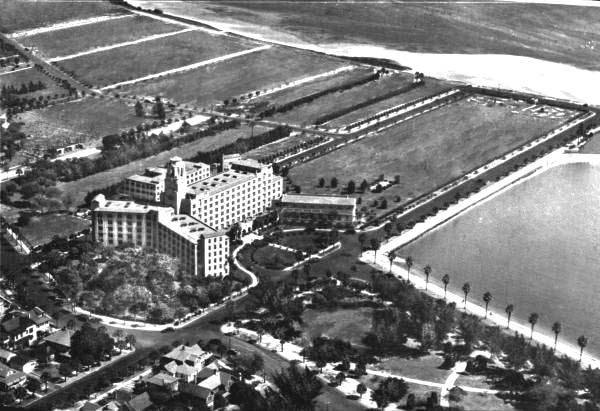 1920
1920St. Petersburg in 1920 — one year before John B. Green platted Euclid–St. Paul out of the former orange grove.
Florida Memory / State Archives of Florida — pha201
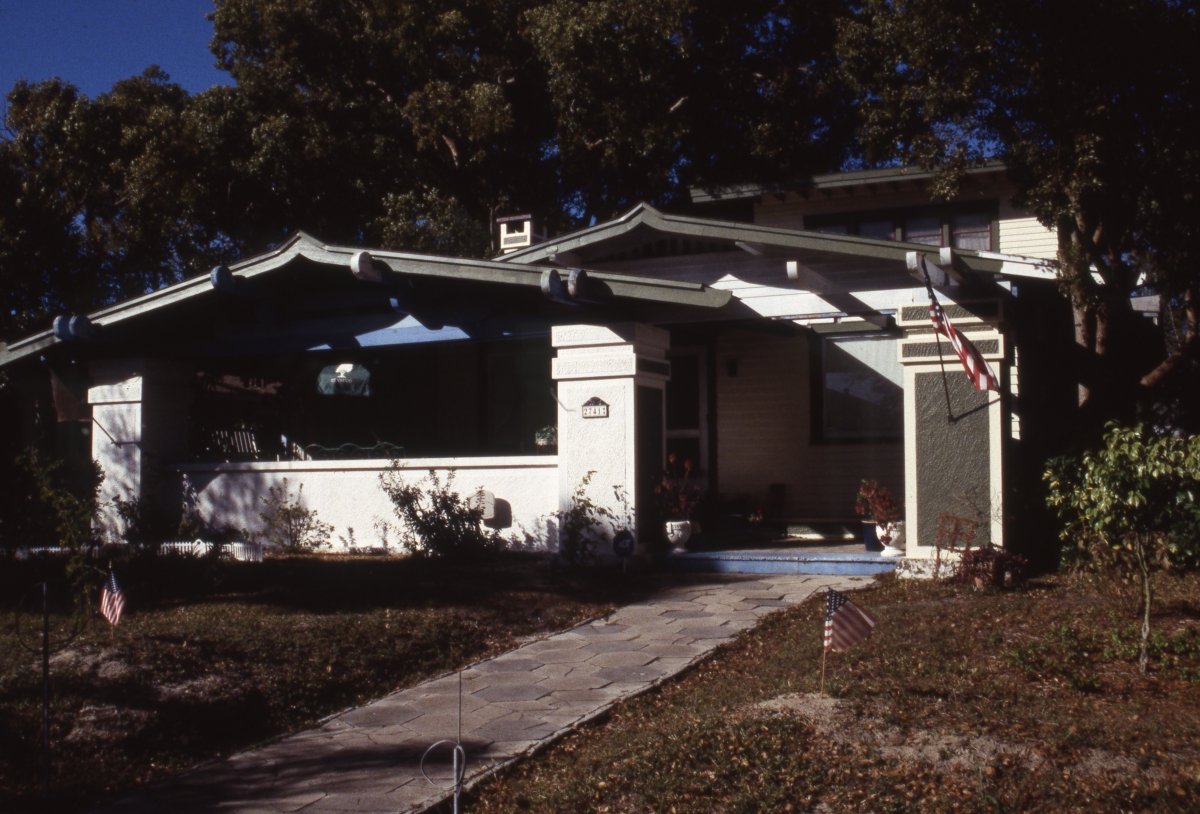 1920
19201920s Craftsman bungalow — the architectural style that anchors much of Euclid–St. Paul's pre-1940 housing stock alongside Spanish bungalows and Mediterranean Revivals.
Florida Memory / State Archives of Florida — msf-pi712-001
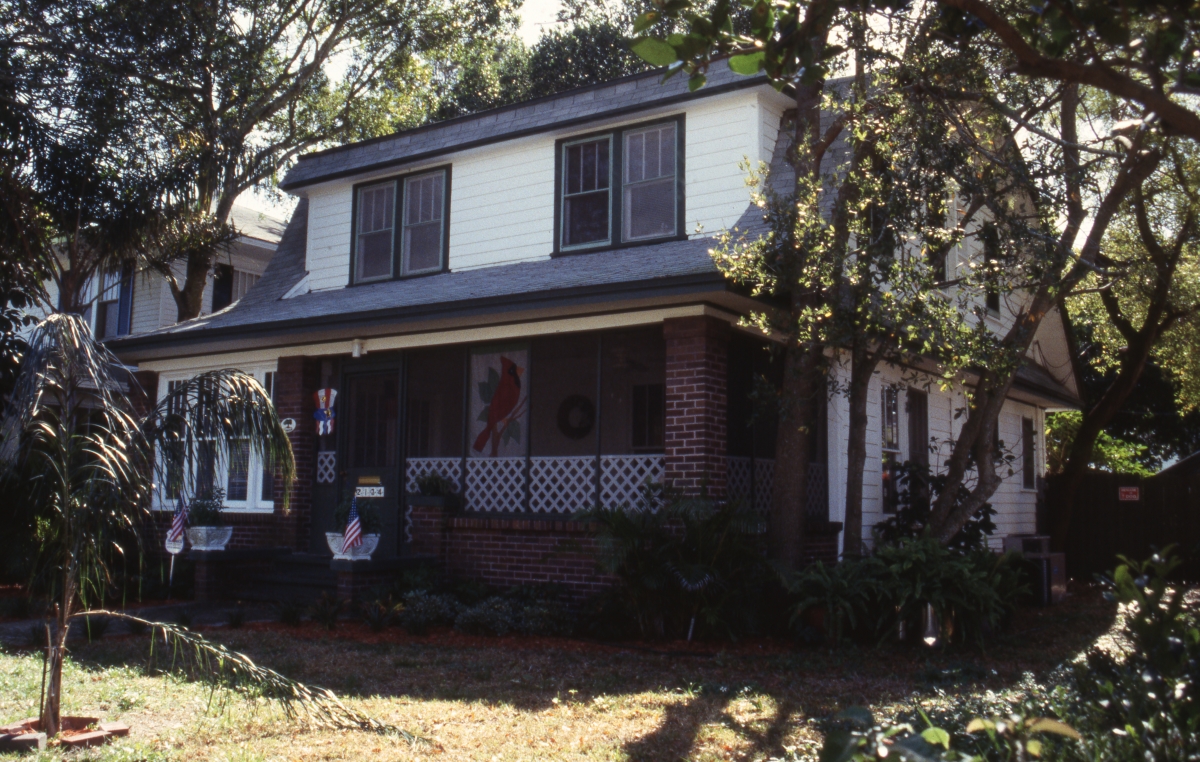 1925
1925Mid-1920s cottage construction — the build wave that filled in Euclid–St. Paul during John B. Green's original platted subdivisions (Edina-Garden of Eden, Hilcrest, Old Kentucky).
Florida Memory / State Archives of Florida — msf-pi7124-001
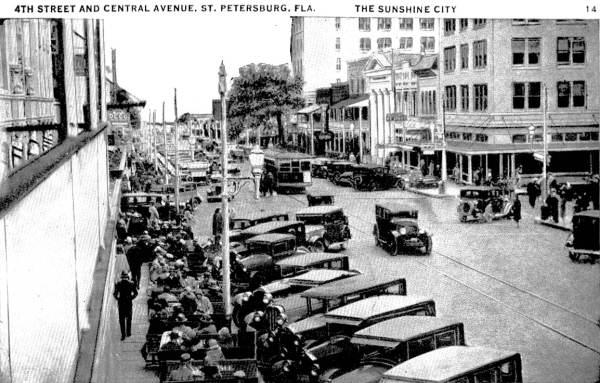 1920
19204th Street and Central Avenue in 1920 — the downtown corridor that Euclid–St. Paul residents have biked to for a century.
Florida Memory / State Archives of Florida — n040185
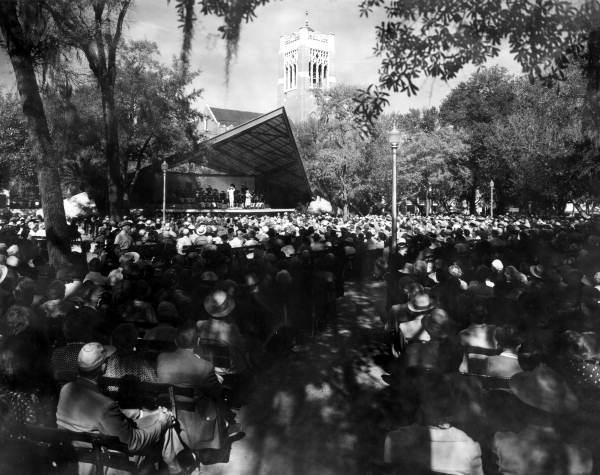 1920
19201920 band concert at Williams Park — the broader civic context for the neighborhood's 1921 platting and 1920s build-out.
Florida Memory / State Archives of Florida — rc19754
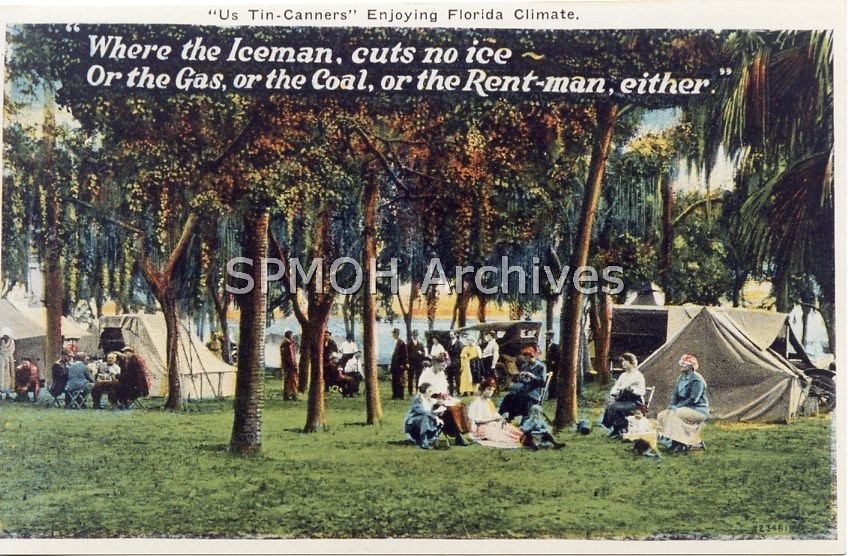 1915
1915Tin Can Tourists in 1915 — the visitor wave that funded St. Pete's 1920s land boom and the construction of Euclid–St. Paul's first homes.
St. Petersburg Museum of History — p01748
Commute Times
Click any destination to see the mapped route with real-time traffic estimates.
Pros & Cons
The Pros
- Flood zone X across most of the district — same elevation ridge (35-45 ft) as Crescent Lake and Crescent Heights
- Walk to Crescent Lake Park's 56 acres and Huggins-Stengel Field (the old Yankees spring training site)
- 1920s historic architecture — bungalows, Spanish, Mediterranean, Colonial — without Old Northeast pricing
- Active neighborhood association (ESPNA) with real events: Haunted Hike since 2005, Oktoberfest, summer bike crawl, front-yard parties
- Walk to Trader Joe's and the 4th Street North restaurant strip — three grocery stores within a few blocks
- 8 minutes to downtown St. Pete, 20 minutes to St. Pete Beach, easy I-275 access
- Quieter residential streets than Old Northeast — fewer Airbnbs, less downtown spillover
- Trading at a meaningful discount to Crescent Lake and Old Northeast for comparable square footage
The Cons
- Low brand recognition with relocation buyers — most don't find it without local guidance
- Pre-1940 wood-frame homes need careful inspection (foundation, electrical, plumbing, roof age)
- MLK Jr Street and 16th Street boundaries are commercial/traffic arteries — block selection inside the district matters
- No commercial corridor inside the neighborhood — you'll drive or walk to 4th Street for restaurants
- Smaller neighborhood than Old Northeast or Kenwood — inventory is thin at any given time
- Mix of build eras means uneven streetscape — some blocks are pristine 1920s, others have dated 1950s ranches and infill new construction next to historic stock
What You Need to Know
Who Should Live Here
Buyers who want a 1920s historic home on a high-elevation ridge but don't need to be on a name-brand street. The right Euclid–St. Paul buyer values quiet residential character over walkable nightlife, has done enough St. Pete research to recognize a flood-zone-X neighborhood when they see one, and is willing to put a couple of years into a 100-year-old home. Young families and young professionals are the dominant cohort here — Niche ranks Euclid–St. Paul as the fifth-best neighborhood in St. Pete, and median household income runs around $92K versus $73K statewide. If you'd be happy to bike to Central Ave in 10 minutes rather than walk to it, this fits.
What to Watch For
The borders matter more here than in most St. Pete neighborhoods. MLK Jr Street and 16th Street are major traffic arteries, and the blocks closest to those boundaries trade differently than the interior streets. Inside the district, the original 1920s deed-restricted streets (15th Avenue and the higher-end blocks of the original platted area) carry the strongest character — that's where the Spanish bungalows and Mediterranean Revivals concentrate. Beyond that: any pre-1940 wood-frame home here needs a 4-point inspection, a wind-mit report, and an honest look at roof age before you write the offer. Check for active galvanized water mains, knob-and-tube wiring hiding behind plaster, and cast-iron drain lines reaching the end of their service life. None of those are dealbreakers — they're the price of admission for a 100-year-old home in flood zone X.
What to Expect
Quieter streets than Old Northeast or Crescent Lake, with mature oak and magnolia canopy, magnolia-lined sidewalks, and stretches of original brick. A mix of architectural eras — 1920s bungalows next to 1950s block ranches next to 2020s infill — that reads as a real, lived-in neighborhood rather than a curated district. An active neighborhood association running events you'll actually attend (Haunted Hike, Oktoberfest, the summer bike crawl). A 10-minute bike ride to Central Avenue, a five-minute walk to Trader Joe's, and Crescent Lake Park's 56 acres a few blocks north when you want green space. Bars, coffee shops, and restaurants on 4th Street within walking distance for most blocks.
Aaron's Honest Take
Aaron & Aubrey Chand
Living in St. Pete · Excellecore Real Estate
Here's what I tell buyers who ask me about Euclid–St. Paul: this is the neighborhood you look at when you want what Old Northeast offers but you can't make Old Northeast pricing work. Same general era of construction — 1920s bungalows, Spanish, Mediterranean, the occasional Tudor — same flood-zone-X high ground, same walkability to downtown, same active neighborhood association. The difference is brand recognition. Most relocation buyers haven't heard of it, so it trades at a discount. That gap is the opportunity.
Aubrey and I have walked these streets at every time of day. The boundary streets matter — MLK on the east and 16th on the west are commercial arteries with traffic. Inside the district, especially around the original 1920s deed-restricted blocks, you get genuinely quiet residential streets with mature oak canopy and stretches of original brick. The pricing range we see is roughly $500K for a 1,000-square-foot two-bedroom up to about $900K for an 1,800-square-foot three-bedroom, with newer infill four-bedrooms breaking $1M. That's meaningfully below comparable square footage in Crescent Lake or Old Northeast.
The honest cons: most homes here are 80 to 100 years old, and that means real inspection work. Wood frame, original electrical and plumbing, roof age that matters for insurance — none of that is exotic, it's just the cost of buying a historic home. Inventory is thin because the neighborhood is small (240 acres versus Old Northeast's 425), so when something good comes up you have to move. And the streetscape is uneven — you'll see beautifully restored 1920s bungalows next to dated 1950s ranches next to brand-new construction. If that mix bothers you, look at Crescent Lake or Kenwood instead. If it reads to you as a real neighborhood that hasn't been turned into a museum, this is one of the strongest value plays north of downtown right now.
The Buying Reality
~30 days for fairly-priced homes; renovated bungalows on the better blocks go in under three weeks
Thin — typical district has 4-8 active listings across all price points
Common on renovated 1920s homes under $750K, especially on the original deed-restricted blocks
Get pre-approved before you start touring, line up a 4-point and wind-mit inspector who's done pre-war St. Pete homes, and have insurance quotes in hand before you go under contract. On the original 1920s blocks, don't ask for cosmetic repair credits — sellers will take a lower offer with no nuisance asks over a higher offer with a list.
Schools & Zoning
Magnet Options
Pinellas County uses a controlled-choice attendance system, so address-based zoning is one factor among several. Woodlawn Elementary at 1600 16th Street North sits on the western edge of the neighborhood and is the typical zoned elementary. John Hopkins Middle and St. Petersburg High are the standard middle/high feeders. Notably, the City-Data profile shows 48.4% of K-12 students in this neighborhood attend private schools — substantially above the 16.5% Florida average — driven largely by St. Paul Catholic School inside the neighborhood, which has been operating since 1930 and is the oldest Catholic parochial school in Pinellas County. Pinellas County Schools' district headquarters is also located within the Euclid–St. Paul boundaries.
Insurance & Maintenance Reality
Pre-War Home Considerations
Euclid–St. Paul insurance pricing is meaningfully better than waterfront St. Pete — flood zone X across most of the district keeps standalone flood policy out of the mandatory-purchase math for most homes. Homeowners' insurance for pre-1940 homes still requires a 4-point inspection (roof, electrical, plumbing, HVAC) and a wind-mitigation report. Roof age matters most: anything over 15 years on a wood-frame home will narrow your carrier options, and over 20 years is hard to place in standard markets.
Common surprises on the older stock: knob-and-tube wiring hiding behind plaster on unrenovated 1920s homes, cast-iron drain lines at end-of-life, original galvanized water mains on the older blocks, and roofs that were last replaced 18-22 years ago. Each can add $5K-$30K to the renovation budget — none are dealbreakers, but you want to know before you write the offer.
The 1950s mid-century block stock is usually a cleaner insurance write — concrete block, simpler electrical, and roofs that have been on a normal replacement cycle. If insurance cost is a primary concern and you're flexible on architecture, the 1950s blocks inside the neighborhood are worth looking at. If you specifically want a 1920s bungalow, build the inspection and insurance conversation in early.
Storm Impact: Helene & Milton
Euclid–St. Paul came through the 2024 Helene-Milton sequence well. Most of the district sits at 35-45 feet of elevation on the same ridge as Crescent Lake — far enough inland and high enough that storm-surge flooding was a non-event for the bulk of the neighborhood. Compare that to Shore Acres, Snell Isle, and parts of Old Northeast where waterfront homes had widespread interior flooding. The primary storm story here was wind, downed limbs, and the occasional roof issue on already-stressed older roofs.
Hurricane Helene
Sep 2024September 26, 2024. Helene's surge worked the open-water Tampa Bay and Gulf-facing neighborhoods hard but didn't reach Euclid–St. Paul. Wind damage was typical for inland St. Pete: scattered fence loss, downed mature trees, some roof damage on older homes. No widespread interior flooding reported in the district.
Hurricane Milton
Oct 2024October 9, 2024 — two weeks after Helene. Milton's track came through inland from the south. Wind-driven rain and a handful of trees down were the main events. For homes that had stressed roofs going into Helene, Milton was the second hit that pushed them to a claim.
Blocks to Watch
The southeast corner of the district near 9th Avenue North and the lower elevations toward MLK Jr Street can run two to four feet lower than the high ridge — verify the specific elevation certificate on those blocks. Flood zone designation is X across most of the district per FEMA, but lot-level elevation still varies.
Community & Events
ESPNA Haunted Hike
Late October (annual since 2005)
The neighborhood's signature event — residents transform front yards into Halloween installations and hand out fictional spooky stories themed to the houses. Self-guided walking tour through the district.
ESPNA Oktoberfest
Annual (September)
Annual community gathering hosted by the neighborhood association — food, music, and a chance to meet the rest of the district.
Gears & Cheers Summer Bike Crawl
Summer
Group bike crawl through the neighborhood and adjacent districts — one of ESPNA's recurring social events.
Friday Front-Yard Parties
Weekly (in season)
Resident-hosted casual gatherings rotated through different front yards across the neighborhood. The kind of thing that doesn't happen in most St. Pete districts.
Holiday Light Decorating
December
Neighborhood-wide light decorating event in December — one of the better holiday displays north of downtown.
What Residents Are Saying Online
The recurring themes in resident commentary on City-Data, Niche, and the neighborhood association's own materials: Euclid–St. Paul is consistently described as a 'hidden gem' that's still affordable relative to nearby downtown neighborhoods, residents praise the friendly community and active neighborhood association, and the bike-to-Central-Ave proximity comes up repeatedly. Forum mentions on City-Data are sparse (the neighborhood gets less attention than Old Northeast or Kenwood) but uniformly positive — recommended alongside Allendale, Old Northeast, and Crescent Heights as a safer family-friendly area. Quote count is lower than for higher-profile neighborhoods because the volume of online discussion is lower, not because sentiment is mixed.
“Northeastern part of Euclid / St Paul”
“Other recommendations are Allendale, Old Northeast, Crescent Heights, and Euclid.”
“We absolutely love being able to hop on our bikes and be on Central Ave in under 10 mins, or to the pier in 15. Grocery shopping is a breeze with 3 grocery stores within a few blocks.”
“Kind of a hidden gem of a place, still one of the more affordable neighborhoods near downtown.”
“The neighborhood association has fun, family friendly events all the time, including movies in the park, bike crawl, and Haunted Hike during Halloween.”
Further Reading & Resources
Civic & Preservation
City of St. Petersburg — Historic Preservation Program
Official city .gov page for the historic preservation program — design guidelines, Certificate of Appropriateness process, and the local register. Euclid–St. Paul is referenced in design guidelines for Tudor Revival, Craftsman, and Mediterranean Revival styles.
City of St. Pete — Property Owner Tax Incentives
City and county 10-year ad valorem tax exemption for qualifying historic-property renovations — relevant for homes individually listed on the local register.
Preserve the 'Burg
Local historic preservation nonprofit founded by Peter Belmont — the leading advocacy and education organization for historic St. Pete neighborhoods.
Preserve the 'Burg — Tax Tips for Historic Property Owners
Plain-English overview of the city's 10-year ad valorem exemption and federal 20% rehab credit — relevant for individually listed historic homes inside Euclid–St. Paul.
St. Petersburg Coalition of Neighborhood Associations (CONA)
Citywide directory of neighborhood associations, including ESPNA — useful reference for understanding St. Pete's neighborhood-association ecosystem.
Neighborhood Association
Euclid St. Paul's Neighborhood Association (ESPNA)
The official neighborhood association — events, board, membership, meeting schedule, and community announcements.
ESPNA About Page
Mission and organizational background for the all-volunteer neighborhood association.
ESPNA on Facebook
Active Facebook page for event updates, neighborhood news, and resident communication.
Schools
Woodlawn Elementary
Zoned elementary school for most of Euclid–St. Paul. Located at 1600 16th Street North on the neighborhood's western edge.
John Hopkins Middle School
Zoned middle school — also home to the Center for Communications, Journalism & Multimedia magnet program.
St. Petersburg High School
Zoned high school — runs an International Baccalaureate program that pulls students from across Pinellas.
St. Paul Catholic School
K-8 private Catholic school inside the neighborhood. Opened September 15, 1930 — the oldest Catholic parochial school in Pinellas County. Drives the neighborhood's high private-school enrollment rate.
Pinellas County Schools
District headquarters is located inside the Euclid–St. Paul neighborhood. Useful reference for the district's controlled-choice attendance system.
Cultural
St. Paul Catholic Church
The parish (established 1929) that gave the neighborhood half its name. Also lists the school's history and the Bill Freehan alumni connection.
Crescent Lake Park
The 56-acre city park immediately north of the neighborhood — Huggins-Stengel Field (former Yankees spring training site) sits inside the park. The closest meaningful greenspace for most Euclid–St. Paul residents.
More
Euclid St. Paul's — Wikipedia
Wikipedia entry covering history, boundaries, original developer (John B. Green, 1921), and notable institutions.
City-Data — Euclid Neighborhood Profile
Demographic and real-estate data for Euclid–St. Paul: population (2,880), median home value ($596,504), construction-era breakdown, education levels, and commute patterns.
Niche — Euclid-St. Paul Reviews
Resident reviews and Niche grades. Ranks Euclid–St. Paul as the 5th-best neighborhood in St. Petersburg.
What's Nearby
Crescent Lake Park
0.4 mi (immediately north)
Huggins-Stengel Field (former Yankees spring training, 1925-1961)
0.5 mi
Trader Joe's (2742 4th St N)
0.4 mi
4th Street North restaurant strip
0.3 mi (eastern edge)
St. Paul Catholic Church & School
in district
Sprague Park
0.4 mi
Booker Creek Park
0.6 mi
Downtown St. Pete waterfront
1.5 mi
The Pier
1.8 mi
Central Avenue / Grand Central District
1.2 mi (10-min bike ride)
Tropicana Field
1.7 mi
St. Pete Beach
8 mi
Elevation & Flood Risk
38ft average elevation
FEMA Flood Zone X (most of district) — flood insurance required
Thinking about Euclid–St. Paul?
We've helped over 50 buyers relocate to Tampa Bay. Let's talk about whether Euclid–St. Paul is the right fit for you.
Explore more neighborhoods
View All in Relocation Guide